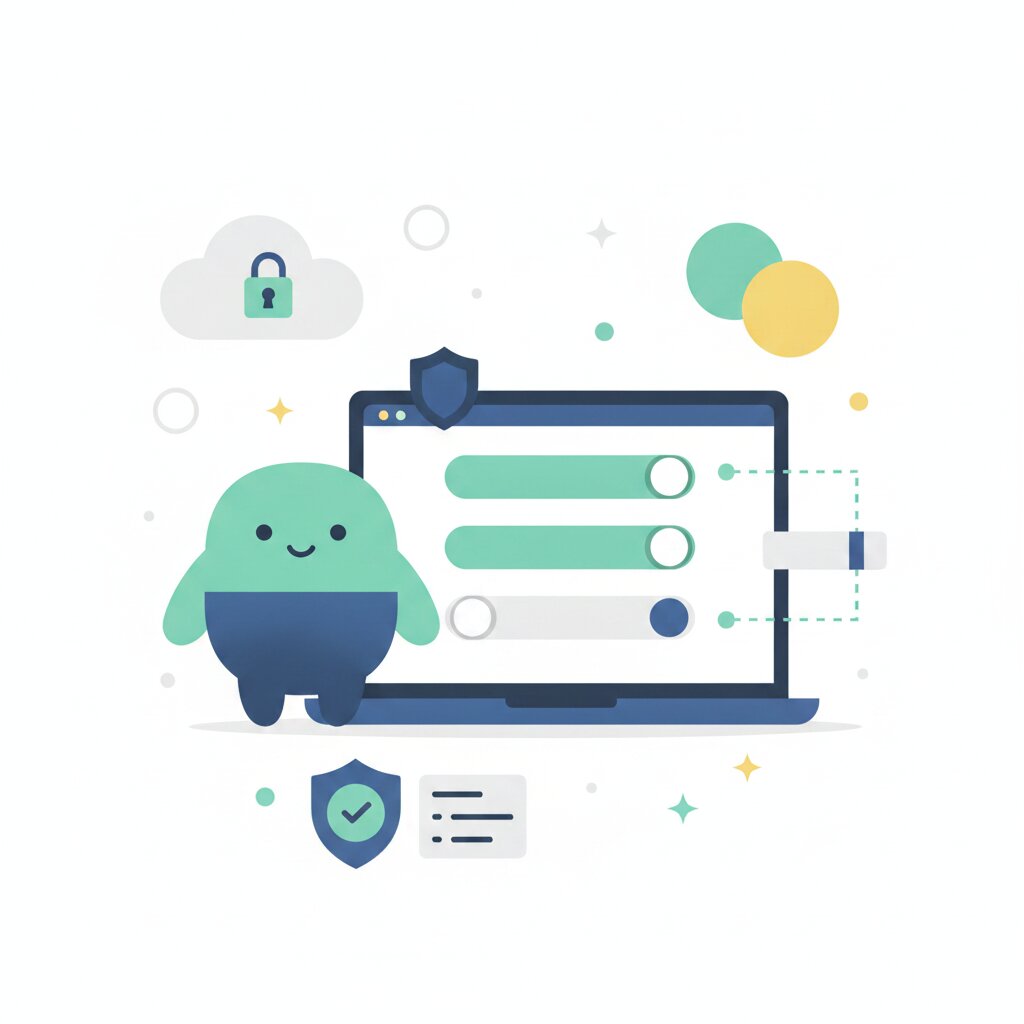

When you open the settings pane on a managed Mac running macOS 27 “Golden Gate”, Siri AI now sits alongside Claude (Anthropic) and Gemini (Google). Apple’s Foundation Models run on-device and through Private Cloud Compute, while Claude and Gemini appear as external intelligence integrations, all part of the wider OS 27 enterprise AI landscape. On macOS 27, the assistant is a governed asset: each toggle sets a data flow and an accountability choice.
That surface raises an instinctive question: which model is better? This article moves from that comparison, through what to verify before enabling external integrations and how Apple’s posture compares to Microsoft and Google, to an allow/block framework you can defend to the board.
How does Siri AI compare to third-party Foundation Models like Claude and Gemini on macOS 27?
Siri AI is Apple’s own assistant, built on the third generation of Apple Foundation Models and run on-device or through Private Cloud Compute. Claude and Gemini are third-party cloud models macOS 27 exposes through the Foundation Models framework‘s LanguageModel protocol. The useful comparison is data handling: where your prompts go and who can access them.
Siri AI acts across apps through the Spotlight semantic index and a system orchestrator layer, reading on-screen context and taking actions in apps, as covered in what Siri AI actually is. Claude and Gemini are general-purpose reasoning models, swapped by changing a Swift Package Manager dependency, as Google’s developer blog explains.
The practical difference is routing and trust. Siri AI defaults to Apple-controlled on-device or Private Cloud Compute processing, while Claude and Gemini send prompts to external cloud inference under provider terms and sign-in.
What should we look for before enabling external intelligence integrations like Claude and Gemini on managed Macs?
Enabling an external model is a data-flow and identity decision. Before you switch it on, the question is what leaves the device, where it is processed, how long the provider keeps it, and which tenant your business talks to.
The first check is a per-provider data-flow and retention map. Anthropic offers zero-data-retention options for Claude Enterprise, as this comparison notes. The second check is provenance and training commitments, including no-training guarantees and audit posture.
Identity is where control lives. Apple Business splits “Allow external intelligence integrations” from “Allow sign-in for external intelligence integrations”, and the External Intelligence Workspace ID allowlists which provider tenant may be used. Anonymous Mode reduces linkage between a prompt and an identifiable account, but it does not override the provider’s terms.
External routing departs from the Private Cloud Compute trust model. External requests sit outside Apple’s stateless, non-targetable guarantees and inherit the provider’s terms, as covered in the on-device versus cloud routing breakdown.
How does Apple’s enterprise AI approach compare to Microsoft Copilot or Google Gemini for enterprise fleets?
Apple anchors its AI in the device and the OS. Microsoft and Google anchor theirs in productivity clouds. Compare the three on fleet governance, privacy architecture and lock-in.
Apple runs Apple Intelligence and Siri AI on-device or in Private Cloud Compute, with declarative allow/block controls and OS-level model choice through the LanguageModel protocol. Microsoft Copilot couples tightly to Microsoft 365, Entra ID and Purview, buying compliance logging and eDiscovery at the price of cloud coupling. Google Gemini offers enterprise workspace, RBAC and retention controls, and it is also the licensed lineage behind Apple’s AFM 3 Cloud Pro, per Apple’s model announcement. That makes Google both a supplier to Apple’s stack and a competing external integration, two roles to track separately in a vendor assessment.
On lock-in, Azure OpenAI and Copilot are described as creating deep vendor lock-in, and choosing Gemini means choosing Google Cloud, Workspace and Vertex AI. Two caveats to record: SOC 3 covers Private Cloud Compute, not Apple Intelligence as a whole, and EchoLeak showed one instance of a planted email steering Copilot to leak files, an agentic risk understood to be cross-vendor. Enforcement differs too, from Apple’s DDM allow/block to Purview and Workspace admin controls, via how Apple enforces fleet policy.
How should we decide which Apple Intelligence and Siri AI features to allow versus block on managed devices?
The allow/block decision is risk tiering turned into enforceable policy. On-device features are safe defaults, cloud and third-party features need controls, and unvetted external model access gets blocked, all enforced through Declarative Device Management.
The safe defaults are the on-device set: Writing Tools, Genmoji, Image Playground and Image Wand, per Apple’s device management updates. Controlled features are the cloud-touching ones, like Mail and Safari summaries and Smart Replies, plus third-party routing through allowlisted workspace IDs and sign-in access. The blocked tier is unvetted external model access.
The policy layer is AI feature governance: classify use as low, moderate, high or restricted, with role-based access and pilot groups. Enforcement runs through the intelligence, external-intelligence and Siri settings, which replace the deprecated MDM restriction keys.
Siri AI’s read-and-act surface is where the most restrictive setting belongs. Simon Willison warns that an assistant that can read private data, ingest untrusted content and transmit information can be tricked into handing that data to a stranger. That read-and-act surface is why the allow/block framework moves into Declarative Device Management.
How should you frame the OS 27 AI governance decision for the CEO and board?
Give the board four plain-language axes: risk, cost, productivity and trust. Then state defensible criteria: what data may be processed where, which models are permitted, who can use which features, and how use is audited.
Risk is data exposure and indirect prompt injection, including Siri AI’s read-and-act surface. Cost is shadow AI and provider licensing: 77% of employees paste data into GenAI prompts, 82% of them from unmanaged accounts. Productivity is safe enablement of on-device features, and trust is verifiable privacy claims.
The gaps worth naming are auditability and role-based access, which are still maturing, alongside the SOC 3 scope gap noted above. 97% of organisations with an AI-related incident lacked proper AI access controls, as reported via Dataiku. That points to a governance gap.
A phased default your team can stand behind is to allow on-device features, pilot controlled ones and block unvetted models. The board conversation is the operational decision restated in plain language, and enforcement runs from policy to device through Declarative Device Management.
Wrapping it all up
The opening comparison, Siri AI versus Claude and Gemini, resolves to routing and trust. Across the wider OS 27 enterprise AI landscape, the fleet decision turns on governance surface, privacy architecture and lock-in.
The practical frame is to tier features into safe defaults, controlled and blocked, enforce through Declarative Device Management, then carry the same criteria upward as risk, cost, productivity and trust. You end up treating the managed Mac as a governed, multi-model asset, while being explicit about what remains unverified: SOC 3 scope, auditability and role-based access maturity.
Turning that tiering decision into policy enforced across every managed Mac is a bounded push, not permanent headcount. Rolling it out once and then maintaining it doesn’t need a new employee on the books indefinitely. SoftwareSeni’s extended development teams add engineering capacity for that kind of rollout, then scale back down once enforcement is live, no hiring round and no redundancy exposure left over.
see how extended development teams add capacity for a rollout like this without a hiring round →
“SoftwareSeni has done a great job, working quickly and reliably on all tasks assigned to them. This is exactly the way I foresee us collaborating more in future projects: rapid client engagements with flexibility in terms of scope and time allocated to resources.”
— Andre Gallo, Co-founder & CTO, Triniti
Frequently Asked Questions
Does Apple Intelligence train on my company’s data?
No. Apple’s stated position is that Apple Intelligence and Private Cloud Compute process prompts to respond, not to train. On-device requests stay on the device, and Private Cloud Compute uses stateless, non-targetable compute that discards data after the request. For Claude and Gemini, training is not Apple’s call; it is governed by each provider’s terms, so you verify no-training commitments before you enable the integration.
What is Private Cloud Compute, and is it the same as Apple storing my data in the cloud?
No, it is not conventional cloud storage. Private Cloud Compute is Apple’s stateless, non-targetable inference infrastructure for Apple Foundation Models. It handles heavier requests on Apple silicon without persistent storage or privileged access for Apple staff, and it publishes software for independent inspection. Data is processed and then discarded, so it behaves like ephemeral compute rather than a store you can query later.
Is Apple Intelligence covered by the same SOC 3 audit as Private Cloud Compute?
No. SOC 3 coverage applies to Private Cloud Compute, not to Apple Intelligence as a whole, and that scope gap should be recorded in your governance case. When you report upward, say plainly that PCC’s trust guarantees are independently audited while the wider Apple Intelligence surface, including third-party integrations, sits outside that certification and must be assessed on its own provider terms.
Is enabling Apple Intelligence an all-or-nothing decision?
No. You can allow safe on-device features such as Writing Tools while blocking or restricting external intelligence integrations. Declarative Device Management provides separate intelligence, external-intelligence and Siri settings configurations, so a default allow for on-device features does not force you to expose the fleet to Claude or Gemini. The control surface is granular, not a single switch.
What is the External Intelligence Workspace ID, and why does it matter?
It is the identifier used to constrain which provider tenants your fleet may use for external intelligence integrations. Allowlisting a workspace ID means you control the Claude or Gemini workspace that receives prompts, instead of letting any employee sign in with a personal account. It converts an open provider relationship into a governed tenant boundary, which is the difference between enablement and actual control.
Is Anonymous Mode enough to make Claude or Gemini enterprise-safe?
No. Anonymous Mode reduces linkage between a prompt and an identifiable account, but it does not override the provider’s data flow, retention or processing terms, and it creates no Private Cloud Compute guarantee. Treat it as one control inside a wider assessment, not a compliance pass. You still need to verify retention, training commitments and the allowed workspace before the integration is acceptable.
What happens if an employee uses a personal Apple Account on a managed Mac?
The device stays managed, but the AI sign-in and provider relationship can drift outside your control. A personal account can bypass workspace allowlisting, route prompts to a tenant you have not vetted, and split audit visibility between corporate and personal identities. That is why sign-in access and workspace-ID controls matter as much as the allow/block toggle itself.
What is indirect prompt injection, and why does it change how I treat Siri AI?
Indirect prompt injection is when an attacker hides instructions inside content a model later reads, such as a webpage or document, to steer its actions. It matters because Siri AI can read private data and act across apps, which enlarges the blast radius. That read-and-act surface is the reason to default restrictive on Siri AI and treat EchoLeak-style agentic risk as cross-vendor.
Do the old MDM restriction keys still work for Apple Intelligence, or do we need Declarative Device Management?
You should move to Declarative Device Management. The intelligence, external-intelligence and Siri settings configurations replace the deprecated MDM restriction keys, so relying on the old keys leaves policy stale and harder to enforce. On managed, supervised fleets enrolled through Automated Device Enrolment, DDM is where allow/block choices become live, declarative device policy.
Does Gemini’s role in Apple’s own model lineage create a governance conflict?
Not automatically, but it is a relationship you must track. Gemini is the licensed lineage behind Apple’s AFM 3 Cloud Pro, while also being a competing enterprise AI provider. That dual role makes Google both a supplier to Apple’s stack and an external integration you may choose to expose, so record both roles separately in your vendor assessment and do not conflate them.
Do we need a separate licence or subscription to use Claude and Gemini on managed Macs?
Generally, yes. Claude and Gemini are third-party cloud inference services, so their use sits under Anthropic’s and Google’s own accounts, terms and pricing rather than a single Apple licence. The operating system exposes the integration, but the provider relationship, data processing and cost are governed by the provider. Confirm licensing and workspace entitlements before you allow the integration fleet-wide.
What is the difference between Siri AI and Apple Intelligence?
Apple Intelligence is the umbrella system, while Siri AI is the assistant built on Apple Foundation Models that orchestrates actions across apps. Apple Intelligence also covers features such as Writing Tools, Genmoji, Image Playground and summaries. The distinction matters for governance because different features have different data flows, so you tier them separately rather than treating the whole suite as one toggle.
Is enforcing this across your fleet worth a permanent hire, or capacity you can flex for the rollout and stand down after? Talk to SoftwareSeni about extended development teams