Open source has already won. Every product you ship runs on open source components; it’s just how software gets built.
So who is actually paying for it?
The answer is uncomfortable. Sixty percent of open source maintainers work unpaid, and September 2026 showed the strain, from Tailwind Labs‘ AI-driven collapse to the Django Software Foundation‘s fundraising appeal.
Free open source always wins because the marginal cost of a copy is zero, and that same zero is why nobody is obliged to pay. That tension, the free-code equilibrium and the zero-cost fallacy, is the engine of the wider funding and governance reckoning.
Why does free open source always win over paid or closed alternatives?
A software copy costs almost nothing to distribute, so the price for code clears at zero and no paid or closed rival can undercut it. Winning generates no income for the people who write it.
Why the price always clears at zero
Once software is written, the cost of serving the ten-thousandth user rounds to zero. That’s the free-code equilibrium: the stable strategy is to let anyone use the code for anything, commercially included, for nothing. MIT, BSD and Apache, the licences that ask for nothing, win. The stack you depend on is built on them.
The equilibrium is self-reinforcing: every project that tried to be less generous lost to the one next door that stayed free. That victory’s cost is human, maintainer burnout, growing heavier as AI raises the maintenance load.
Permissive vs copyleft: a debate that misses the funding point
Permissive licences like MIT and Apache maximise adoption. Copyleft licences like the GPL try to protect a commons that cannot be closed. It’s a trade-off, argued at length, but neither side has ever produced a maintainer’s income.
What is the open source funding and governance reckoning of 2026?
The reckoning is the point where the zero-cost fallacy collapsed and the gap between value extracted and money returned turned into a governance problem.
The signals that forced the conversation
Tailwind CSS lost three of its four engineers in January because AI answer engines replaced its documentation, and its revenue fell about 80% before it joined Shopify. The Django Software Foundation raised its goal to $500,000 to keep its three fellows paid.
The zero-cost fallacy
The zero-cost fallacy is the finance-side misread: a $0 download price gets read as a $0 total cost. The equilibrium is the supply-side fact; the fallacy is the finance-side misread of it. The sustaining cost simply moves from a vendor invoice to an unpaid weekend.
Why this became a governance problem in 2026
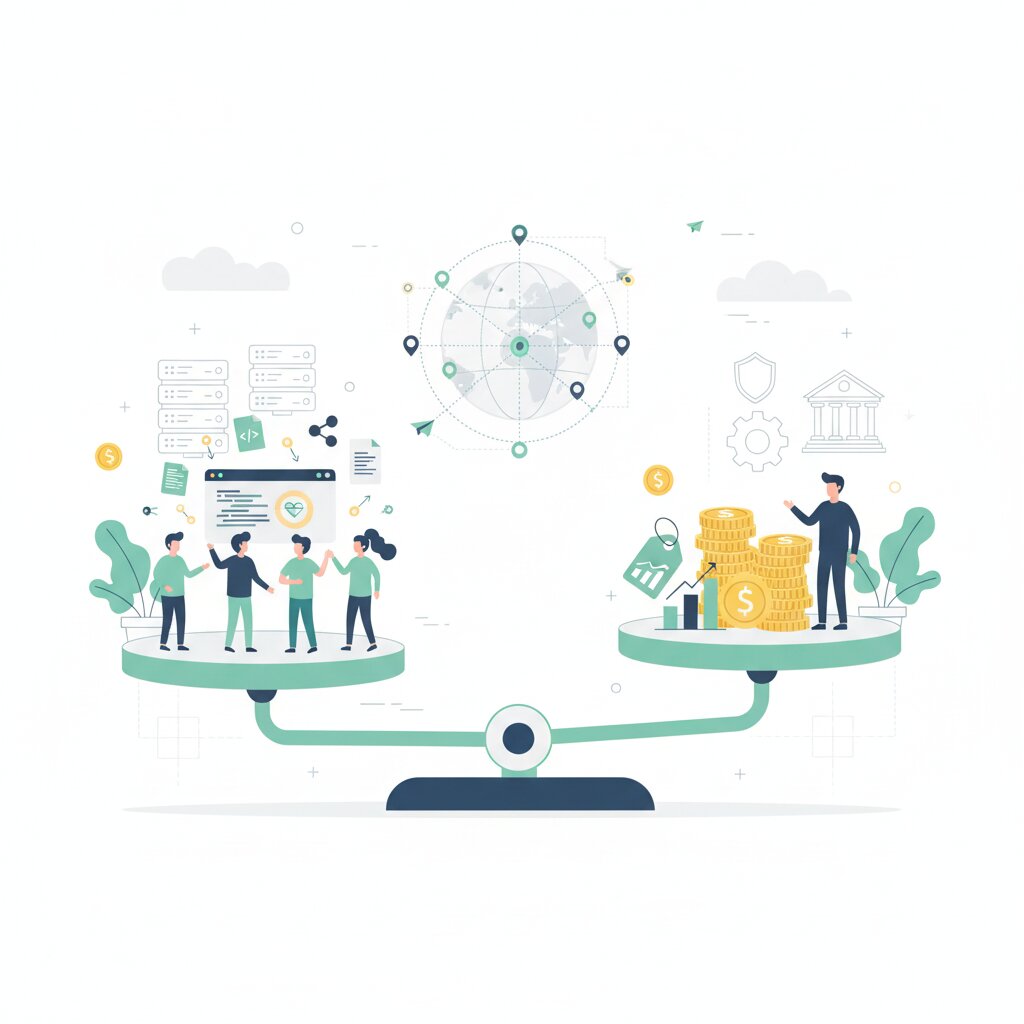
Put 60% of maintainers unpaid next to a $100 million sponsorship rail and you get the funding gap: the measured distance between value extracted and money returned. Corporate patronage, today’s default, is discretionary, cyclical and first to be cut. Microsoft, Amazon and Intel sponsor projects and employ maintainers, then cut that goodwill first in a downturn. The EU’s Cyber Resilience Act creates compliance obligations, not sustainability. So the question becomes a governance one: who has authority to decide what gets funded. To answer it, you have to look at what the funding rails actually look like today.
Why do 60% of maintainers go unpaid while GitHub Sponsors’ $100M is nowhere near enough?
Sixty percent of maintainers are unpaid, and GitHub Sponsors passed $100 million in payouts in July 2026. Both are symptoms of the open source funding crisis, the structural shortfall at the centre of the 2026 reckoning.
The $100M that isn’t enough
That $100 million, accumulated since 2019, sits against JFrog’s $532 million in 2025 revenue from Artifactory, a private registry mirror. One company built on open source posts nine figures in a year; the whole sponsorship rail has raised $100 million across six. It’s a rounding error.
Worse, the money flows the way tips always flow, as a power law. A few maintainers do fine; the median sponsored maintainer makes lunch money. Of 300 million companies extracting value, only 4,200 take part.
GitHub Sponsors vs the Sovereign Tech Fund
GitHub Sponsors is voluntary corporate charity. Germany’s Sovereign Tech Fund, renamed the Sovereign Tech Agency in 2024, pays maintainers of critical infrastructure directly, more than €23 million into over sixty projects since 2022.
Which one reaches infrastructure? The state-backed one. Sponsors funds whatever is popular; the Agency funds whatever is load-bearing. As Andrew Nesbitt puts it, no state relies on Adopt-a-Highway to keep a bridge standing.
Where the official programme details live
GitHub Sponsors documents its patronage rail, the Open Source Pledge sets an employer-side levy of $2,000 per developer per year, and the Sovereign Tech Agency publishes its funding criteria. The Pledge turns scattered contributions into predictable income for the dependencies your business runs on, but it stays voluntary, which is why giant companies still don’t pay.
But before any funding model can work, there is a harder constraint: the licence itself cannot be used to claw value back. The funding models competing to close the gap have to work around that.
Why have licence changes always lost to forks?
Once code ships under an open licence, the licence, not the vendor, is the real gatekeeper. Any attempt to claw value back triggers a fork that keeps the free option alive.
Elasticsearch → OpenSearch
In 2021 Elastic moved Elasticsearch off Apache 2.0 to stop Amazon selling it as a service. Amazon forked the last open release into OpenSearch, which landed at the Linux Foundation, and in 2024 Elastic returned to an open licence. The fork stayed.
HashiCorp Terraform → OpenTofu
In 2023 HashiCorp moved Terraform to the Business Source License. Within weeks a coalition forked the last MPL release into OpenTofu, which moved to the Linux Foundation. HashiCorp was later bought by IBM.
Redis → Valkey
In 2024 Redis moved off the 3-clause BSD licence. Valkey forked within days, picked up every cloud provider, and shipped a stable release in 27 days. In May 2025 Redis added AGPLv3 back. The licence came back and the fork stayed.
The gap to a stable fork keeps shrinking: 179 days for OpenSearch, 153 for OpenTofu, 27 for Valkey. You cannot put the code back in the tube once it ships under an open licence; a fork always undercuts a less generous licence, which is what protects you if your supplier relicenses tomorrow.
So the only lever left is funding, not ownership. Which resolutions stand a chance is the subject of the three resolutions now competing.
The win and the bill are the same fact
Free open source wins for one reason: a copy costs nothing to distribute, so the price clears at zero, and that same zero is why nobody is obliged to pay. The funding gap, 60% unpaid against a $532 million single-year vendor revenue, is not a bug that goodwill will patch.
Charging at the licence level cannot work. Elastic, HashiCorp and Redis all tried, and every one of them lost to a fork.
The 2026 question is how to fund critical infrastructure. The three resolutions now competing are the only levers left. See where this fits in the 2026 picture for how the economics, the funding models and the risk fit together.
Frequently Asked Questions
What does “zero marginal cost” actually mean in plain English?
Zero marginal cost means the next copy of a piece of software costs essentially nothing to make and distribute, so no seller can charge for it and still compete. That single fact drags the market price of code down to zero, which is exactly why free open source always wins and why the people who write it have no natural revenue line.
What is the difference between free software and open source software?
They describe overlapping things from different traditions. Free software, from the Free Software Foundation, is a matter of user liberty: run, study, share and modify the code. Open source embraces the same licences but frames them as a development and business method rather than an ethical stance. The licences overlap almost entirely, so the funding gap bites both equally.
What is copyleft, and does it stop companies from making money from open source?
Copyleft, the GPL family, requires anyone who distributes modified code to release their changes under the same terms, which keeps improvements in the commons. It does not stop companies earning money: they can sell support, hosting or hardware around it. Copyleft protects a notion of the commons, but it has never produced a maintainer’s income, which is why the licensing debate misses the funding point.
If open source code is free, why do companies pay for it at all?
Companies pay for everything around the code, not the code itself: support contracts, hosted services, security reviews, integration and compliance. Red Hat is the classic case, selling support for software anyone can download free. That spending is real and large, but it flows to vendors and platforms, not to the maintainers of the upstream projects those products depend on.
What happens to my project if a critical maintainer burns out or walks away?
The code keeps working, because a copy never stops running, but the security patches, bug fixes and compatibility updates stop. That is the quiet risk of the funding gap: an abandoned dependency does not fail loudly, it just ages. The practical response is to know your critical dependencies, watch their commit activity, and be ready to fund, fork or replace them.
How do I tell whether a dependency I rely on is underfunded?
Look for the signs rather than the price. A single unpaid maintainer handling most commits, a sponsor page that raises very little, slow security responses, and no foundation or programme backing all point to a project running on goodwill. Tools that surface dependency health and funding status help, as does simply reading the project’s contributing and funding pages.
Is it true that big tech companies simply don’t pay for open source?
It is more accurate to say they pay a fraction, and by choice. Microsoft, Amazon, Intel and Canonical all sponsor projects and employ maintainers, but that patronage is discretionary, cyclical and the first thing cut in a downturn. Across the ecosystem it funds a small slice of the critical infrastructure it depends on, which is why 60% of maintainers still go unpaid.
What exactly is a fork, and when should I use one?
A fork is a copy of a project’s code that someone else takes forward under the existing open licence. It exists precisely because the licence, not the vendor, controls what happens once code is released. You fork to preserve a free option, to keep maintaining an abandoned project, or to resist a hostile licence change, as OpenTofu and Valkey both did.
Should governments fund open source, or does that just make it political?
Governments already fund open source, and it works when the funding is structural rather than symbolic. Germany’s Sovereign Tech Fund pays maintainers of critical infrastructure through service contracts, which reaches working code far more reliably than voluntary tips. The risk is politics and short funding cycles, so the model works best as a standing programme with clear criteria, not a one-off grant.
Can the funding gap ever actually be closed, or is open source doomed to run on unpaid labour?
It can be narrowed, but not by goodwill alone. Because a copy costs nothing, no revenue line will ever appear for maintainers on its own, so closing the gap means deliberately routing money to them through foundations, registry royalties or employer levies. Whether that happens is a governance choice, which is exactly why 2026 turned the reckoning into a governance question.
What can an individual developer do to support the maintainers they depend on?
Start by paying, even a little, and by asking your employer to do the same. The Open Source Pledge sets a benchmark of $2,000 per developer per year, which turns scattered tips into predictable income. Beyond money, contribute patches, document your dependencies and choose projects with real backing. Individual goodwill helps, but employer-scale funding is what closes the gap.