

When we build useful software we are building a low-resolution model of a small piece of the world. A pair of shoes in the database of an online store contains no leather. When that pair of shoes is sold, no notes or coins are going to change hands.
Around this simple model of real world inventory and transactions is the operational model of the online store: how the database is structured, how the database is served and managed, how the contents of the database end up on the screen of the customer’s phone, how payments are handled.
Building the model, and building the system that implements and operates the model of an online store, a CRM, an inventory management system or any other system requires countless inter-related decisions. Some decisions can be made based on experience, other decisions can only be made as implementation progresses.
This decision making is the “taste” that AI proponents label as the key trait behind the successful use of AI.
Agents make decisions based either on the commonality of examples in their training data or on biases applied to that training data by later Reinforcement Learning. This is fine if you’re building the average service in the average industry – except no such thing exists.
Also, agent software design has its own versions of the “delve” issue of text generation, but only an experienced developer notices them.
These factors combine with the historical difficulty in specifying requirements for a software project at the level of detail required. Where an agent can’t find a requirement (like the fields in a customer record), it chooses its own.
So you can’t tell an agent to go off and build a complex project and get your vision brought to life. You still need an experienced developer with an understanding of the project and its domain, and how the system around the project needs to be implemented to fit budgets, available resources, in-house practices, etc.
This is great news if you have access to experienced developers or software architects. It also suggests there is a ceiling to vibe coding and so a limit on who can compete with you over the medium to long term. If you don’t have access to experience, initial forward momentum will slow down as code erosion accumulates.
QA is now everywhere and all the time
With agents generating code, agents that are as fallible as they are fast, the processes that bookend programming become central to success. We just discussed the design end that gives us what to code. Next is what follows the code: QA, every software development project’s least favourite line item.
In our experience, when working with agents every turn of the conversation is some form of QA. And no matter the request, there is always a good chance that the agent will do something unexpected or unwanted. Agents can be so effective yet simultaneously inject random errors of process or of logic that a human would not.
Working with agents on codebases requires almost a statistical approach to code production. Yes, they can write much code in little time, but some percentage of that code will cause you problems and you do not want to build further upon it.
SlopCodeBench is a benchmark that captures this behaviour. It’s rather simple. It gets agents to work on a codebase in a way that reflects normal practice: some code is written, and then requirements are changed and feature requests start to come in and the current code needs to be updated.
Even the best models are only reaching ~30% on this benchmark. The best models, also the most expensive, successfully iterate on changes to codebases only ~30% of the time.
This is known in practice. Experienced agentic developers say you should be spending 30% of your agent tokens on generating code and 70% on making sure it is correct. This is for agentic coding. If your developers are still reading all the code then you don’t need this mix.
Where to spend that 70% is the challenge. There are dozens of forms of testing across the Software Development Lifecycle.
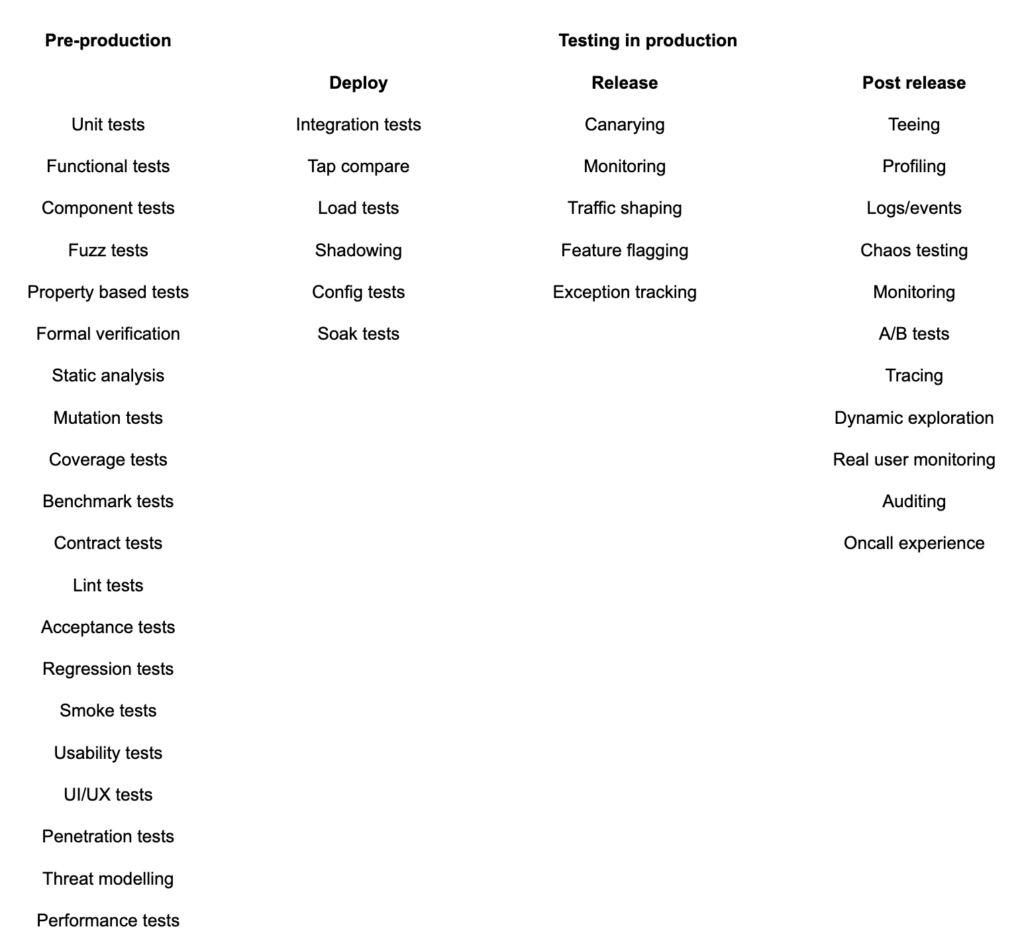
It’s a daunting list of tests. What makes it tractable is that you can use agents to build those tests for you. But you also need agents to check the tests are valid, preferably agents running on a model from a different provider to the test writer.
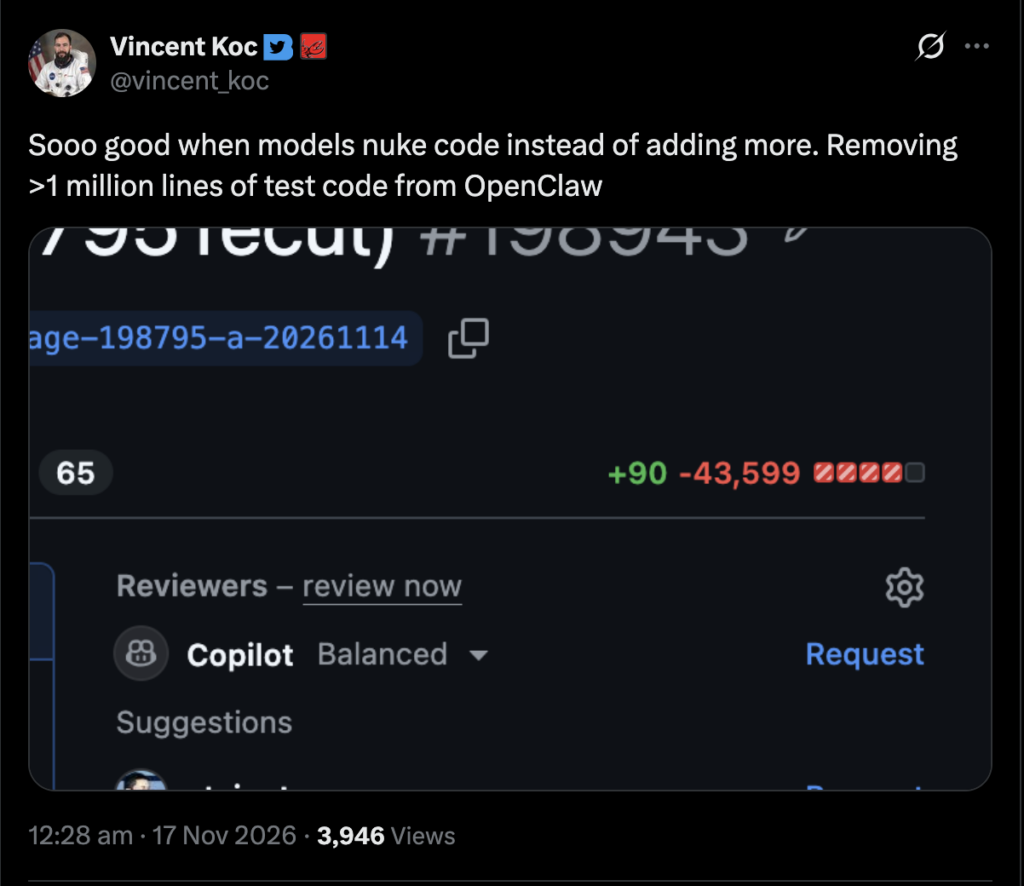
But even tests require humans paying attention. They need to be part of the architecture that you hand over to agents to implement. And, like architecture, they require experience to know which parts of the codebase require which kind of tests. Otherwise you can end up with millions of lines of test code that burn time and resources to run but don’t contribute to the quality of your code.
Software engineering is not going away
Agentic AI has expanded the number of people who can produce code to include everyone on the planet with access to a web browser. But building a product that people want to pay money for, that is reliable and extensible, still requires software engineering skills.
But what software engineering practice looks like has shifted. It still requires being able to understand code, but the focus for all developers is now on architecture and verification. Developers need to know how a system is structured, how it works, and how it must be tested to ensure correctness and reliability in the face of agent unpredictability.
These are all complex practices requiring experience and expertise. Software is still hard, just the scale and location of the challenges have changed.