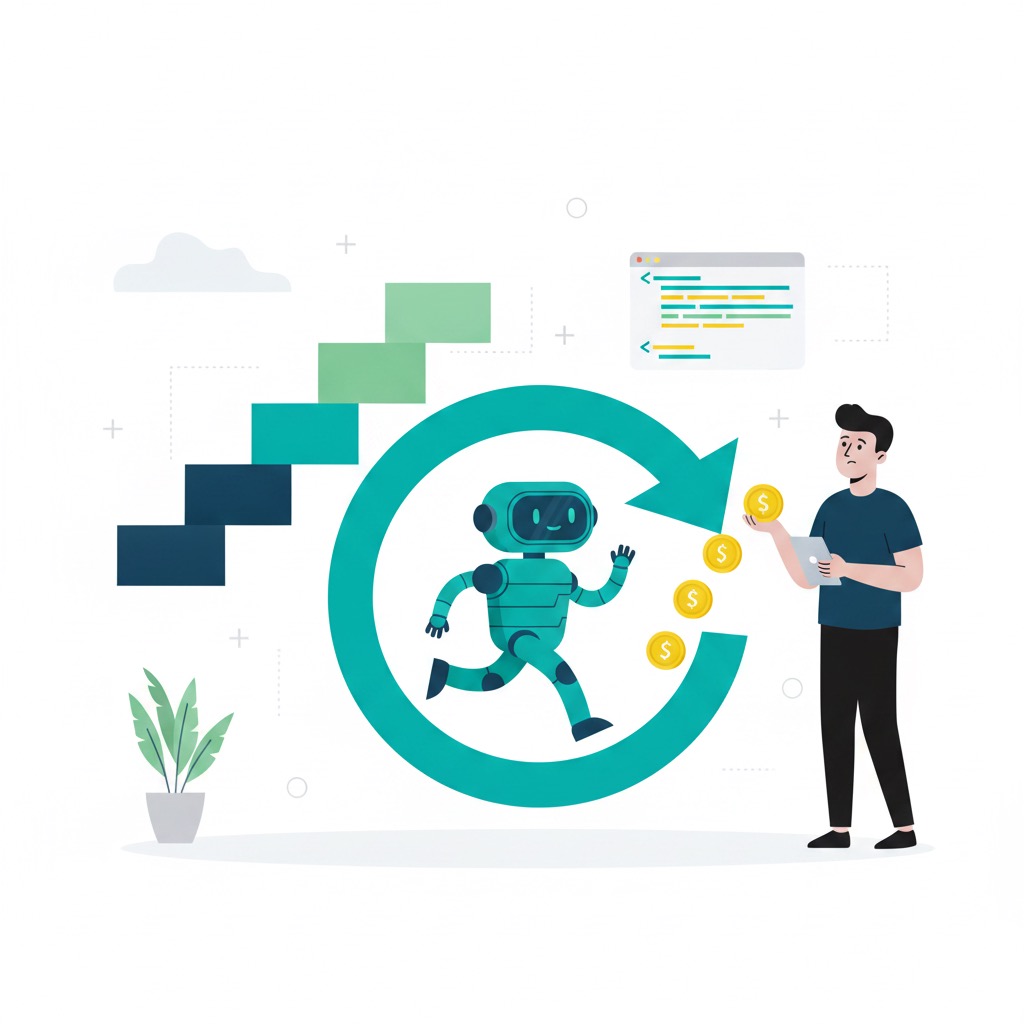

There are two claims about running AI locally, and they can’t both be true: one says it’s free because there’s no token bill, the other says the cloud is cheap because there’s no hardware to buy. At least one is marketing shorthand. “Zero token cost” is really a total-cost-of-ownership question: what do hardware capex, power, maintenance, engineering time and utilisation risk actually cost you?
While most teams compared token prices, the 2026 memory shortage (“RAMageddon”) has been rewriting the build-versus-buy arithmetic. By the end you’ll have a threshold, the utilisation and token volume at which local pays off, plus a routing logic for latency, privacy and cost. That is one strand of on-device AI and the local-first shift, which places the economics beside governance and hardware.
Is Running AI Locally Actually Cheaper Than the Cloud at Scale, and What Is the True Cost?
Not automatically, and not without conditions. Local removes per-token fees but swaps them for hardware capex, power, maintenance, engineering time and utilisation risk, and it only beats premium frontier APIs above roughly 26% daily utilisation for a single mid-range workstation. That threshold is the honest answer to the true cost of local AI: a total-cost-of-ownership figure, not a sticker price.
Depreciation and electricity dominate the bill
Once the machine is bought, each extra token does cost nothing more. GPU depreciation dominates the bill at roughly 77 to 92% of total cost, while electricity sits at only about 13%. The GPU sticker price is a poor cost indicator: self-hosting costs three to five times the raw GPU price once electricity, cooling, redundancy and downtime risk are in.
Where local actually wins: the break-even maths
Take a $9,000 RTX PRO 6000 Blackwell, depreciated over three years at $250 a month. At 27 tokens per second and 26% utilisation it produces about 18.5 million tokens a month, equivalent to roughly $275 of Claude Sonnet spend. That equality is the break-even, and it moves with the API your team is comparing against. You’ll never win against Together AI’s $0.88 per million tokens, and Anthropic’s 50% batch discount pushes the break-even utilisation to about 55%. Local wins on steady, interactive, latency-sensitive volume rather than bursty, offline work.
The AMD 500-machine verdict: cheaper at 50/50, not at 100%
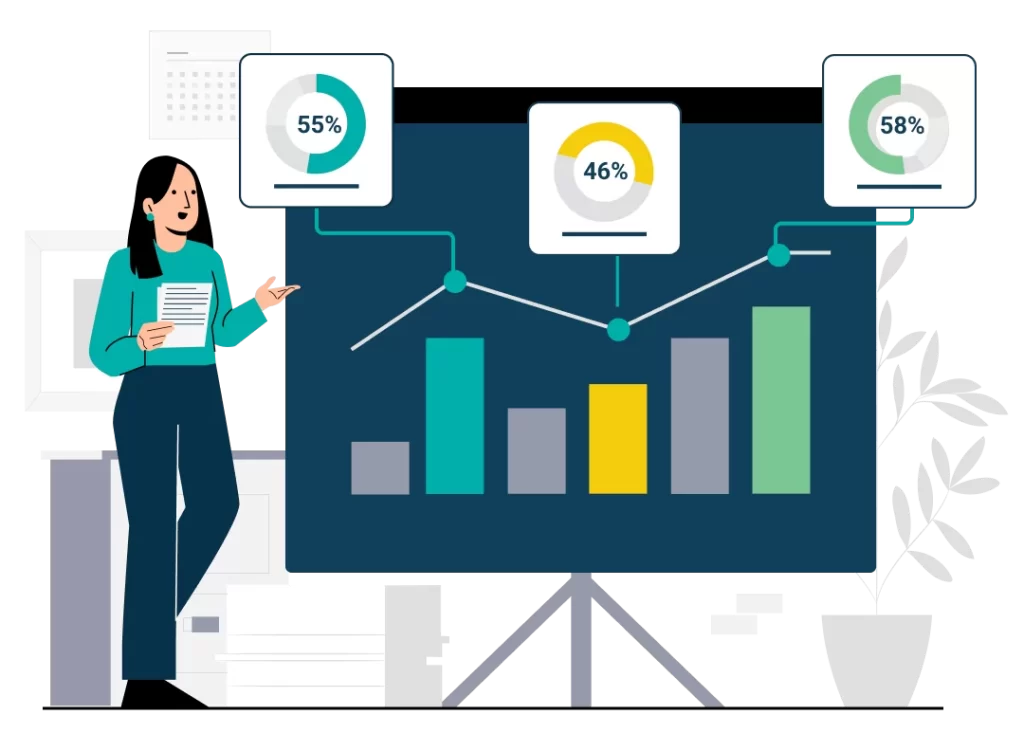
AMD’s worked example puts a number on it: a fleet of 500 AI PCs in a 50/50 local/cloud split delivers projected three-year savings of 40 to 60% against cloud-only. The savings appear at a half-and-half blend rather than a full migration.
Why Are Memory (DRAM) Prices Rising So Sharply in 2026, and What Does It Do to the Local Case?
All of that break-even maths assumes stable memory prices. The 2026 DRAM shock changes that input. The memory shortage changes the local build’s economics: it makes memory the binding cost and shortens the payback window.
What’s driving the surge: HBM and hyperscaler pre-buying
DRAM prices have climbed roughly 500% year-over-year on some kits, with quarterly contract increases as high as 95%. The driver is structural: hyperscalers pre-buying 2027 supply and wafer capacity reallocated to HBM, which takes substantially more wafer input than conventional DRAM, removing a disproportionate amount of ordinary memory from the market. SK Hynix, Samsung and Micron are all steering capacity that way.
What it does to a local build’s economics
For a local rig, memory becomes the line item that decides the bill, raising the effective capital cost and break-even utilisation. The shock also hits performance: memory bandwidth is the decode-step bottleneck that sets token speed, because every token reads the whole weight set from memory. A pricier memory build costs more upfront and caps token throughput too.
Mitigating it: quantisation and memory tiering
Quantisation (Q4, AWQ or GPTQ) cuts the memory footprint by roughly four times, and memory tiering pushes cold pages onto NVMe flash that costs a fraction of DRAM per gigabyte. Neither ends the shortage, but both keep the local tier viable, and most analysts don’t expect relief before late 2027.
What Is the Latency-Privacy-Cost Triangle, and How Do You Balance It?
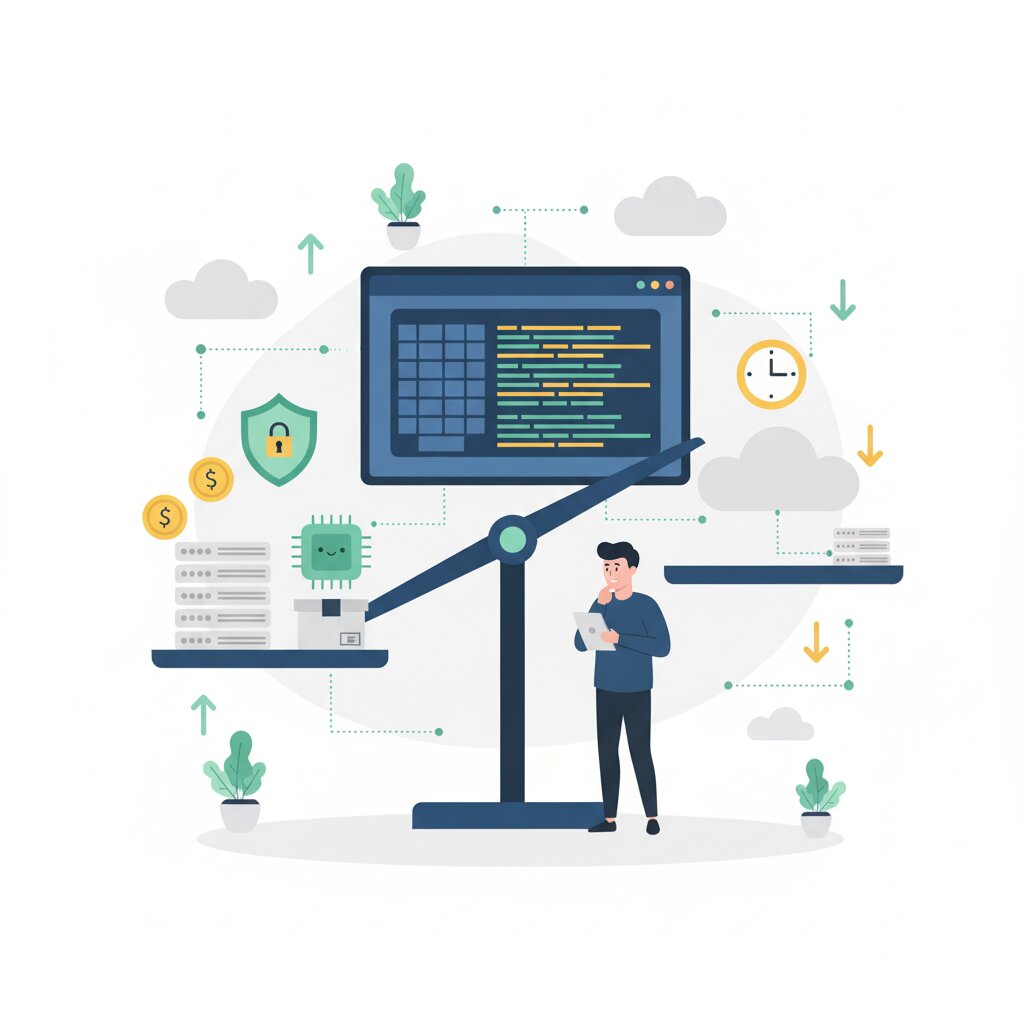
Cost is only one vertex of the decision. No placement maximises latency, privacy and cost at once: optimise for two and you constrain the third. That makes placement a per-query routing problem.
The three vertices and what each placement buys
Local buys data control and predictable latency, but pays capex and utilisation risk. Cloud buys elasticity and capex-free scaling, but pays egress, data exposure and per-token cost. On latency, local time-to-first-token typically lands at 50 to 200 milliseconds versus 200 to 800 for cloud APIs.
Why privacy, not cost, decides for regulated teams
For regulated teams, the privacy vertex overrides cost. GDPR, the EU AI Act, HIPAA and the US CLOUD Act all pull toward infrastructure you control, which is why deciding what data leaves the machine matters before any price comparison. The European Data Protection Board has found that cleartext GPU inference admits no effective supplementary measure, so a provider that must see your plaintext prompts cannot satisfy the bar, whatever the contract says. In those cases you choose where data may legally live rather than which price point wins.
Balancing it: hybrid routing as the answer
The operational answer is hybrid AI or model cascading: routine traffic runs on your local tier, while frontier reasoning and demand spikes escalate to the cloud, routed by data sensitivity, task complexity, confidence and volume. Gateways like LiteLLM and Portkey make that a configuration decision your team can tune as volumes shift. The local tier is only viable because small language models now handle routine work well enough to carry the bulk of traffic, part of the wider local-first shift.
The break-even threshold and where each workload lands
Once you run the numbers, the useful question becomes: at what utilisation and token volume does it pay off, and which workloads belong where? The true cost of local AI sits in depreciation and utilisation risk rather than token price. The 2026 memory shock makes memory the binding cost, with quantisation and memory tiering as the mitigations that keep the local tier viable. Since latency, privacy and cost trade against each other, the answer lands per workload, with privacy overriding cost for regulated teams. Where each workload lands still has to fit what the hardware can actually run, which is the capability ceiling the next piece tackles. Against the wider local-first picture, all of this is one axis of a placement call that also turns on trust and regulatory fit.
Frequently Asked Questions
What hardware do I actually need to run a useful AI model locally?
You need enough memory capacity to hold the model weights and enough memory bandwidth to decode tokens quickly. A 7B model at 4-bit quantization fits in roughly 4-5 GB, so a 16-24 GB GPU or a unified-memory Mac with 32-64 GB is a realistic floor. Do not shop on the GPU sticker alone: bandwidth, not raw compute, sets your interactive token speed.
Can I run local AI on a gaming PC or Mac I already own?
Often yes, within limits. A modern gaming PC with 8-16 GB of VRAM can host 7B-13B models at 4-bit quantization for routine chat, summarisation and classification, and Apple Silicon Macs with unified memory handle larger models well. What you cannot do is match frontier reasoning or heavy concurrency, so treat it as your local tier, not a cloud replacement.
How do I work out my own break-even utilisation?
Divide your monthly all-in cost (hardware depreciation, power, ops labour and engineering time) by the marginal cost you would otherwise pay per token, then compare that against your actual token volume. If your rig sits idle most of the day, the effective cost per token climbs sharply. For most teams, break-even lands around 26% daily utilisation, or roughly 6.3 hours of generation each day.
What happens if I only use my local rig a few hours a day?
Your cost per token rises fast, because depreciation accrues whether the hardware is busy or idle. That is the utilisation risk behind the “zero token cost” claim: a rig used two hours a day spreads the same capex over a fraction of the output a fully utilised one produces. Below roughly 26% daily utilisation, cloud APIs are usually the cheaper choice.
Does quantization hurt model quality?
It can, but the trade is usually worth it. Moving from 16-bit to 4-bit precision (Q4, GPTQ or AWQ) typically costs a small amount of accuracy on most tasks while cutting memory footprint by around three to four times, which is exactly what the 2026 memory shock makes valuable. For routine classification, extraction and summarisation the loss is often negligible; for delicate reasoning, test before you commit.
Which tools route requests between local and cloud automatically?
Gateway and routing layers such as LiteLLM and Portkey sit in front of your models and send each request to the right place. You define rules by data sensitivity, task complexity or confidence, so routine traffic stays on your local tier while frontier reasoning and demand spikes escalate to a cloud API. That is model cascading in practice, and it makes the 50/50 split operational rather than theoretical.
Is an enterprise cloud agreement private enough to skip local deployment?
Not necessarily. Commercial terms, zero-retention promises and regional hosting help, but they do not change the underlying legal exposure for regulated data. The European Data Protection Board has found that cleartext GPU inference admits no effective supplementary measure, which means for GDPR, HIPAA or EU AI Act workloads, contractual privacy is often not a substitute for keeping sensitive data on infrastructure you control.
What is the US CLOUD Act and why does it matter for where my AI runs?
The US CLOUD Act lets US authorities compel American providers to hand over data they hold, even when it sits on servers in another country. That is why a European or Australian team using a US hyperscaler can still face extraterritorial exposure. For sensitive workloads it is a reason the privacy vertex can override cost entirely, and a reason local or genuinely sovereign hosting stays on the table.
Does running AI locally actually reduce latency?
It removes network round-trips and gives you predictable latency you can provision against, which matters for interactive and real-time workloads. But local latency still depends on memory bandwidth, because decode speed is bounded by how fast weights move through memory, not by raw compute. A poorly specced local rig can feel slower than a well-provisioned cloud endpoint, especially under concurrency.
Is a sovereign cloud region a good middle ground between local and public cloud?
Sometimes, and it depends on the workload. A sovereign or regional cloud region keeps data inside a jurisdiction and avoids some extraterritorial exposure, while still giving you elastic, capex-free scaling. But it remains someone else’s infrastructure, so it does not fully resolve the privacy vertex for the most sensitive data. Treat it as a useful tier in a hybrid design, not a blanket answer.
How long is the 2026 DRAM price shock expected to last?
The driver is hyperscaler pre-buying of 2027 supply and wafer capacity shifting to HBM, so the pressure is structural rather than a short blip. Prices are up roughly 500% year-on-year on some kits, with quarterly contract increases of up to 90-95%. Until that capacity rebalances, plan on memory remaining the binding cost of a local build, and budget accordingly.