
The moat in enterprise coding agents has shifted from the model to the harness: the memory, tools, orchestration and governance wrapped around a frontier model.
The proof is a number worth remembering. The same GPT-5 weights score 35.2% on Terminal-Bench 2.1 inside Terminus 2, and 49.6% inside Codex CLI (HarnessDev). Nothing changed but the harness.
If the harness is where advantage lives, owning it looks obvious, but you still depend on a supply chain someone else controls. The four reads cover what a harness is, what it costs to own one, the risk that remains, and how to govern agents on your repos.
In This Series
- What an Agent Harness Is and Why It Now Outperforms the Model. The definition, the pillars and the constant-weights proof that the harness is now the lever.
- Build or Buy a Coding Agent Harness and What Ownership Really Costs. What you actually own, how to weigh total cost, and why named enterprises build while still paying Anthropic.
- Vendor Risk and the Control Plane Emerging Above Agent Harnesses. Why a self-built harness still depends on a model supply chain, and the control plane emerging above it.
- Auditing and Governing Your Coding Agent Harness Before It Fails. Separating load-bearing capability from dead weight and governing unattended agents.
What is an agent harness, and why does it now matter more than the model?
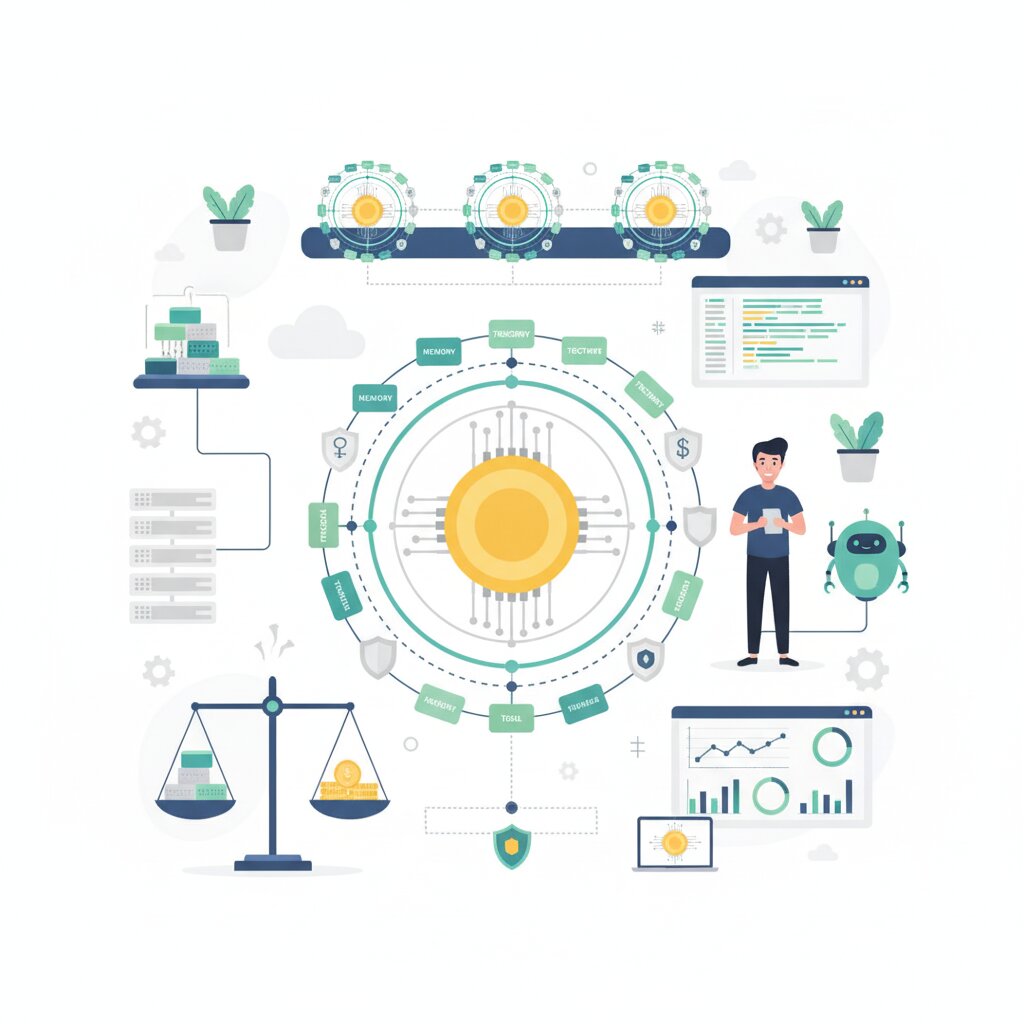
An agent harness is everything wrapped around the model: memory, tools, orchestration, context management and governance. It turns a general-purpose model into a dependable coding agent. It now matters more than the model because frontier weights have converged, leaving the harness as the variable that decides how the same model performs. The lever is the layer you can own and iterate.
Think of the model as the engine and the harness as the memory, tools and orchestration bolted around it. Harness Engineering has become the discipline that matters, which is why so many teams are building their own.
That constant-weights gap is the proof. The same GPT-5 weights score 35.2% on Terminal-Bench 2.1 inside Terminus 2 and 49.6% inside Codex CLI (HarnessDev). One caveat: Terminal-Bench and SWE-bench disagree on harness sensitivity, so treat any single number as directional. The differentiator is now the layer you control.
The full definition and the deeper treatment of Harness Engineering live in what an agent harness is.
Understand what a harness is, and the next question is whether to build or buy one.
Should you build or buy a coding agent harness — and what does ownership actually cost?
The real question is which primitives you own and which you rent. Owning a harness means owning the memory, context engineering, orchestration and governance you differentiate on, while renting the commodity plumbing. Weigh control, portability, differentiation and team capacity. Coinbase, Shopify and Ramp build their own harnesses around a purchased model: the model is an input, and the harness is where the ownership lives.
Coinbase and Shopify wrap Anthropic’s Claude Code with their own layers (Coinbase and Shopify), and Ramp hand-rolled its agent on Modal and Cloudflare Durable Objects (Ramp).
Cost the whole stack: engineering time, evaluation, governance and maintenance, on top of the per-run fee. TrueFoundry‘s TrueForge claims $8.50 per run against Claude Managed Agents at $11.80, roughly 30% cheaper at parity accuracy (The New Stack). That is only the price-sheet layer; a weaker harness erases the saving, so cost and accuracy have to be judged together.
The full TCO stack and the build-versus-buy criteria are in building or buying a harness.
Own it, and the cost question quickly becomes a risk question.
Why doesn’t building your own harness remove vendor dependence, and what is the control plane emerging above it?
Building your own harness changes your dependencies; it does not remove them. Your harness still sits on a model supply chain a vendor can cut. OpenAI used a change-of-control clause after SpaceX acquired Cursor, winding down Cursor’s model supply from 12 November 2026 (Paddo). The emerging answer is a control plane: a layer above individual harnesses that routes, governs and observes across multiple models and harnesses, preserving optionality through standards like MCP and A2A.
Weigh the proprietary managed path against the open-source SDK path: with managed offerings you configure the harness, but someone else owns it.
Databricks, Microsoft, Google and AWS are all racing to own that layer above individual harnesses (VentureBeat).
The full supply-chain analysis and the meta-harness distinction are in vendor risk and the control plane.
Whatever layer you own, it still has to be governed before it fails.
How do you audit and govern a coding agent harness before it fails?
Most mature harnesses carry dead weight. ByteDance Seed‘s HarnessDev found only 34 of 64 harness changes generalised, and 124 of 587 features were dead code (HarnessDev). So the audit is subtractive: remove one component at a time and re-benchmark to find what carries the load. Governance is containment, observability, phase gating and a kill switch. You cannot govern what you cannot see.
Two more checks earn their keep: swap the model and the harness separately to see where the value lives, and benchmark at the task level, where the differences show up.
Unattended agents need those bounds before production: containment, observability and a kill switch the agent cannot reach. Add the EU AI Act and customer VPC or on-premises deployment for regulated data. Failures cluster at the harness layer because that is where the guardrails live, and when they are missing the failure happens quietly.
The full audit method and the observability tooling landscape are in auditing and governing a harness.
Resource Hub: Enterprise Coding Agent Deep Dives
The Fundamentals
What an Agent Harness Is and Why It Now Outperforms the Model (7 min). Start here if you are still working out where the advantage lives.
The Ownership Decision
Build or Buy a Coding Agent Harness and What Ownership Really Costs (8 min). A decision framework for what to own, what to rent, and what it costs in total. Vendor Risk and the Control Plane Emerging Above Agent Harnesses (6 min). Why owning the harness does not end your dependence, and what the control plane changes.
Operational Discipline
Auditing and Governing Your Coding Agent Harness Before It Fails (7 min). A method for finding dead weight and putting guardrails around unattended agents.
Suggested order: fundamentals first, then ownership, then operational discipline.
Owning a harness is only the start. The vendors are racing to own the layer above it, so pick a position: build, buy, or build with a control plane in mind.
Where you start depends on where you are. Still deciding whether the harness is where your advantage lives? Start with the fundamentals of an agent harness. A build-versus-buy decision in front of you? Read the build-versus-buy trade-offs. Worried about vendor dependence? See the vendor-risk and control-plane analysis. Already running agents against production repos? Go to the governance and audit method.
Frequently Asked Questions
Is an agent harness the same thing as an agent framework?
Not quite. A framework is the toolbox you assemble agents with; the harness is the running system wrapped around a specific model: memory, tools, orchestration, context management and governance. Frameworks give you abstractions. Harnesses give you behaviour you can measure. The same framework can produce a strong or weak harness depending on how you wire the primitives together, which is why the harness, not the framework, is the lever.
Does a stronger model make the harness irrelevant?
No. Frontier weights have converged, so a stronger model mostly raises the floor for everyone. The constant-weights proof settles it: identical GPT-5 weights scored 35.2% on Terminal-Bench 2.1 inside Terminus 2 and 49.6% inside Codex CLI, a swing attributable to the harness alone. A better model helps, but the gap between a good and a poor harness is the gap you can actually control.
Which benchmark should I trust when comparing harnesses?
Treat any single number as directional, because the benchmarks disagree. Terminal-Bench and SWE-bench diverge on harness sensitivity, so a score that looks decisive in one can flatten in the other. The better test is task-level and local: run your own repositories through two harnesses on the same weights and compare pass rates on work your team actually ships. Benchmarks rank harnesses; your backlog tells you which one to buy.
Can I swap models without rebuilding my harness?
Increasingly, yes, and that portability is the point. Standards like MCP and A2A let you abstract the model and tools behind interfaces, so swapping a provider is a configuration change rather than a rewrite. The catch is that abstraction is not free: a harness tuned hard for one model may lose a few points on another. Build the seams early, or you will rebuild under pressure when a vendor changes terms.
Do I need a large team to own a coding agent harness?
No. You need a small platform team and ruthless scoping, not headcount. Most enterprises start with three to eight engineers owning memory, context engineering and orchestration, while renting commodity plumbing such as sandboxing and tracing. The trap is staffing for a from-scratch build. Own the primitives that encode how your team works, buy the rest, and keep the team lean enough to move.
Are there open-source coding agent harnesses I can self-host?
Yes, and they are a credible starting point. Open-source SDK paths let you run an agent on your own infrastructure, and MIT-licensed options such as TrueFoundry’s TrueForge claim roughly $8.50 per run against Claude Managed Agents at $11.80. The caveat is ownership: with a managed path you configure the harness but do not own it. Self-hosting buys control, so budget the engineering time to run it properly.
How do I stop an agent from making a bad change to a production repo?
Contain it before it ships. Run agents in a sandbox with no direct write access to main, force every change through a pull request, and gate merges behind human review for anything load-bearing. Route tool calls through an MCP gateway, keep an audit log, and wire a kill switch you can pull in seconds. The goal is not a perfect agent; it is a bad change that never reaches production.
Does the harness matter more for some coding tasks than others?
Yes. The harness premium grows with task length and ambiguity. Long-horizon, repo-wide jobs such as migrations or multi-file features lean heavily on memory, context management and orchestration, so a good harness wins big. Single-line completions barely need one. That is why you should benchmark at the task level: measure the work your team actually does, not the tasks a leaderboard chose.
What is the biggest mistake CTOs make when building a harness?
Re-implementing commodity plumbing and calling it strategy. Teams burn quarters rebuilding sandboxes, retries and tracing, then run out of room for the memory and context engineering that actually differentiates them. The fix is to scope ownership per primitive: own what encodes how your team works, rent the rest. A second mistake is shipping harness features without measuring them, which is how dead weight accumulates.
How do I make the case for a harness budget to my board?
Lead with the constant-weights number: identical GPT-5 weights scored 35.2% on Terminal-Bench 2.1 in one harness and 49.6% in another. Then frame the spend as control, not cost: the harness is the layer you own and iterate, while the model is a rented input. Add the vendor-risk line, that supply can be cut with ten weeks’ notice, and ownership becomes a resilience argument, not a tooling preference.
Are coding agents ready to run against production code every day?
Yes, with governance, but they are not maintenance-free. Failures cluster at the harness layer, not the model, which means load-bearing capability, observability and guardrails decide whether daily use is safe. Teams running agents against production repos pair sandboxes and registries with human-on-the-loop gating for anything risky. The agents are ready; the question is whether your harness is.
How long does it take to see a return from building a harness?
Expect months, not weeks, and measure it in task outcomes. Gains show up first in long-horizon work such as migrations, where memory and orchestration compound. A useful early signal is cost per run: parity accuracy at roughly 30% less, as TrueForge claims against Claude Managed Agents, is a concrete milestone. If you are not measuring task-level results, you will feel busy without being able to prove the return.