The AI incident management market exploded in 2025 and 2026. Every platform — legacy and new — now claims to be “AI-powered.” Most of them are not doing what those words imply.
The gap between genuine autonomous incident investigation and AI-washing is large and consequential. Real AI SRE platforms formulate hypotheses, call live tools to query actual telemetry, and synthesise evidence into a root cause with a specific remediation recommendation. Most platforms are labelling alert summarisation or pre-programmed decision trees as AI intelligence. Selecting the wrong platform means paying AI-level prices for workflow automation.
This guide organises the platform landscape into three capability tiers and structures recommendations by SMB engineering team size — ≤50, 50–200, and 200–500 engineers — because most comparison content treats all teams as equivalent. They are not.
Before evaluating any platform, it helps to understand the AI SRE category and what it promises, including the architectural patterns that separate meaningful automation from capability theatre.
What Is the AI-Washing Test and How Do You Apply It to Any Vendor Demo?
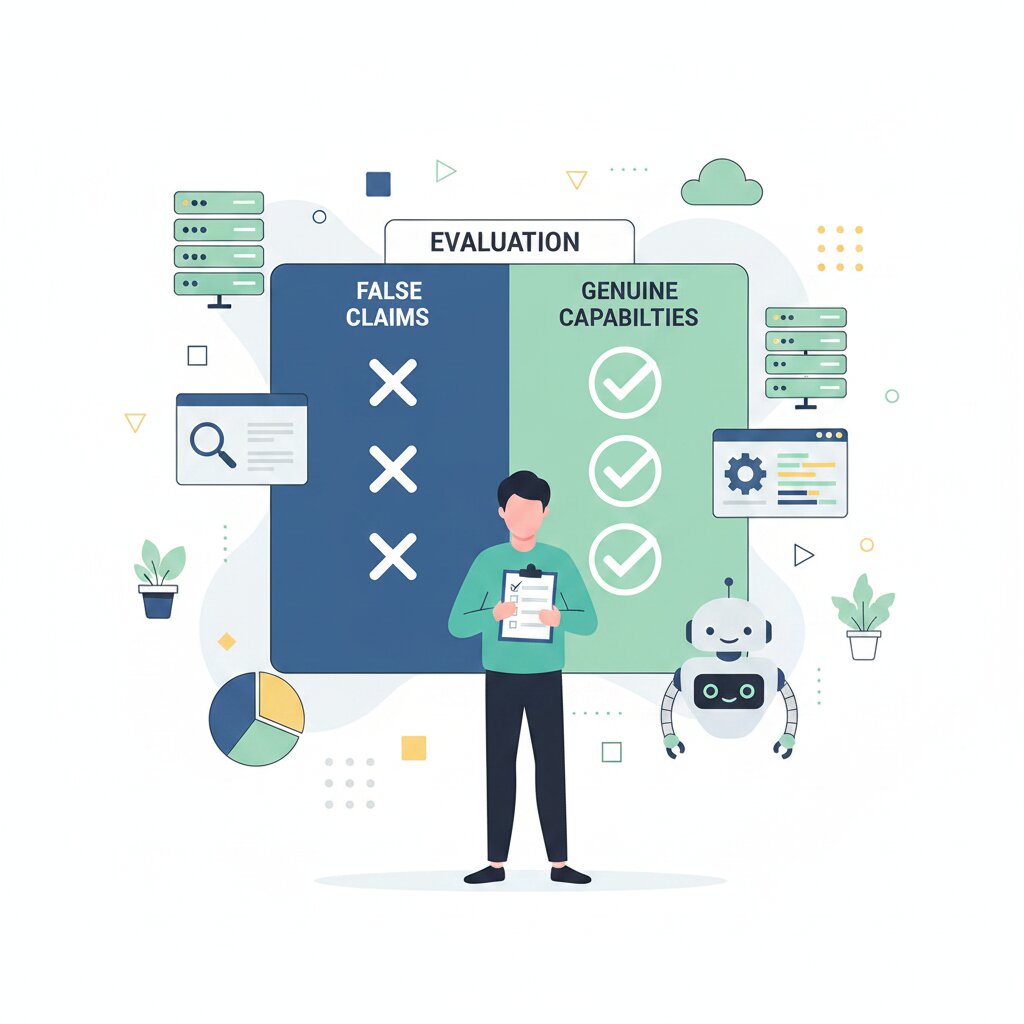
AI-washing is marketing a product as “AI-powered” when the AI is nonexistent, trivial, or a third-party model relabelled as proprietary intelligence. In incident management it takes three forms: summarising logs and calling it root cause analysis, applying pre-programmed decision trees and calling it autonomous reasoning, and invoking a general-purpose LLM API and describing the output as AI SRE.
Genuine AI SRE requires three observable capabilities: hypothesis formulation (generating specific candidate explanations for a failure), tool-calling against live telemetry (querying metrics, traces, logs, and deployment events to test each hypothesis), and evidence synthesis (a root cause conclusion with source citation and a specific remediation). A genuine AI SRE correlates recent deployments with error spikes and generates an environment-specific fix PR. A generic feature that summarises chat logs saves five minutes of reading. That is not the same thing.
Ask the vendor to walk through a real incident — not a prepared demo — and show you the hypotheses generated, the telemetry queried, and the specific evidence cited in the root cause. Vendors with real AI give specific numbers. Vendors without it give adjectives. Ask what happens when the incident matches no known pattern. Ask how hallucinations are mitigated in production. Ask which agent observability tools — LangSmith, Galileo AI, AgentOps — the platform exposes so you can debug AI behaviour yourself.
A vendor with genuine AI answers with specifics: “We detected the causal pull request in 30 seconds.” A vendor selling AI-washing answers with adjectives: “Our proprietary AI engine leverages advanced machine learning to deliver intelligent insights.”
The three-tier capability spectrum used throughout this article:
- Tier 1 — Genuine AI SRE: Autonomous hypothesis testing, tool-calling against live telemetry, evidence synthesis with source citation. Platforms: incident.io, AWS DevOps Agent.
- Tier 2 — AIOps / Agentic Triage: ML-based event correlation, noise reduction, generative summaries, targeted diagnostics with human approval. Platforms: PagerDuty.
- Tier 3 — AI-Enhanced Workflow Automation: Configurable process automation with AI drafting assistance — post-mortems, runbook suggestions, alert grouping. Platforms: Rootly, FireHydrant.
Gartner’s 2025 rebranding of AIOps as “Event Intelligence Solutions (EIS)” confirmed that most vendors still operate in the correlation-and-context tier, not genuine autonomous investigation. The same framework applies to guardrail evaluation; see the guardrail depth to look for in any platform.
Which Platforms Have Genuine Autonomous Investigation Capability?
Tier 1 — Genuine AI SRE
incident.io coined “AI SRE” as a product category and carries the deepest evidence base. Its AI handles up to 80% of incident response autonomously — connecting telemetry, code changes, and past incidents to surface root causes. Customer results: Favor −37% MTTR; Buffer −70% critical incidents. Pricing: $15/user/month (Team), $25/user/month (Pro). Slack-native architecture.
AWS DevOps Agent is built on Amazon Bedrock AgentCore with a three-tier skill hierarchy. Its topology intelligence maintains a live dependency graph across resources, alarms, metrics, and log groups. Customer results: WGU reduced resolution time from ~2 hours to 28 minutes; Zenchef traced a code regression in 20–30 minutes versus 1–2 hours manually. The lock-in caveat: capability is concentrated in AWS-native environments. Teams with multi-cloud or tool-agnostic architectures should weigh this tradeoff before committing.
OpsWorker and Resolve AI are Tier 1 alternatives for tool-agnostic architectures. OpsWorker coordinates specialised agents (logs, metrics, runbooks) through a supervisor layer, without cloud lock-in. Resolve AI performs parallel hypothesis testing drawn from extracted tribal knowledge.
Tier 2 — AIOps / Agentic Triage
PagerDuty has 700+ integrations and enterprise-grade governance. Its SRE Agent introduces agentic triage — detecting and triaging incidents, running diagnostics, and proposing remediations with cited evidence. Honest classification: Tier 2, not autonomous AI SRE. Best for large enterprises where integration breadth and compliance posture outweigh the need for autonomous RCA.
Tier 3 — AI-Enhanced Workflow Automation
Rootly is Slack-native and deeply configurable with a free tier. Its AI Co-Pilot provides root cause suggestions and post-mortem drafts — assistance, not autonomous investigation. Best for teams wanting codified workflow processes.
FireHydrant is service-catalog-driven, using explicit dependency mapping as context for AI-assisted runbooks. Best for complex microservice architectures where service ownership visibility is the primary pain.
For a stress test of each tier’s claims against real production failure modes, see how each platform handles production failure modes.
How Do You Choose Based on Team Size and SRE Maturity?
Team size and SRE maturity determine which capability tier a team can absorb, not just afford. The most common mistake: selecting for maximum capability without the prerequisite infrastructure — structured observability, consistent service naming, deployment timestamp correlation — the AI needs to function.
SMB developer-SREs (≤50-person engineering team)
At this scale, engineers wear the SRE hat alongside development work. When incident.io creates a Slack channel, pages on-call, and starts capturing the timeline in under two minutes — versus 15 minutes of manual coordination — the ROI is immediate.
Best fit: Rootly free tier to establish process discipline, or incident.io Team ($15/user/month) for genuine AI investigation. A 20-person team pays approximately $3,600/year all-in.
Prerequisite gate: structured JSON logs, four golden signal metrics, distributed traces. Without these, even a Tier 1 platform cannot do autonomous investigation.
Growing SMBs (50–200 engineers)
On-call rotations are formalising and alert fatigue is becoming a burnout risk. At 100 incidents per month with 12 minutes of coordination overhead each, that is 20 hours of engineering time lost to logistics monthly. AI-powered coordination recaptures that.
Best fit: incident.io Pro ($25/user/month) with on-call add-on. FireHydrant if complex microservice architecture and service ownership visibility is the primary pain. Avoid PagerDuty at this scale unless protecting an existing contract — the AI add-ons are expensive and the autonomous investigation depth does not justify the premium.
Scaling organisations (200–500 engineers)
Enterprise tooling integration — ServiceNow, Datadog, GitHub, JIRA — becomes non-negotiable. Best fit: incident.io at scale for multi-cloud or tool-agnostic infrastructure; AWS DevOps Agent for predominantly AWS-native environments; PagerDuty for organisations with complex enterprise escalation hierarchies or compliance-driven audit trail requirements.
Reactive teams should not adopt Tier 1 AI SRE before structured observability and runbooks are in place. Shadow mode — AI observes incidents for 30 days without taking action — is the bridge strategy.
Annual costs for 50 users: PagerDuty Business with required add-ons runs to approximately $32,600. incident.io Pro comes in at around $27,000. incident.io Team at $15,000 suits teams where on-call scheduling complexity is low. Legacy platforms consistently advertise base pricing that excludes features teams actually need — always get the all-in TCO.
What Is the OpsGenie Sunset and Why Does Platform Lock-In Matter Now?
Platform capability and team fit are only two of three evaluation dimensions. The third is exit risk.
On 5 April 2027, Atlassian will sunset OpsGenie. Every OpsGenie user faces mandatory migration to Jira Service Management — a heavyweight ITSM platform designed for service desk workflows, not SRE velocity. This is the most visible current example of platform lock-in: switching costs so high that teams cannot exit even when the platform no longer serves their needs.
If you are on OpsGenie: incident.io is the fastest migration path (operational in 2–4 weeks); Rootly is best for teams needing to preserve extensive automation configuration. Either way, treat the forced migration as a strategic opportunity to evaluate the entire category rather than defaulting to JSM.
AWS DevOps Agent as the current-generation lock-in case: the 75–77% MTTR reductions in preview data are real; the migration cost when architecture changes is also real. Teams with multi-cloud or tool-agnostic architectures should weigh this tradeoff before committing.
MCP (Model Context Protocol) support is a forward-compatibility signal. Ask which MCP servers are supported and whether your observability stack connects via MCP or proprietary connectors. MCP is a forward-compatibility criterion, not a capability tier indicator.
Before signing any multi-year contract: ask how you export incident history, runbooks, and alert routing rules in machine-readable format — and whether that is self-service via API or requires a support ticket. Self-service export is the mark of a vendor confident in its own retention. OpsWorker’s tool-agnostic architecture is the reference model for avoiding lock-in.
When Does Building Your Own AI SRE Agent Make Sense?
Building a custom AI SRE agent using LangGraph is technically feasible, and many engineering teams will consider it. The build-vs-buy calculation is less favourable than it appears.
The case for building: full control over tool integrations, no vendor lock-in, customisable to unusual stacks (non-Kubernetes, heavy Lambda or Cloud Run, proprietary internal tooling).
The case against: the maintenance burden is real and ongoing — prompt engineering, tool-calling failure rate management (3–15% in production), guardrail engineering, agent observability instrumentation, and incident data pipelines are all permanent team responsibilities. A four-agent system costs approximately 15x more to operate than a simple chat implementation. Buying takes weeks; building takes 6–24 months.
When DIY makes sense: 10+ engineers with one dedicated to ongoing maintenance; an unusual stack no managed platform integrates well; mature observability already in place.
When DIY does not make sense: production-grade reliability needed within weeks; constrained engineering capacity; the goal is reducing on-call toil, not building AI systems.
The phased adoption pattern applies regardless of build-or-buy: shadow mode (30 days, no actions) → advised (AI recommends, engineers execute) → approved (AI executes with human approval) → autonomous (bounded, reversible actions within guardrails). See where each platform fits in the AI SRE landscape for the multi-agent supervisor patterns that underpin this progression.
What Should Be on Your Evaluation Checklist Before Committing to a Platform?
Here are the 10 questions to take into any vendor demo. Each maps to a specific evaluation risk.
Questions 1–3 — AI-washing test:
- Can you show me the full investigation reasoning chain for a real incident — not a curated demo? Show me the hypotheses generated, the live telemetry queries executed, and the specific evidence cited in the root cause.
- What are your precision and recall numbers for root cause analysis? Provide a sample size and define whether MTTR is measured from detection to mitigation, resolution, or post-mortem close.
- Does your AI formulate and test hypotheses against live telemetry, or apply pre-programmed rules? What happens when no known pattern matches?
A vendor who cannot answer these with specific numbers is almost certainly selling AI-washing.
Questions 4 and 6 — Guardrail depth and agent observability (see the guardrail depth to look for in any platform):
- What specific hallucination guardrails are in place? Ask about structured output enforcement and cross-validation — not prompt instructions alone.
- Which agent observability tools (LangSmith, Galileo AI, AgentOps) does your platform expose for debugging AI behaviour in production?
Questions 5, 8, and 9 — Lock-in risk:
- Does your platform support MCP for tool integration? Are my observability stack connections via MCP or proprietary connectors?
- What is your multi-cloud support model — can agents operate identically across AWS, Azure, and GCP?
- How do I export incident history, alert routing rules, and runbooks in a portable format if I need to migrate? Is this self-service via API?
Question 7 — TCO transparency:
- What is the full annual cost for our team size including base subscription, on-call, status pages, AI add-ons, and API access?
Question 10 — Platform reliability:
- What are your SLO commitments for the platform itself, and how do you handle your own incidents?
For each platform’s specific failure modes under production load, see how each platform handles production failure modes. Once vendor selection is complete, how vendor selection feeds your pilot budget and TCO translates the platform choice into a concrete pilot plan.
Frequently Asked Questions
Is PagerDuty’s AI offering genuine AI SRE or just AIOps?
Accurate classification: Tier 2 (AIOps + Agentic Triage). PagerDuty’s SRE Agent runs targeted diagnostics and proposes remediations with cited evidence — agentic triage with memory, not autonomous hypothesis testing at the depth of incident.io. Most valuable for large enterprises where integration breadth (700+ integrations) and compliance posture outweigh the need for autonomous RCA.
Should I wait for the AI SRE market to mature before committing to a platform?
Waiting means elevated on-call toil in the meantime. Teams on OpsGenie do not have the option to wait — the migration decision is forced by April 2027. Mitigation: start a 30-day shadow mode evaluation now with no commitment — observe AI-assisted incidents against your own MTTR baseline before deciding.
Can I run incident.io alongside AWS DevOps Agent?
Best architecture: designate AWS DevOps Agent as the infrastructure investigation layer for AWS-native alerts, and route findings into incident.io for communication and post-mortem capture. Most teams choose one primary platform; the hybrid suits organisations with strong AWS-native infrastructure that still need tool-agnostic coordination.
What does MCP support actually mean for platform longevity?
MCP (Model Context Protocol) is an open standard — “USB-C for AI” — for connecting agents to external tools. A platform supporting MCP can add new integrations as they emerge without proprietary connector work, reducing switching costs over time. Ask which MCP servers are supported today and whether your observability stack connects via MCP or proprietary connectors. MCP support alone does not indicate AI SRE capability — evaluate capability tier first.
What is the real cost difference between incident.io, PagerDuty, and Rootly for a 50-person team?
Annual all-in costs: PagerDuty ~$32,600; incident.io Pro ~$27,000; Rootly Essentials + add-ons ~$24,000–26,000; incident.io Team ~$15,000. Always request the all-in TCO for your actual use case — base pricing across all platforms excludes features most SMB engineering teams require.
How do I evaluate whether a platform’s MTTR reduction claims are real?
Ask for customer-specific data with sample sizes and a precise MTTR definition. Request case studies from organisations similar in size and stack. Run shadow mode for 30 days and measure your own baseline — no vendor claim replaces your own data. Check whether MTTR figures include coordination time or only technical investigation time.
What is the risk if I adopt an AI SRE platform and then want to migrate away?
Migration risk is proportional to how deeply your alert routing rules, runbooks, and on-call policies are encoded in the vendor’s proprietary format. Before signing, request a data export walkthrough — incident history, runbooks, alert routing, on-call schedule history — and prefer self-service API export over support ticket. The OpsGenie sunset is the cautionary example: teams now face a complex migration with no clean portability path.
Is a Slack-native platform always better than a web-first platform?
Slack-native wins for teams where incident response is decentralised and coordination already happens in Slack — the ~12-minute coordination tax elimination per incident is real and measurable. Web-first (PagerDuty) is better for complex enterprise escalation hierarchies or compliance-driven audit trails that must live outside a chat tool.
How do I prevent an AI SRE agent from taking destructive actions during an incident?
Start in shadow mode and configure the agent to recommend remediations, not execute them, until it has proven its RCA accuracy. Apply minimum necessary privileges — read access to observability tools and write access only to reversible actions. Use SLO guardrails as a hard control gate: depleted error budget should trigger human escalation, not autonomous action. See the guardrail depth to look for in any platform for the full safety architecture.
What observability tooling do I need before adopting an AI SRE platform?
Minimum viable: structured JSON logs with consistent field naming, the four golden signal metrics (latency, traffic, errors, saturation), and distributed traces across service boundaries. Also needed: consistent service naming, deployment timestamps correlated with incident timelines, and a service catalog mapping service relationships. Platforms that integrate with your existing stack (Datadog, Prometheus, Grafana, New Relic) via native APIs are preferable to those requiring telemetry migration before evaluation begins.