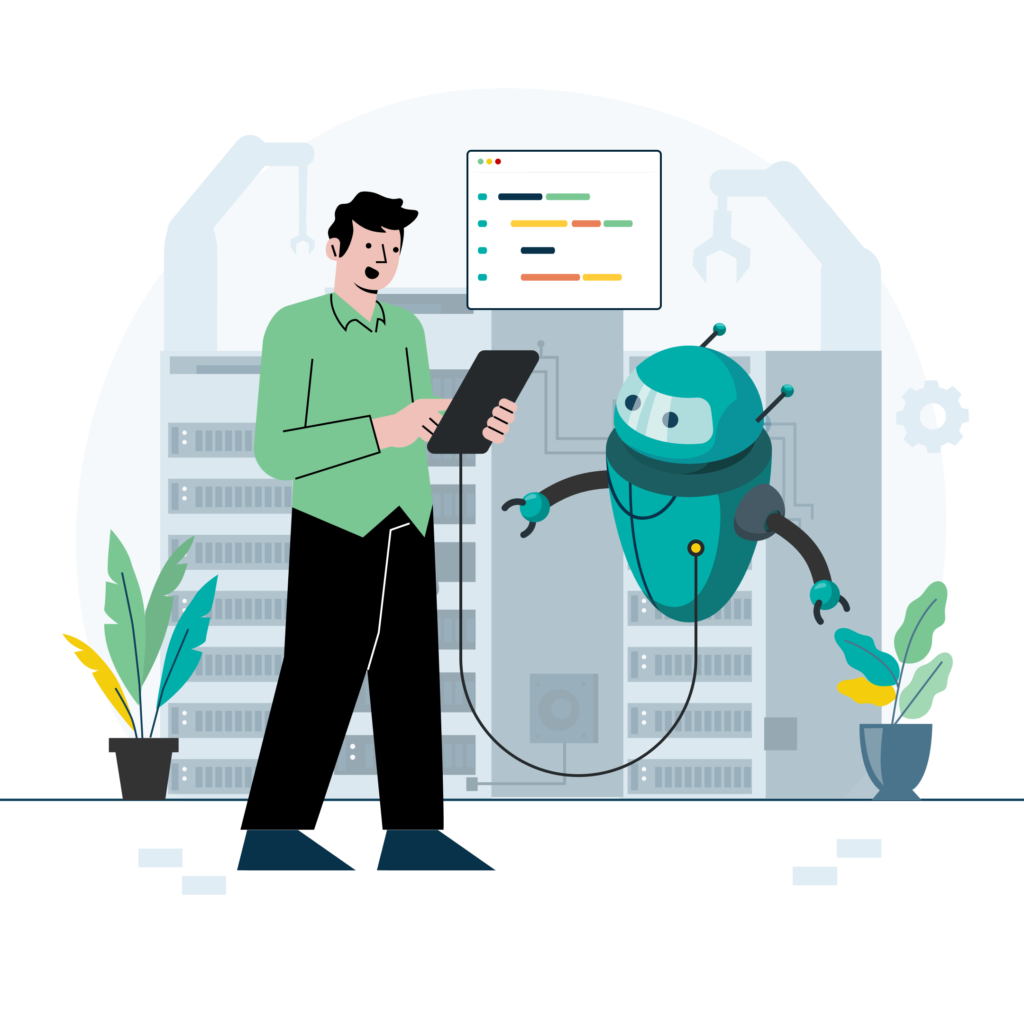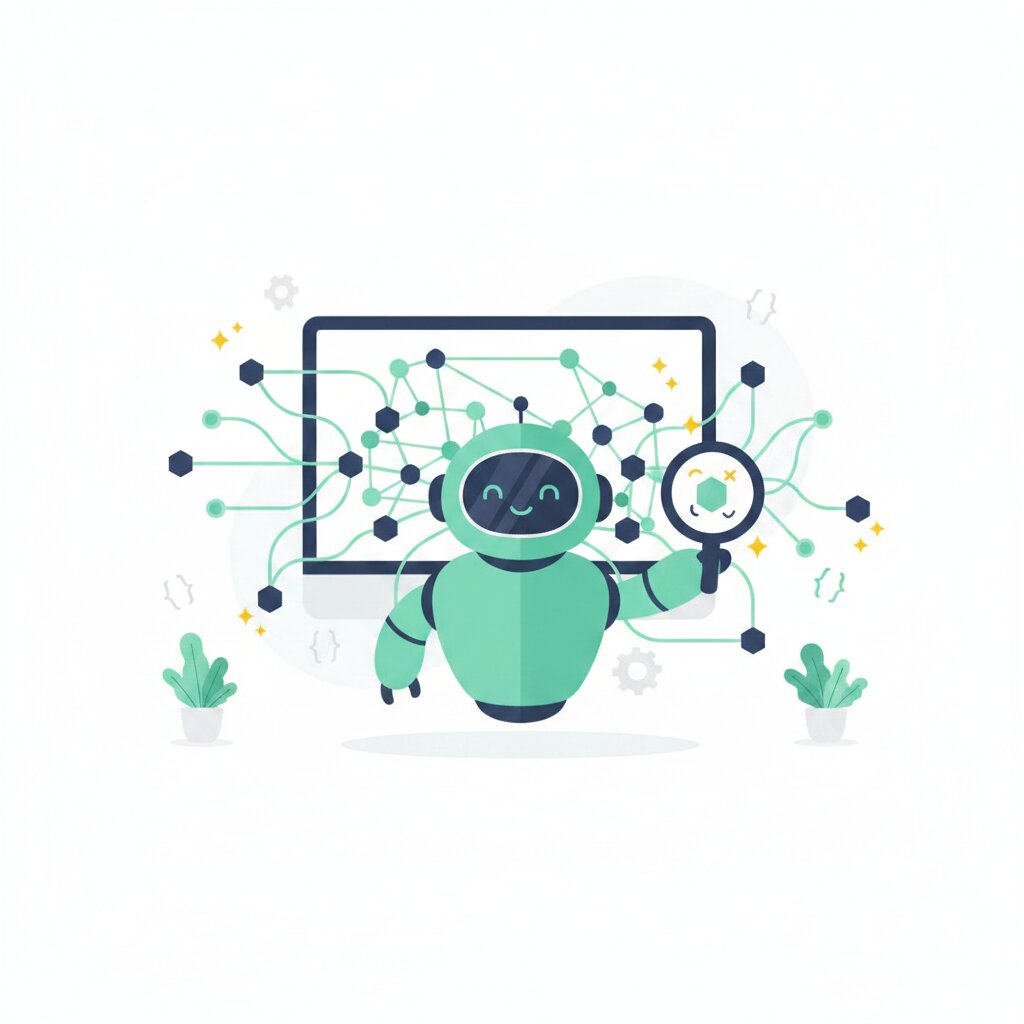

In April 2026, Sundar Pichai said something worth reading slowly: “Search would be an agent manager.” Not a faster search engine — a platform that orchestrates AI agents to complete tasks on behalf of users, rather than returning links for humans to follow.
This is the second-order disruption that the AI search zero-click crisis set in motion. The first-order disruption was AI answering queries for humans. The second-order: the searcher is no longer human. AI agents are doing the searching, the evaluating, and the transacting — and when the searcher is a machine, optimisation changes with it.
Three infrastructure shifts define what that actually means. WebMCP (Web Model Context Protocol) turns websites from passive sources into callable tools. Google-Agent is a user-triggered fetcher already sending traffic to your site since March 2026 — invisible in your analytics. And the Universal Commerce Protocol (UCP) lets AI agents complete checkout within Google’s surfaces without a user ever visiting your website.
When AI Agents Are the Searcher, What Changes About Optimisation?
When a human searches, they click, dwell, and bounce. When an AI agent searches, none of that happens. It calls functions, extracts data, completes actions, and reports back. There is no click to measure.
So the things that matter for optimisation are completely different. Structured data completeness and entity graph resolution matter more than keyword density. API surface and callable endpoints matter more than page design. Machine-readable pricing matters more than persuasive copy.
This creates a two-audience problem. GEO and AEO remain necessary — human users still exist and still search. But the infrastructure layer now needs to serve a second audience with entirely different requirements.
Three dimensions organise the challenge: discoverability (can the agent find your platform?), accessibility (can it extract what it needs?), and actionability (can it complete the task without human intervention?). Most organisations are still working through the first two. Actionability is where agentic infrastructure actually begins.
What Is WebMCP and How Does It Change the Relationship Between Websites and AI Agents?
WebMCP (Web Model Context Protocol) is a proposed web standard co-developed by Google and Microsoft engineers through the W3C. It was previewed in February 2026 and is currently available in Chrome Canary behind a feature flag — not in Chrome stable as of May 2026.
Here is the practical shift. Instead of scraping your page and inferring structure, an AI agent can call a defined function on your site and get a structured result back — the same way a developer calls an API. Your website goes from something an agent interprets to something an agent uses directly.
In practice, a WebMCP-enabled pricing page exposes a capability an agent can query with specific parameters and get a machine-readable response. Same goes for demo requests, documentation search, and feature lookups. The B2B scenarios the standard is targeting include industrial quoting, vendor qualification, and wholesale ordering.
WebMCP is not retrofit-friendly. Design what you would expose now, and implement when Chrome stable ships. That is on a 12-month horizon. For how GEO and AEO disciplines apply when the searcher is an AI agent, the entity and structured data work required for human-facing AI search and agent-facing discovery converge at the same foundation.
What Is Google-Agent and Why Is It Invisible in Your Analytics?
Google-Agent was added to Google’s official fetcher list on March 20, 2026. It is not a crawler — it is user-triggered. When a human directs an AI agent to complete a task, Google-Agent may visit your site as part of executing it.
There are a couple of things about it that will surprise you. First, it ignores robots.txt. Google classifies it as “user-triggered,” which puts it outside the scope of the robots.txt protocol — so conventional blocking does not work. Second, it does not appear in your analytics. Google-Agent does not execute JavaScript, produces no standard session signals, and does not match bot-detection patterns. Your site is already receiving this traffic. It is not in your dashboards.
What to do about it: audit your server logs for the Google-Agent user-agent string — not GA4. Cloudflare logs and Microsoft Clarity’s Bot Activity report provide ongoing monitoring. And keep this in mind: Google-Agent does not render JavaScript and does not retry on timeout, so critical content needs to be in raw HTML with sub-second response times. For how ranking in AI responses differs for agent-facing content — including what the empirical data shows about the content characteristics that predict citation when an agent is the retriever — the evidence picture is meaningfully different from traditional SERP ranking.
What Is the Universal Commerce Protocol and What Does Agentic Checkout Mean for Product Discovery?
The Universal Commerce Protocol (UCP) is an open standard launched at the National Retail Federation conference in January 2026, co-developed by Google and Shopify, with Etsy, Wayfair, and Target as founding partners. By April 2026, Amazon, Meta, Microsoft, Salesforce, and Stripe had joined.
What it actually enables: AI agents can discover products, negotiate fulfilment conditions, and complete checkout within Google’s surfaces — without the user visiting the merchant’s website. The Shopping Graph is the product data layer. UCP is the commerce equivalent of WebMCP: where WebMCP lets agents call website functions, UCP lets agents complete purchases.
It is live with B2C commerce partners. Not yet live for B2B SaaS as of May 2026 — so plan for it, do not implement it yet.
The planning implication is worth sitting with. Pricing written as narrative copy is invisible to agent-mediated discovery. An agent evaluating SaaS vendors queries a structured data source and returns a ranked result. No queryable pricing data means no appearance in that comparison. The same gap applies to demo flows — an agent expects a structured endpoint, not a form.
What Does Pichai’s “Agent Manager” Vision Actually Mean for Web Infrastructure?
Pichai named 2027 as “an important inflection point” and estimated only 0.1% of the world is living this future today. 2026 is the diffusion year. He also confirmed that Antigravity — Google’s internal agent orchestration platform, formerly called Jet Ski — had already been deployed to the Search team. Not a consumer announcement; an internal infrastructure signal pointing in one direction.
The vision produces a three-layer stack you need to be building toward.
The Knowledge Graph is the entity layer. If you are not a resolved entity there, AI agents cannot surface you in response to category queries — you do not enter the candidate pool, regardless of content quality.
The Shopping Graph is the product layer. Merchant Center accuracy and attribute completeness are now agent-discoverability prerequisites, not just advertising inputs.
WebMCP and UCP are the capability layer — turning your web presence from a passive source agents scrape into an active resource agents invoke.
All three layers: discoverable, accessible, actionable. Miss layer one and you are invisible, full stop.
What Does Agentic Search Mean for B2B SaaS, FinTech, and HealthTech Specifically?
The agentic search conversation has been dominated by B2C e-commerce. The B2B implications are the gap — and they are structural. BrightEdge data shows AI Overviews appear on 82% of B2B technology queries. The pressure is already here.
Pricing page architecture. Most B2B SaaS pricing pages are optimised for human persuasion — deliberate friction, no public enterprise pricing, “contact us” CTAs. When an agent evaluates vendors, a page that requires human navigation is not evaluated. It is skipped.
Documentation discoverability. HealthTech and FinTech platforms carry extensive technical documentation. Under agentic search, this becomes an agent-callable resource — but only if it is structured at the passage level. Q&A format and declarative section headings with self-contained answers perform best. Dense prose does not. For documentation teams, this is a structural rewrite.
Entity graph as prerequisite. For an agent to surface a B2B SaaS platform in response to a category query, the platform must be a resolved Knowledge Graph entity. No resolution means no candidate pool entry — binary. Organisation schema, consistent brand descriptions across LinkedIn, G2, Crunchbase, and Wikipedia. Months of work, and you need to start now.
FinTech regulatory overlay. Agent-readable pricing data must also satisfy compliance requirements around financial product disclosure. That is legal and infrastructure coordination from the architecture phase.
What Is Actionable Now vs. What to Plan for in 12-18 Months?
Three tiers, no false urgency.
Tier 1: Do this now
Audit your server logs for the Google-Agent user-agent string — not GA4. Set up Cloudflare log monitoring or Microsoft Clarity’s Bot Activity report as ongoing metrics.
Audit your Knowledge Graph entity status. No Knowledge Panel means starting with Organisation schema, a consistent brand presence across LinkedIn, G2, Crunchbase, and Wikipedia, and sameAs links.
Review your pricing pages and documentation for passage-level extractability. Each H2 should work as a standalone, declarative answer. That is immediate GEO and AEO value, and it is the groundwork for agent-readiness at the same time.
Tier 2: Design work (~12-month horizon)
Enable the WebMCP feature flag in Chrome Canary and get across the API. Identify which functionality your platform would expose as callable tools. Design the interface. Do not ship yet.
Tier 3: Plan for it (12-18 months)
Read the UCP specification at ucp.dev. Design machine-readable, parameter-queryable pricing structures. Build the agent-callable demo endpoint alongside your existing human-facing form — both audiences, one infrastructure.
Pichai named 2027 as the inflection year. The preparation window is 2026.
Frequently Asked Questions
What is WebMCP in plain terms?
WebMCP (Web Model Context Protocol) is a web standard that lets websites expose functions as callable tools for AI agents. Instead of scraping your page, an agent calls a defined function and gets structured data back. It is available in Chrome Canary now; stable availability is expected within 12 months.
Is Google-Agent the same as Googlebot?
No. Googlebot is Google’s traditional scheduled web crawler. Google-Agent, added March 20, 2026, is user-triggered — it visits when a human directs an AI agent to complete a task. It ignores robots.txt. You cannot block it through conventional means.
Do I need to implement WebMCP right now?
Not in production. WebMCP is only in Chrome Canary and still evolving. Understand the API, identify what callable functionality you would expose, and design the architecture now to avoid a costly retrofit later.
Is the Universal Commerce Protocol relevant to B2B SaaS?
Not yet live for B2B. UCP launched with B2C partners in January 2026. Start designing machine-readable pricing and capability data structures now so you are ready when the B2B layer activates. The spec is public at ucp.dev.
Why does Google-Agent not appear in my Google Analytics?
Google-Agent does not execute JavaScript — which is how GA4 collects data. The only reliable detection method is server log analysis, filtering for the Google-Agent user-agent string.
If AI agents are searching for me, how do they know my company exists?
Through the Knowledge Graph. If your company is not a resolved entity there, AI agents cannot reliably surface it. Building Knowledge Graph presence requires consistent Organisation schema, accurate brand descriptions, and third-party presence on G2, Crunchbase, LinkedIn, and Wikipedia. It takes months.
What is Antigravity and how does it relate to Google Search?
Antigravity (formerly Jet Ski) is Google’s internal agent orchestration platform, deployed to the Search team before Pichai’s April 2026 interview. It is the internal model for what consumer Search becomes — a platform that manages agents rather than returns links.
How is agentic search different from AI Overviews?
AI Overviews synthesise information for a human who decides what to click. Agentic search uses AI agents to execute tasks on a human’s behalf — the agent searches, evaluates, and acts. The optimisation requirements differ because the agent is not deciding what to click; it is completing a task.
Should I block Google-Agent in robots.txt?
Blocking Google-Agent in robots.txt has no effect — it ignores robots.txt by design. Audit your baseline traffic via server log analysis and understand what it is accessing before making any policy decisions.
What does the “agent manager” vision mean for organic search traffic?
Organic traffic — a human clicking a result and landing on your page — becomes a smaller proportion of total search-driven value. The agent executes the task without a click. Attribution models built on click-based traffic will increasingly misrepresent your web presence’s actual value.
How does the Shopping Graph relate to the Universal Commerce Protocol?
The Shopping Graph is Google’s product and merchant database. UCP uses it as its product data source. Shopping Graph accuracy and completeness is a prerequisite for UCP participation, not an afterthought.
This article is part of the broader shift from human to machine search interfaces documented across this cluster. For the optimisation disciplines that underpin agent-ready content — structured data, entity building, and passage-level extractability — see the companion piece on AEO and GEO. For how ranking in AI responses differs when the searcher is an agent rather than a human, see Ranking in AI Responses.