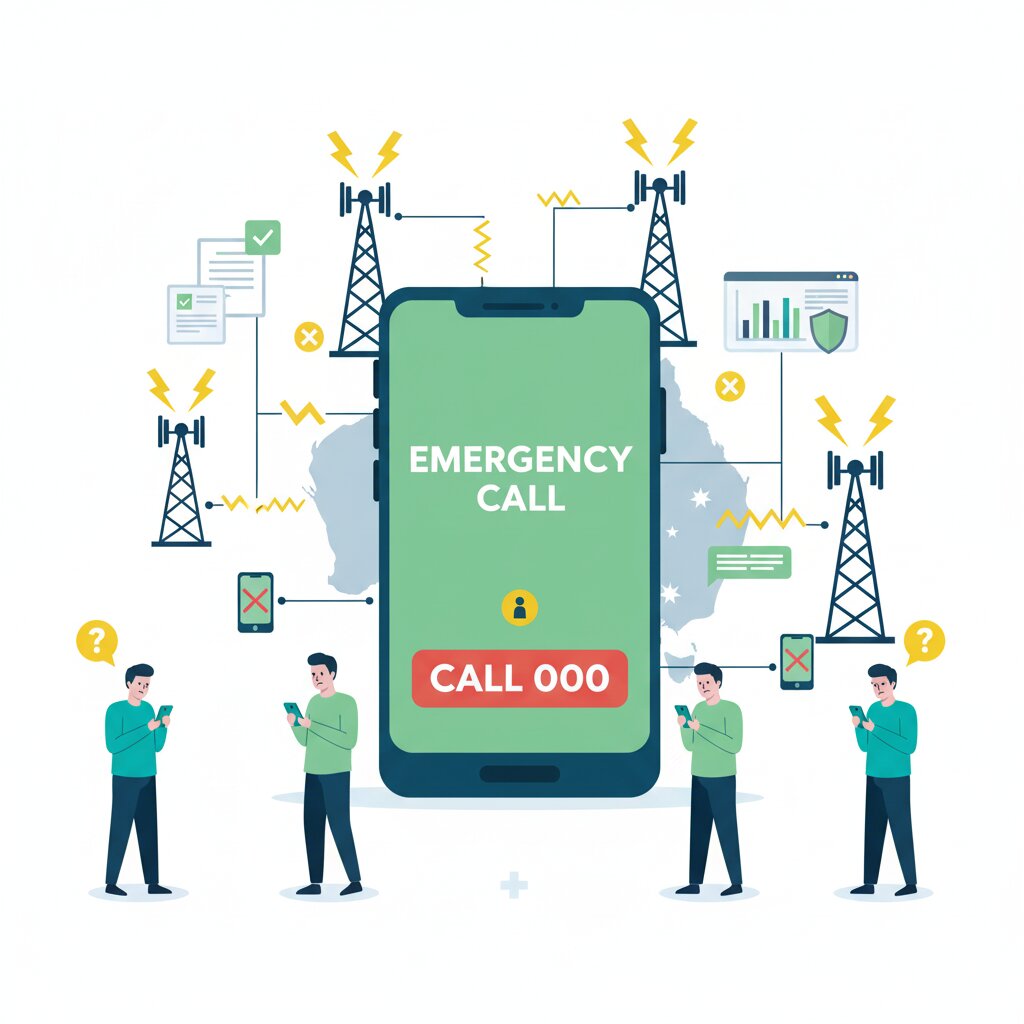
Why Australian Telecommunications Failed When Lives Depended on It and What Happens Next
A TPG Telecom customer died when their Samsung phone couldn’t connect to Triple Zero in November 2025. This wasn’t an isolated incident. The September 2025 Optus outage prevented over 600 emergency calls from connecting and was linked to three deaths. Telstra identified more than 70 Samsung models that cannot make emergency calls on alternative networks when their primary carrier fails.
These aren’t just technical failures. They’re preventable deaths caused by systemic problems spanning device firmware, carrier operations, and regulatory oversight. Some Samsung phones have hardcoded firmware settings that cannot be fixed, requiring hardware replacement. Network outages that should have triggered automatic failover to alternative carriers left customers stranded with no way to reach emergency services. Testing protocols failed to detect these defects despite devices being sold since 2020.
Whether you’re checking if your phone can safely call Triple Zero, managing device fleets, or understanding what government intervention means for telecommunications reliability, this crisis has implications for everyone. The scope affects tens of thousands of devices, multiple carrier failures, new regulatory powers, and operational changes across the industry.
This guide provides comprehensive coverage of the Australian telecommunications public safety crisis. You’ll find technical explanations of why emergency calls failed, analysis of regulatory responses including the new Triple Zero Custodian role, operational case studies of carrier responses, practical guidance for checking device safety, and strategic lessons for enterprise fleet management.
What Happened with the Australian Telecommunications Public Safety Crisis?
Australia experienced a systemic telecommunications emergency calling crisis between November 2023 and November 2025 involving multiple failure modes. Network outages prevented emergency calls from connecting, causing at least three deaths during the September 2025 Optus outage. Separately, firmware defects in 71+ Samsung device models prevented emergency calls from routing to alternative networks when primary carriers failed. A TPG customer died in November 2025 after their Samsung phone could not connect to emergency services, triggering regulatory intervention and creating the new Triple Zero Custodian oversight role.
The crisis unfolded across three distinct failure patterns. Complete network outages struck Optus in November 2023 and September 2025, blocking all emergency calls regardless of device. Device firmware defects prevented automatic failover to alternative carriers—when a customer’s primary network was unavailable, their Samsung phone should have roamed to any available network for emergency calls, but hardcoded settings prevented this. Carrier non-compliance with emergency calling regulations left customers vulnerable during critical incidents, with some carriers taking over a year to identify and notify affected customers.
The September 2025 Optus outage resulted in over 600 failed emergency calls and was linked to three deaths. These preventable fatalities demanded immediate government intervention beyond reactive fines after failures occurred.
Systemic vulnerabilities emerged during the 3G network shutdown. The planned decommissioning of 3G networks revealed that thousands of devices could not make emergency calls on newer 4G and 5G networks. Devices that relied on 3G for emergency connectivity lost this capability, while VoLTE-compatible devices with firmware defects could not failover to alternative carriers when their primary network failed. The migration exposed cascading failures in device testing, carrier certification, and regulatory oversight that had remained undetected since 2020.
If you need to understand the technical causes of these failures, read our detailed analysis of how VoLTE firmware failures block emergency calls. If you’re concerned about your own device’s safety, check our guide on whether your Samsung phone is safe to call Triple Zero.
How Did VoLTE Firmware Defects Prevent Emergency Calls from Connecting?
Samsung firmware defects in 71+ device models hardcoded network selection settings that prevented emergency call failover to alternative carriers. When a device’s primary carrier network failed or became unavailable, the firmware should have allowed roaming to any available network for emergency calls. Instead, hardcoded carrier identifiers locked devices to their primary network even during complete outages. Because these settings exist in read-only firmware partitions, software updates cannot fix affected devices, requiring hardware replacement for some models.
VoLTE emergency calling depends on dynamic network selection. Modern 4G and 5G emergency calls use Voice over LTE technology, which requires devices to register with a carrier’s IMS (IP Multimedia Subsystem) infrastructure. When the primary carrier network is unavailable, devices should automatically scan for and connect to alternative carriers for emergency calls only. This failover mechanism is mandated by Australian regulations but depends on correct firmware implementation in every device.
Hardcoded carrier settings created single points of failure that industry experts described as “highly irregular” and even “unheard of” in mobile engineering circles. Samsung firmware on affected devices contained hardcoded Mobile Country Code (MCC) and Mobile Network Code (MNC) values that prevented roaming to alternative networks. Testing by Telstra identified that these devices could not connect to the Vodafone network for emergency calls even when Vodafone coverage was available. The hardcoded settings exist in firmware partitions that cannot be modified through over-the-air updates, making some devices permanently incapable of emergency call failover.
Standard carrier testing protocols failed to detect the defects because they focused on normal operating conditions. Carriers typically test devices on their own networks when everything is working properly. The Samsung firmware defects only manifested when the primary carrier network was unavailable and the device needed to roam to an alternative network—a scenario not routinely tested. This gap in testing protocols allowed non-compliant devices to be certified and sold to customers since 2020, creating widespread public safety risk that remained undetected until fatal failures occurred.
For a complete technical explanation including VoLTE architecture, firmware configuration hierarchy, and why hardcoded settings prevent fixes, read our deep dive on VoLTE firmware failures and unfixable Samsung phones. If you manage device fleets and need to understand testing implications, see our enterprise fleet management lessons.
What Are Telecommunications Carriers’ Legal Obligations for Emergency Services?
Australian telecommunications carriers must ensure devices can connect to emergency services under the Emergency Call Service Determination, enforced by ACMA. Carriers must notify customers within 30 days if their devices cannot make emergency calls, block non-compliant devices from networks, and maintain emergency calling capability during network failures through multi-operator core network failover mechanisms. Amendments enacted in November 2025 mandate facility wilting protocols that automatically release customers to alternative carriers during outages. Maximum penalties for non-compliance increased from $250,000 to $30 million.
Carriers face cascading notification obligations during major outages. The Telecommunications Customer Communications for Outages Industry Standard requires carriers to notify customers, other carriers, emergency service providers, and regulators within specific timeframes based on outage scale. Major outages affecting 100,000+ services for 60+ minutes trigger immediate notification requirements. Regional and remote areas have lower thresholds—1,000+ services for regional areas, 250+ for remote areas—recognising their higher vulnerability to telecommunications disruptions.
Device blocking powers enforce emergency calling compliance. Under the Triple Zero Rules, carriers must block devices from their networks if those devices cannot reliably connect to emergency services. Carriers must provide 28 days notice before blocking, allowing customers time to update firmware or obtain replacement devices. This enforcement mechanism aims to remove non-compliant devices from service, though its effectiveness depends on carriers accurately identifying problematic devices and customers responding to notifications before the deadline.
New facility wilting requirements address systemic failover failures. Amendments to the ECS Determination enacted in November 2025 require carriers operating multi-operator core networks to implement facility wilting protocols. When network facilities lose connectivity to the core network, they must become unavailable to force customer devices to connect to alternative carriers. This addresses the root cause of emergency call failures where devices remained registered to failed networks instead of roaming to working alternatives.
For comprehensive analysis of the regulatory framework including the new Triple Zero Custodian powers, enforcement mechanisms, and international comparisons, read our detailed guide to Australia’s Triple Zero Custodian and government compliance powers.
What Is the Triple Zero Custodian and What Powers Does It Have?
The Triple Zero Custodian is a new independent oversight body created by the Telecommunications Legislation Amendment Act 2025 with proactive monitoring and intervention powers for emergency calling services. Unlike ACMA’s reactive enforcement role, the Custodian continuously monitors emergency call performance, can request ACMA investigations, and issues performance directions to carriers. However, the Custodian lacks independent enforcement authority and must refer violations to ACMA for penalties, creating questions about whether this two-tier structure provides sufficient accountability.
The Custodian was created in response to repeated carrier failures and regulatory gaps. The Optus November 2023 outage resulted in a $12 million ACMA fine but failed to prevent the September 2025 outage that killed three people. The TPG customer death in November 2025 revealed that reactive ACMA enforcement after failures was insufficient. The Custodian provides ongoing oversight to identify and address risks before they cause harm, representing a shift from punishment after failures to prevention before them.
Custodian powers focus on monitoring and coordination rather than direct enforcement. The Custodian can monitor emergency call service performance across all carriers, prepare for and coordinate responses to outage events, request ACMA to exercise regulatory powers including investigations and penalties, and issue performance directions to carriers specifying required improvements. This proactive monitoring enables earlier intervention, but the Custodian cannot directly impose penalties or force immediate carrier action without ACMA involvement, potentially creating delays during rapidly evolving crises.
International comparisons reveal variations in emergency calling oversight. The US Federal Communications Commission has direct enforcement authority over 911 services and can impose immediate corrective actions when carriers fail. European regulators under the European Electronic Communications Code have similar direct intervention powers. Australia’s bifurcated model with a monitoring Custodian and enforcement ACMA creates oversight redundancy but may complicate accountability when rapid responses are needed. Whether this structure proves more or less effective than international models remains to be seen.
For detailed regulatory analysis including the Custodian’s specific powers, ACMA enforcement capabilities, device blocking regulations, and international framework comparisons, read our comprehensive guide to Australia’s new Triple Zero Custodian and government enforcement powers.
How Have Telecommunications Carriers Responded Operationally to the Crisis?
Optus responded to repeated outages by insourcing 450 network operations staff previously outsourced to Nokia, aiming to improve control over critical infrastructure. Telstra conducted comprehensive device testing that identified 71+ Samsung models with emergency calling defects, demonstrating the testing rigour that other carriers lacked. TPG faces ongoing ACMA investigation for potential Triple Zero Rules violations. The operational responses reveal tensions between cost optimisation through outsourcing and reliability requirements for life-safety infrastructure.
Optus’s strategic shift from outsourcing to insourcing critical network operations followed the September 2025 outage linked to three deaths. The company decided to insource 450 roles, with 150 staff transferring from Nokia and 300 additional positions created. This reverses years of outsourcing network operations to reduce costs. The decision recognises that when network failures can cause deaths, maintaining direct operational control outweighs outsourcing cost savings. However, the transition period creates risks as institutional knowledge transfers from Nokia to Optus employees.
Telstra’s comprehensive device testing programme identified emergency calling defects that other carriers had not detected. This testing included scenarios other carriers had not examined—attempting emergency calls when the primary carrier was unavailable and failover to alternative carriers was required. Telstra’s findings exposed that other carriers had not tested emergency calling under network failure conditions, allowing non-compliant devices to be certified and sold since 2020.
Carrier responses highlight trade-offs between operational models and resilience. Optus’s insourcing increases costs but improves control over critical functions. Telstra’s enhanced testing requires more resources but identifies critical safety issues before they cause harm. TPG’s investigation exposes compliance failures and questions about when the company knew about affected devices. These responses demonstrate that ensuring emergency calling reliability demands significant operational investment beyond minimum regulatory compliance. Carriers must choose between lean operations optimised for cost and robust operations designed for life-safety requirements.
For a detailed case study of Optus’s insourcing decision including strategic analysis of outsourcing trade-offs and lessons for other organisations with critical infrastructure, read our examination of how Optus responded by bringing network operations in-house.
Which Samsung Phones Are Affected and How Can You Check Yours?
Telstra identified 71+ Samsung device models unable to make emergency calls via network roaming, including popular models across Galaxy S, A, and Z series. Affected devices have hardcoded firmware that prevents emergency call failover to alternative carriers during outages. The defect affects approximately tens of thousands of devices currently in use across Australia. Samsung released firmware updates for some models, but devices with read-only firmware partitions require hardware replacement. Customers should check Samsung’s official affected device list, verify their model and firmware version, and contact their carrier for specific guidance.
Affected devices span multiple Samsung product lines and price points. The 71+ models include flagship Galaxy S series, mid-range Galaxy A series, and foldable Galaxy Z series devices sold between 2020 and 2024. Multiple models across all product tiers are affected, with some requiring hardware replacement. A complete, updated list is maintained by Samsung and carriers. The widespread nature of the defect indicates a systemic firmware development issue rather than isolated errors in specific models.
Checking device status requires multiple verification steps. Customers must identify their exact device model through Settings → About Phone, check if that model appears on the affected device list published by Samsung and carriers, verify current firmware version, and confirm with their specific carrier whether updates are available. The same device model may have different firmware versions depending on which carrier sold it, and carrier-specific firmware may be updatable while unlocked firmware is not.
Consumer options depend on whether firmware can be updated. Devices that can receive firmware updates should be updated immediately through Samsung’s software update mechanism. Devices with hardcoded firmware that cannot be updated may be blocked from carrier networks under device blocking regulations, requiring customers to obtain replacement devices. Carriers have varying policies on providing free replacements—some offer subsidised upgrades while others require customers to purchase new devices at full cost. Customers have 28 days from carrier notification to update or replace their device before it is blocked from all Australian mobile networks.
For step-by-step instructions on checking your device, updating firmware, testing emergency call capability, and determining when replacement is necessary, read our complete consumer safety guide: Is your Samsung phone safe to call Triple Zero and how to check your emergency call capability.
What Should Organisations Managing Mobile Device Fleets Do?
Organisations should implement emergency calling verification as a mandatory procurement requirement, testing devices across multiple carrier scenarios including primary carrier failures. Vendor due diligence must include emergency calling compliance certification and firmware update commitments. Fleet management processes should track device emergency calling capability, monitor vendor security advisories for firmware defects, and maintain device replacement cycles that prevent critical infrastructure reliance on devices that cannot receive firmware updates. The crisis demonstrates that standard carrier certification is insufficient assurance.
Procurement processes must include emergency calling testing requirements beyond standard features and performance metrics. Standard device procurement focuses on features, price, and performance under normal conditions. Emergency calling capability should be a mandatory requirement verified through carrier-independent testing. Procurement specifications should require vendors to demonstrate emergency calling functionality when the primary carrier is unavailable, provide firmware update commitments for the device lifecycle, and disclose any hardcoded settings that could prevent emergency call failover.
Vendor risk management frameworks must assess life-safety implications that standard enterprise vendor management typically overlooks. Enterprise vendor management typically evaluates financial stability, delivery reliability, and support quality. For devices used in environments where emergency calling is critical, vendor assessment must include safety engineering practices, firmware development quality processes, regulatory compliance track record, and responsiveness to disclosed security and safety vulnerabilities. The Samsung firmware defects demonstrate that even major manufacturers with robust quality processes can ship devices with life-threatening defects.
Fleet management must include ongoing emergency calling capability monitoring because initial procurement testing is insufficient. Firmware updates, carrier network changes, and regulatory requirement modifications can affect emergency calling capability over time. Fleet management processes should monitor vendor security advisories for emergency calling issues, track which devices can receive firmware updates and which require replacement, and maintain audit trails proving that managed devices meet emergency calling requirements. Organisations with duty-of-care obligations for employee safety face potential liability if they deploy devices that cannot reliably reach emergency services.
For comprehensive guidance on implementing enterprise device testing programmes, vendor due diligence frameworks, fleet management best practices, and operational resilience planning, read our strategic guide to lessons from the Australian emergency call crisis for enterprise mobile device fleet management.
What Happens Next with Telecommunications Emergency Calling in Australia?
The Triple Zero Custodian began operations in 2025 with ongoing carrier performance monitoring and a real-time public outage register launched November 2025. ACMA investigations into TPG and Optus compliance continue, with potential penalties up to $30 million. Carriers must implement facility wilting protocols for multi-operator core networks by November 2025. The proposed Telecommunications Amendment (Enhancing Consumer Safeguards) Bill, currently before Parliament, would make emergency calling standards directly enforceable rather than voluntary. Device blocking for non-compliant Samsung phones continues through 2025 as carriers identify affected devices.
The regulatory framework continues evolving to address identified gaps. The facility wilting requirements, increased maximum penalties, and enhanced notification obligations represent reactive responses to specific failure modes. The Telecommunications Amendment (Enhancing Consumer Safeguards) Bill, if passed, would make Code C536:2020 (Emergency Call Service Requirements) mandatory rather than a voluntary registered code, giving ACMA direct enforcement authority over technical standards. This regulatory evolution moves from industry self-regulation to prescriptive government mandates following repeated carrier failures.
Transparency initiatives aim to provide public visibility into network reliability. The real-time outage register launched November 2025 allows consumers to verify carrier reliability claims and makes outage patterns visible before they cause harm. Mandatory outage reporting with specified timeframes creates audit trails for ACMA enforcement. Consumer advocates argue transparency alone is insufficient without competitive market dynamics that reward reliability, as many regional areas have limited carrier choice regardless of reliability track records.
Technology changes present both opportunities and risks for future emergency calling reliability. The 3G shutdown exposed emergency calling vulnerabilities but enables spectrum reallocation to more efficient 4G and 5G networks. Newer devices designed for VoLTE from inception may avoid legacy firmware issues affecting devices migrated from 3G. However, increasing network complexity with 5G, network function virtualisation, and cloud-native architectures creates new potential failure modes. Future telecommunications resilience requires learning from current crisis failures and implementing robust testing and oversight before new technologies reach consumers.
For detailed analysis of regulatory developments including the Triple Zero Custodian’s operational timeline, ACMA enforcement actions, and proposed legislative changes, read our guide to Australia’s new Triple Zero Custodian and government compliance powers.
Resource Hub: Telecommunications Emergency Calling Library
Technical Understanding
How VoLTE Firmware Failures Block Emergency Calls and Why Some Samsung Phones Cannot Be Fixed
Deep technical analysis of VoLTE architecture, firmware configuration hierarchy, network failover mechanisms, and why hardcoded settings prevent fixes. Explains how emergency calls should route through IMS infrastructure, what firmware settings control network selection, why Samsung firmware locked calls to wrong networks, and how failover mechanisms are supposed to protect emergency calls. Essential for understanding the root technical causes of emergency calling failures and why some devices cannot be repaired.
For technical readers who need to understand root causes and firmware architecture.
Regulatory and Government Response
Australia’s New Triple Zero Custodian and Government Powers to Force Telecommunications Compliance
Comprehensive analysis of regulatory response including new Triple Zero Custodian role, ACMA enforcement powers, device blocking regulations, and international regulatory comparisons. Covers what the Custodian can and cannot do, how device blocking works as an enforcement tool, carrier compliance obligations under the Emergency Call Service Determination, and how Australian regulation compares with US FCC and European models. Essential for understanding government intervention and regulatory accountability.
For those seeking to understand regulatory frameworks and government enforcement mechanisms.
Operational Case Studies
How Optus Responded to the Emergency Call Crisis by Bringing Network Operations In-House
Strategic examination of Optus’s decision to insource 450 staff from Nokia, analysing insourcing versus outsourcing trade-offs for critical telecommunications infrastructure. Covers the Nokia outsourcing arrangement, timeline of Optus’s response to repeated failures, strategic rationale for taking direct control of network operations, and lessons for other organisations with outsourced critical functions. Valuable case study for technology leaders evaluating vendor relationships and operational resilience.
For technology leaders evaluating outsourcing strategies and operational control of critical infrastructure.
Consumer Safety
Is Your Samsung Phone Safe to Call Triple Zero and How to Check Your Emergency Call Capability
Practical guide covering affected devices, checking procedures, firmware update instructions, emergency call testing methods, and when device replacement is required. Includes step-by-step instructions for identifying your device model, checking Samsung’s affected device list, performing firmware updates, testing emergency calling capability, and understanding carrier-specific replacement options. Essential for anyone with a Samsung device who needs to verify their emergency calling safety.
For Samsung phone owners who need to verify their device’s emergency calling capability.
Enterprise and Fleet Management
Lessons from the Australian Emergency Call Crisis for Enterprise Mobile Device Fleet Management
Strategic guidance for technology leaders on mobile device procurement testing, vendor due diligence, fleet management best practices, and operational resilience planning. Covers what enterprises can learn from carrier testing failures, how to evaluate device safety before procurement, emergency call testing protocols for device fleets, vendor risk management frameworks, and ongoing fleet monitoring practices. Essential for organisations managing mobile device fleets with duty-of-care obligations for employee safety.
For organisations managing mobile device fleets with employee safety responsibilities.
Frequently Asked Questions
How many people have died because of telecommunications emergency calling failures in Australia?
At least four confirmed deaths are linked to telecommunications emergency calling failures. Three deaths were associated with the September 2025 Optus network outage that prevented over 600 emergency calls from connecting. One TPG customer died in November 2025 after their emergency call could not connect, with investigations examining whether Samsung firmware defects or carrier failures were responsible. These represent confirmed direct links where telecommunications failures prevented emergency services from being reached. Additional deaths may have occurred where telecommunications failures contributed to delayed emergency response but have not been officially confirmed.
What is the difference between the TPG death, Optus outages, and Samsung firmware defects?
These represent three distinct failure modes that created the systemic crisis. The Optus outages were complete network failures that prevented all customers from making emergency calls regardless of what device they were using. The Samsung firmware defects prevent emergency call failover to alternative carriers when the primary carrier is unavailable, affecting specific device models across all carriers. The TPG customer death is under investigation to determine whether carrier non-compliance with notification requirements, Samsung firmware defects, or a combination of factors prevented the emergency call from connecting. All three failure modes exposed different vulnerabilities in the telecommunications emergency calling system.
Can telecommunications carriers be sued for damages when emergency call failures cause death or injury?
Australian telecommunications carriers operate under regulatory frameworks that define their obligations, but civil liability for emergency call failures involves complex legal questions about duty of care, causation, and regulatory compliance defences. Victims or families may have grounds for civil actions if carriers failed to meet regulatory obligations and that failure directly caused harm. However, carriers may argue regulatory compliance provides a defence, or that multiple parties including device manufacturers and software providers share responsibility. Legal outcomes depend on specific circumstances of each case, including whether the carrier met notification obligations, implemented required testing, and followed emergency calling regulations.
What alternative emergency communication methods should I have if my phone cannot reliably call emergency services?
Maintain multiple communication methods for emergency situations. A landline telephone if available uses separate infrastructure from mobile networks and is not affected by mobile carrier outages or device firmware issues. A secondary mobile device from a different carrier provides redundancy if your primary carrier fails. Know your exact location address to provide to emergency services if calling from a different device or location. Be aware of neighbours or nearby locations with working communications who could assist in emergencies. For those in remote areas, consider satellite emergency beacons such as PLBs or EPIRBs that operate independently of telecommunications networks.
How do I report telecommunications service failures to ACMA?
Contact ACMA through their online complaint form at www.acma.gov.au or phone 1300 850 115. Provide specific details including date and time of the incident, carrier name, device model, what happened when you attempted the call, and any documentation such as screenshots or carrier responses. For emergency calling failures specifically, also file a complaint with the Telecommunications Industry Ombudsman at www.tio.com.au or 1800 062 058 if your carrier does not resolve the issue. Document everything including notification dates, carrier responses, and actions taken, as these records may support regulatory investigations and potential enforcement actions.
Will 5G networks have better emergency calling reliability than 4G?
5G networks use similar VoLTE infrastructure for voice calls, so they face the same firmware compatibility and network failover challenges as 4G. The technology itself does not automatically improve emergency calling reliability. What matters is proper implementation of failover mechanisms, comprehensive device testing including failure scenarios, and regulatory enforcement of emergency calling requirements. In fact, 5G’s increased complexity through network slicing and virtualisation may actually create new failure modes if not carefully managed. Future emergency calling reliability depends on learning from current failures and implementing robust testing and oversight before deploying new technologies.
Should I choose my telecommunications carrier based on emergency calling reliability?
Emergency calling reliability should be a significant factor in carrier selection alongside coverage, price, and service quality. Review carriers’ outage history through the new real-time outage register launched November 2025, examine their track record of ACMA enforcement actions and penalties for compliance failures, and assess their device testing and certification processes. However, recognise that regulatory requirements apply to all carriers, and systemic issues like Samsung firmware defects affect customers regardless of carrier. In areas with limited carrier options, focus on device selection and maintaining backup communication methods rather than relying solely on carrier choice for emergency calling reliability.
What responsibilities do device manufacturers have for emergency calling compliance?
Device manufacturers must design firmware that complies with emergency calling regulations in markets where they sell devices. This includes implementing proper network failover mechanisms that allow emergency calls to route to any available carrier, avoiding hardcoded settings that prevent emergency call routing to alternative carriers, and providing firmware updates to fix emergency calling defects when they are discovered. In Australia, manufacturers can face device blocking if their products cannot reliably connect to emergency services, effectively preventing sales. However, enforcement primarily targets carriers who sell non-compliant devices rather than manufacturers directly, creating questions about accountability when firmware defects originate with manufacturers.
How long do I have to update or replace my affected Samsung phone?
You have 28 days from the date your carrier sends you a notification about your affected device to either update the firmware or obtain a replacement device. After this 28-day period, carriers are required to block your device from their networks under the Triple Zero Rules. If your device can be fixed with a firmware update, you should update immediately through Samsung’s software update mechanism. If your device requires hardware replacement because the firmware cannot be updated, contact your carrier to understand their replacement policy and ensure you have a compliant device before the 28-day deadline expires.