.... Funraisin
Triple arrow up Triple arrow down

CLIENT CASE STUDY

It’s the Relationship: An Interview

with Eddie Petersen of Funraisin

Integrating an extended software development team changes what is possible for any business. And you don’t just get the software development team, you also get the team behind the team - management, training, onboarding, and lots more.

A long term relationship with a provider like SoftwareSeni creates shared processes and knowledge that reduces the burdens that can accompany dynamic team sizing. One of our clients, Funraisin, recently spoke to us about how we helped them streamline their onboarding of new team members, reducing the time and effort it took to grow their teams.

Read the Interview

arrow down icon
circle dot image icon
Funraisin preview image

summary

Project Overview

Funraisin project overview image

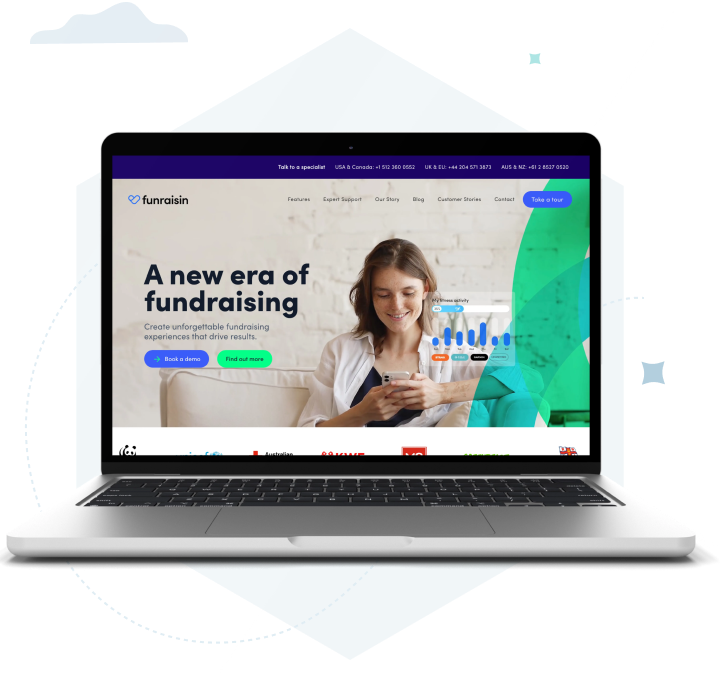
Funraisin is a fundraising platform that offers white label digital infrastructure for non-profits to raise money for their causes. It was founded in 2014 by Courtney Evans, Mike Dennis and Scotte Diley. It sprang out of their digital agency where they saw a continual influx of requests from charities to build platforms to support their efforts.

Launched in 2014, Funraisin was boot-strapped initially as a niche custom website developer, but they soon started their transformation into a platform for fundraising. Their goal became to give non-profits the kind of features, analytics and reporting that the corporate world had, but in a way that served the non-profits instead of the Funraisin brand.

Eddie Petersen

Head of Engineering of Funraisin

When Eddie Petersen joined them in 2022, the product development team was quite lean.

The Full Interview

Q

What did the development team at Funraisin look like when you joined?

Person answer icon

Product development was just the CTO and a single developer. We had another 6 project delivery devs customising sites for clients in our CMS. In total we had 40 people across Australia and the UK. Now we have 145.

Q

So they brought you in as Head of Engineering because they wanted to, they needed to, do more?

Person answer icon

Right. They knew they had to invest more in product development. I came in, moved them to current tooling and methodologies, Agile and Scrum supported by Jira, then started growing the team.

Q

And was this about the same time Funraisin started working with SoftwareSeni?

Person answer icon

About that time, but initially we weren’t bringing on developers. Our first 2 team members from SoftwareSeni were designers.

Then I started our first pod. Our dev pods have 1 internal developer working with 3-4 SoftwareSeni developers. The first pod, it was just a test to see if this was going to be viable, was myself and a single dev from SoftwareSeni.

Q

Can you tell us more about your “pod” strategy?

Person answer icon

Our product team is now 3 groups of 20. And those 20 people can work on any area of Funraisin. We’re not a small team, but we’re not large, and we have so many features - stores, newsletters, apps, payments, fitness app integrations - we don’t have the numbers to have “Product Area Pods”.

So my strategy has been to move developers around, move pods around, and give them the time and opportunity to learn the different stacks we use at each point in the platform. It’s a “go slower to go quicker” strategy. You allow for it. This sprint’s feature might take a little longer to implement because the pod hasn’t touched this part of the platform before. But in three months or six months when they end up back here they will have the experience and the knowledge.

Q

Can we dig deeper into Funrain's onboarding process? How did onboarding work when you first started bringing SoftwareSeni people in?

Person answer icon

In the early days it would be “we're going to add developers”, and then I would interview them myself, and we'd bring them in. We started out with two and we put them into our project development area, not our product development. That's our develop-on-the-platform area. That worked well with those first two, and the interaction was really quite heavy at the start, as you'd expect.

We didn't really have any onboarding material that we could get going, so that's why it was a lot of hand-holding for us - and that wasn't SoftwareSeni, that was us. But as we grew and we got bigger, our commitment with SoftwareSeni and our resource profile grew alongside.

We ended up with 10 people just in project development, and we started utilising the training team at SoftwareSeni. We needed training materials, so they would write the onboarding, and my premise really was, what makes this scalable is that we need SoftwareSeni to be as self-sufficient as possible with the onboardings. Experienced SoftwareSeni staff that have been there a while, they self-onboard, and that self-sufficiency in getting up to speed - that's where we’ve arrived at.

Q

How is that onboarding shared between the two sides now?

Person answer icon

SoftwareSeni have their own onboarding, so they'll go through a SoftwareSeni Funraisin onboarding, and then we have our in-house onboarding. What it's allowed us to do, is strip that away from being a heavy technical onboarding. Our Funraisin onboarding is aimed at the company, what we do, what the product stands for, what we stand for. The SoftwareSeni one is really how do you get up to speed, what are the tools, what's the environment, what's the coding, and they handle all of that.

When we first started, we leaned heavily on a front-end developer and a back-end developer, and we'd balance our teams out. Over the last 18 months we’ve been experimenting on changing that - keep the people we've got, but equip them to be frontend and backend, to be full stack. And SoftwareSeni leads that training.

Q

Who at SoftwareSeni did you work with to move to that more self-sufficient model?

Person answer icon

Our account manager is my go-to. I have a problem or an idea, and I just need to tell them, this is happening, can you help me. And that was the conversation that shifted how we onboard: we're going to continue to add staff, this is going to get quite big, and we're going to run pretty lean on our side, so I need onboarding to be self-sufficient on the SoftwareSeni side as we grow.

We're pretty lucky in that out of the first three developers that started with us, two of them are still with us - and that's heading towards 4 years. They're still here and they've got all of the system knowledge and they've helped grow our onboarding. And then that became the blueprint for when we pulled people into the product teams.

Now when we want to expand our product development team - we use SoftwareSeni to scale. We use the same blueprint: start with a few people, then once we’re ready to add more people into the pod, they’re all in SoftwareSeni’s office, they can bring them onboard and upskill them directly.

Q

Beyond onboarding, what does this long-term relationship give you that people might not see from the outside?

Person answer icon

It blew me away the first time I went to Jogjakarta. I knew SoftwareSeni was a sizable organisation, but being there hits home - the mechanics and all the things that they do behind the scenes. I think where people look at the relationship wrong is, they'll get one person, and think “we're just getting this one person”.

You go to SoftwareSeni, and it's the training department - you get to see that - and the English lessons that they're running, and the Spark Grad program, which we've taken three or four people through.

It's not just getting a developer, it's getting all that supporting mechanisms behind the scenes - your account manager, your training department, your HR department, and then you've got leadership, like Heryno (Heryno Cheung, Managing Director for Indonesia) and Bagus (Bagus Herdiawan, Technology Director), who lead from a technology perspective.

Q

How has AI and agentic coding tools impacted product development at Funraisin?

Person answer icon

It’s accelerated it. It’s accelerated everything across the business. It means we can do more with the resources we have. I don’t understand why anyone would cut developer numbers because of AI. It’s just not competitive to reduce headcount.

Q

Have you settled on a particular AI provider or tool set?

Person answer icon

Just whatever works. Whatever the dev finds that makes them productive. We’re not wedded to any platform, but Copilot is probably the main tool.

Q

Have you found any challenges building such a complex platform with remote developers?

Person answer icon

No. The SoftwareSeni developers have been solid. They have had no issues with the flexibility that we need from our developers. They show up and they do the work as part of the team. Turnover has never been a problem.

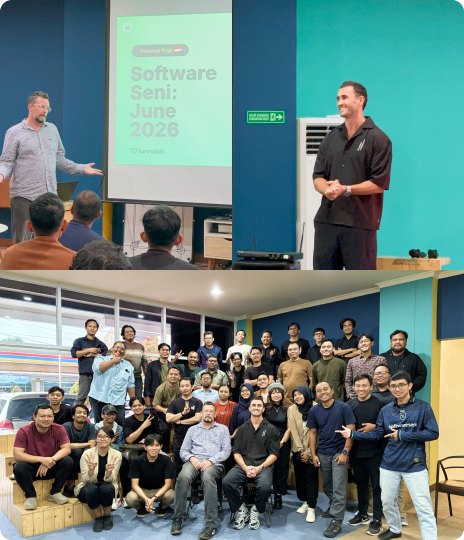
I do make the point of visiting the remote team at SoftwareSeni’s Jogjakarta office every year or so. You can do semi-social activities via video, but meeting in person, for product planning or actual in-person social activities, it boosts team cohesion so much. It’s always worth it and always enjoyable to visit them.

conclusion

Our Takeaway

Funraisin takeaway image

Software development is a team sport.

At SoftwareSeni our success is tied to our clients’ success. The longer we work with our clients, and the more we get to know their business, and they get to know our team and our services, the more value we can create together.

As AI pushes the industry towards smaller teams and economics increases the need for flexibility, extended software development teams from SoftwareSeni provide the access to skills and the stability of operations across up-turns and down-turns that reduces risk and increases competitiveness.

If you’re looking for a software development partner who can help you work strategically and operate tactically, get in touch for a chat!

triple dot image

Visit LIVE SITE

Need a reliable team to help achieve your software goals?

Drop us a line! We'd love to discuss your project.

Offices Dots
Offices

BUSINESS HOURS

Monday - Friday
9 AM - 9 PM (Sydney Time)
9 AM - 5 PM (Yogyakarta Time)

Monday - Friday
9 AM - 9 PM (Sydney Time)
9 AM - 5 PM (Yogyakarta Time)

Sydney

SYDNEY

55 Pyrmont Bridge Road
Pyrmont, NSW, 2009
Australia

55 Pyrmont Bridge Road, Pyrmont, NSW, 2009, Australia

+61 2-8123-0997

Yogyakarta

YOGYAKARTA

Unit A & B
Jl. Prof. Herman Yohanes No.1125, Terban, Gondokusuman, Yogyakarta,
Daerah Istimewa Yogyakarta 55223
Indonesia

Unit A & B Jl. Prof. Herman Yohanes No.1125, Yogyakarta, Daerah Istimewa Yogyakarta 55223, Indonesia

+62 274-4539660
Bandung

BANDUNG

JL. Banda No. 30
Bandung 40115
Indonesia

JL. Banda No. 30, Bandung 40115, Indonesia

+62 858-6514-9577

Subscribe to our newsletter