
When independent testers began reserving handles during WhatsApp’s username reservation window in late June 2026, they expected the platform’s safeguards to block them from claiming lookalikes of Indian public figures. They were wrong. Within 72 hours, testers had secured variants of “rbi” (Reserve Bank of India) and handles mimicking prominent institutions and public figures. By 1 July, India’s government had frozen the feature’s rollout — India’s regulatory freeze of the feature turned a product launch into a governance crisis.
The gap between Meta’s stated anti-impersonation safeguards and what testers could actually register is a consequence of layering a username namespace onto a single-anchor identity system at planetary scale. No enumeration-based reservation list can close it. This article examines one dimension of the broader WhatsApp username story. By the end, you will understand why.
What Is WhatsApp’s Username Feature, and How Does It Change the Platform’s Identity Architecture?
WhatsApp’s username feature, announced globally on 29 June 2026, lets users optionally claim a 3 to 35 character handle (lowercase letters, numbers, periods, underscores) that can be shared to receive messages without disclosing a phone number. It is an added pseudonym layer on the existing phone-number architecture, not a replacement. Phone numbers are still required to create an account. The feature sits alongside WhatsApp Pay and the Business-Scoped User ID as part of a coordinated platform-modernisation push across Meta’s identity systems.
The old model was simple: your phone number was your identity. Every account was tied to a SIM-verified number serving as identifier, contact-discovery mechanism, and rough authenticity signal. This provided identity certainty but exposed users to phone-number harvesting and SIM-swap attacks every time they joined a group or messaged a stranger.
The dual-anchor model splits these functions. The phone number remains the backend anchor (cryptographic and legal), while the username becomes a shareable, presentational layer. The central architectural decision is the zero-discovery model: no public directory, no search, no autocomplete. A username is a shareable pointer, not a discoverable identity. Someone must know your exact handle to initiate contact. This distinguishes WhatsApp from Telegram, where usernames function as a public discovery tool, and from Instagram, where the username is the identity itself. As analyst Shruti Inani put it, for a platform with three billion users, this is not a cosmetic update but a fundamental rewrite of how identity works.
Why Did WhatsApp Introduce Usernames After 17 Years of Phone-Number-Anchored Identity?
WhatsApp’s commitment to phone-number-anchored identity was a deliberate tradeoff that prioritised identity certainty over privacy. Three converging pressures finally tipped the balance.
First, privacy differentiation. Users increasingly wanted to communicate without exposing phone numbers, particularly in groups where any participant can harvest numbers, and in marketplace interactions on WhatsApp Business. Phone numbers double as keys to banking apps and two-factor authentication. Handing one to a group of strangers has always carried quiet risk.
Second, competitive pressure. Telegram has offered username-based messaging since 2014, Signal since 2022. WhatsApp was the last major platform maintaining phone-number-only identity, creating a growing gap.
Third, regulatory tailwinds. GDPR-style expectations and specific pressure in markets like India (850 million users) and the EU made the old model’s privacy costs visible. The EU designated WhatsApp as a “very large platform” under the Digital Services Act in January 2026, adding compliance obligations.
Meta appointed CRED founder Kunal Shah as WhatsApp’s global head on 22 June 2026, one week before the announcement. The timing was not coincidental. The username feature, WhatsApp Pay, and the Business-Scoped User ID together represent a strategic inflection point, not a tactical addition.
What Happened When Independent Testers Researched Impersonation Risks During the Reservation Window?
Independent testers found that handles mimicking Prime Minister Narendra Modi, actors Shah Rukh Khan and Amitabh Bachchan, Mukesh Ambani’s Jio, and the Reserve Bank of India remained claimable. Variants such as “indiamodi,” “shahrukh.actor,” “ambanijio,” and “rbi_verify” all slipped through.
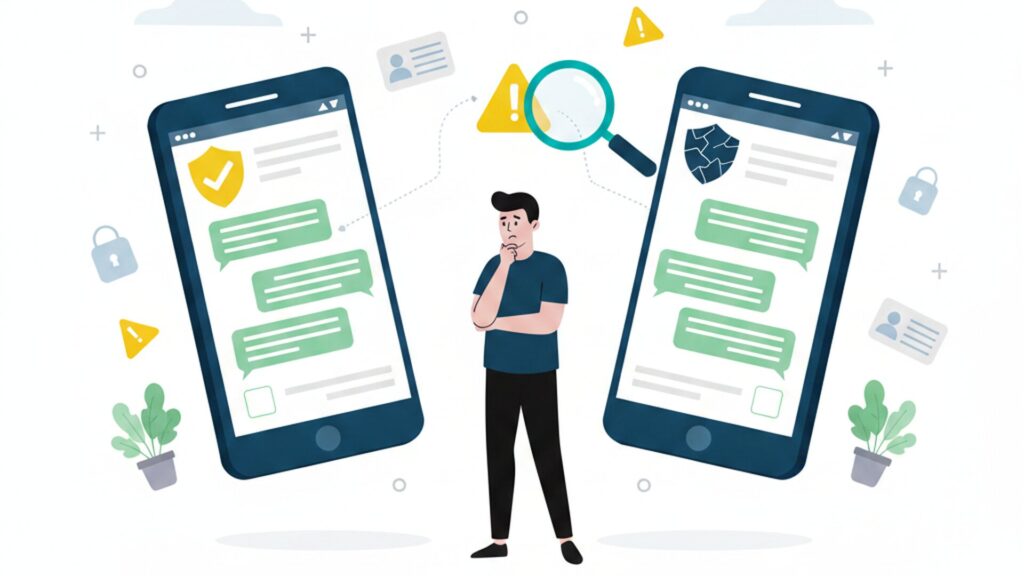
Meta said it reserved usernames for public figures and “lookalike derivatives of known names” but did not specify which permutations received protection. The gap between the stated protection and what researchers could register shifted the conversation from product debate to regulatory crisis.
The industry reaction was swift and pointed. Paytm founder Vijay Shekhar Sharma warned that the feature could invite scams by surrounding verified usernames with similar-sounding unverified alternatives. Entrepreneur Ankur Warikoo called the rollout a potential “disaster” for India. Jasveer Singh, CEO of KnotDating, said his first thought was not privacy but scams. Crypto executive Changpeng Zhao’s own failed bid to capture his desired handle highlighted the first-come, first-served danger. Researchers also identified an enumeration surface during the testing window, examined in detail below.
The core problem is simple: the combinatorial space of lookalike variants (underscores, periods, numerals, suffixes like “_verify” or “_official”) is too large for any enumeration-based reservation list to cover. Meta could reserve “rbi” and a handful of known variants, but not every possible permutation. That gap is deterministic, not incidental.
How Does WhatsApp’s Anti-Impersonation Layered Defence Architecture Actually Work at a Technical Level?
WhatsApp’s defence architecture was designed to manage the consequences of this gap, even if it could not close it. It has six layers, and they represent real engineering investment. But most address contact behaviour, not namespace integrity.
The username key is a cryptographic identifier underneath the human-readable handle. It ensures two accounts cannot share the same key but does not prevent lookalike registration. The optional username PIN requires any first-time sender to know both the exact handle and the PIN before a message delivers. It is the strongest individual safeguard against unsolicited contact but is default-off. Researchers explicitly advised users to enable it manually.
Proactive handle reservation is the only layer that addresses namespace integrity: Meta holds handles for public figures, government entities, and verified accounts. But as the reservation window demonstrated, this enumeration-based approach cannot cover the combinatorial variant space.
Rate limiting restricts how many new people an account can contact via username and blocks repeated key-guessing. Automated impersonation detection systems flag unusual metadata patterns (contact frequency, account creation velocity), though end-to-end encryption prevents content-level monitoring. Safety signals in first-time conversations alert recipients when a sender is not in their contacts, whether the account is new, and whether it originates from another country.
The reservation window made visible what each layer can and cannot protect against. Most of the safeguards address what happens after a handle is claimed. Only the reservation layer addresses whether a lookalike handle should exist at all.
Why Do Cybersecurity Experts Distinguish Between Privacy Gains and Security Gains in the Username Debate?
Rachel Tobac, CEO of SocialProof Security, described usernames as a net privacy gain: removing phone numbers from first contact reduces SIM-swap exposure and phone-number harvesting. The tradeoff is that the same distance from a verified phone number makes similar-sounding handles easier to weaponise for impersonation.
The privacy gains are real. Phone numbers are no longer automatically exposed to every group participant or marketplace counterparty. In jurisdictions where phone numbers link to national ID systems, communicating without exposing a government-registered identifier matters.
But the security losses are equally real. A 3-billion-user namespace creates impersonation vectors the phone-number-anchored model did not have. The Mozilla Foundation noted that abandoning the “implicit signal of authenticity” that comes from owning a phone number makes impersonation an inevitable consequence. Aaron Bugal, Field CISO for APJ at Sophos, argued that a professional-looking username like “cyber-cell-helpdesk” may appear more trustworthy than an unknown mobile number, weakening the instinct to distrust strangers.
The pre-existing enumeration flaw at WhatsApp offers a concrete example of this tradeoff. University of Vienna researchers exploited a contact-discovery enumeration flaw to gather data on more than 3.5 billion users at over 100 million accounts per hour. “To our surprise, neither our IP address nor our accounts have been blocked by WhatsApp,” they wrote. More than half of the accounts enumerated had profile pictures; 29 percent had text in their bios. WhatsApp’s VP of engineering confirmed the finding and thanked the researchers. The flaw predates usernames, but it demonstrates the pattern: a system designed to protect identity creates surfaces that leak identity data at scale.
Eliad Kimhy of Acronis put it plainly: usernames are a good privacy improvement but not a scam-prevention silver bullet. They reduce one exposure point while creating a new identity layer that attackers will test. The experts converge on the same point: privacy and security are orthogonal axes. You can gain on one while losing on the other.
What Enumeration Risks Did the Username Feature Introduce, and Why Were They Described So Starkly?
The enumeration flaw is the clearest case study of this orthogonality in action: a privacy feature creating a security externality in real time.
During the reservation window, researchers described an ability to determine whether a given phone number had registered a username, characterising it in strong terms as potentially “the largest leak ever” from the platform. The language reflects not the sensitivity of any individual datum (a boolean: “has username” or “does not have username”) but the scale at which that datum could be harvested and the inferences it enables: active versus inactive accounts, adoption patterns, correlation with other data sources.
A system designed to hide phone numbers created a mechanism that exposes whether phone numbers have usernames. Rate limiting constrains probing velocity but does not eliminate the surface. Closing it requires architectural choices (making the mapping cryptographically opaque) that may conflict with other design goals.
The enumeration risk is distinct from the impersonation gap. The impersonation gap concerns what handles are claimable. The enumeration risk concerns what information the namespace leaks about users. Both are security externalities of the username architecture, but they operate at different layers.
What Does the WhatsApp Username Story Reveal About Identity Namespace Design at 3-Billion-User Scale?
India’s MeitY froze the username feature on 1 July 2026, two days after Meta’s announcement, citing concerns about fraud and impersonation. A day later, it widened its review to Telegram and Signal. The freeze raises a question: when does platform identity architecture at population scale become infrastructure governance?
Nitin Pai of The Takshashila Institution argued that WhatsApp has the character of public infrastructure in India. At that scale, a design change can create downstream harms the platform is not fully equipped to anticipate. Nikhil Pahwa of MediaNama characterised the government’s posture more bluntly as a “license raj for software features.”
Telegram has operated username-based messaging since 2014 at roughly 900 million users, and the impersonation patterns WhatsApp is encountering have already played out there at smaller scale. The impersonation gap is a structural property of any identity namespace layered onto a single-anchor system. The combinatorial variant space of lookalike handles grows faster than any reservation list can cover. What works at 900 million users may not work at 3 billion because the impersonation incentive (the number of potential victims any lookalike handle can reach) scales with the user base.
Identity namespace design carries a threat model that scales non-linearly with user base. The impersonation gap must be architected against from the first design decision.
At 3-billion-user scale, the impersonation gap is a structural consequence of any dual-anchor identity system. The combinatorial variant space of lookalike handles grows faster than any enumeration-based reservation list can cover. Privacy and security are orthogonal axes, and every privacy feature creates a security externality. WhatsApp made this visible at planetary scale — and how Telegram’s username experience provides an ominous precedent for what happens when these patterns play out over years at massive scale. The same pattern would manifest at any platform that reaches sufficient user density, and the infrastructure-governance question India raised is the shape of things to come for any platform managing identity at population scale.
Frequently Asked Questions
Is it safe to use WhatsApp usernames right now?
Yes, with two caveats. The zero-discovery architecture means a stranger cannot find your username unless you share it, which fundamentally limits unsolicited contact. The impersonation risk affects high-profile targets far more than ordinary users. Enable the optional username PIN immediately: it requires any first-time sender to know both your exact handle and your PIN before a message delivers, closing the most direct impersonation vector for personal accounts.
How do I enable the optional username PIN?
Go to Settings, tap your username, and select “Username PIN.” Create a numerical passphrase that first-time contacts must enter alongside your exact handle before their message reaches you. Security researchers explicitly recommended enabling this during the reservation window because it is default-off. The PIN does not prevent someone from registering a lookalike handle, but it stops that lookalike from contacting people who know your real username and PIN combination.
What happens if someone has already registered a lookalike of my name or brand?
WhatsApp’s proactive reservation system holds handles for verified public figures, government entities, and some known brands, but the combinatorial variant space means lookalikes slip through. If you are an individual, the zero-discovery model limits the damage: an impersonator cannot broadcast their handle to your contacts. If you represent an organisation, report the lookalike through WhatsApp’s impersonation reporting channel. Enforcement speed and scope remain unverified at the time of writing.
Can I change my WhatsApp username after claiming it?
Yes, usernames are not permanent. You can change your handle through Settings, though WhatsApp has not disclosed whether previously used handles become immediately available to others or enter a cooldown period. This matters because changing a compromised or lookalike-adjacent handle is a practical defence for users who discover they are adjacent to an impersonation vector. The username key, the cryptographic identifier underneath, persists regardless of display handle changes.
Are business accounts better protected from impersonation than personal accounts?
Not structurally. WhatsApp Business accounts benefit from the same six-layer defence architecture as personal accounts, and the proactive reservation list does include some business entities. But the combinatorial variant problem affects businesses identically: a lookalike like “paytm_official” or “paytm.support” exists in the same namespace as the legitimate handle. The Business-Scoped User ID provides backend stability, but it does not prevent namespace-level impersonation of the publicly visible username.
Did the lookalike handles actually result in real-world impersonation or just proof-of-concept testing?
Independent testers demonstrated proof-of-concept reservations rather than active impersonation campaigns. They reserved handles like RBI variants and fintech leader lookalikes to prove the gap existed, then disclosed findings responsibly. This distinction matters: the impersonation gap is a demonstrated structural vulnerability, not a confirmed active exploitation event. However, at 3-billion-user scale, the window between proof-of-concept and real-world abuse narrows considerably because the impersonation incentive is proportional to the potential victim pool.
Is the enumeration flaw that researchers warned about still active?
WhatsApp has not publicly confirmed whether the specific enumeration pathway researchers identified has been closed. The company’s layered defence architecture includes rate limiting on username-initiated contact, which constrains probing velocity, but rate limiting alone does not eliminate the surface. Any system that can answer “does phone number X have a username?” at scale creates enumeration risk. Closing it entirely requires architectural changes that make the mapping cryptographically opaque, and whether WhatsApp has implemented those changes is unconfirmed.
What should I do if I receive a message from a suspicious username?
Check the safety signals WhatsApp displays in first-time username-initiated conversations: the platform flags when a sender is not in your contacts and was not discovered through your phone-number-based contact graph. Do not share personal information, payment details, or verification codes. If the handle mimics a known institution, verify through the organisation’s official website or phone number before engaging. Report suspicious accounts through WhatsApp’s in-app reporting flow to trigger the automated impersonation detection systems.
How is WhatsApp’s username system different from just using a display name?
A display name is what contacts see in their chat list and is not unique: thousands of users can set “John” as their display name. A WhatsApp username is globally unique within the platform’s namespace. Only one account can hold “john.smith” at any time. The username also serves as a routable contact point: someone who knows your exact handle can message you without your phone number. The display name has no routing function and provides no privacy separation from the phone number.
Why did India’s regulators intervene so quickly compared to other markets?
Three converging factors. First, India is WhatsApp’s largest market with over 850 million users, making any identity vulnerability disproportionately consequential there. Second, India’s regulatory environment has existing frameworks for digital identity governance, including Aadhaar-linked verification norms, that create institutional readiness to scrutinise platform identity transitions. Third, the specific lookalike handles demonstrated by testers targeted Indian institutions like the Reserve Bank of India and prominent fintech leaders, making the impersonation threat domestically salient from the first 72 hours.
Does the zero-discovery model mean WhatsApp usernames are completely private?
No. Zero-discovery means there is no public directory, search function, or autocomplete exposing usernames. But usernames are not cryptographically hidden: anyone who knows your exact handle can attempt to contact you. The model constrains the blast radius of impersonation by requiring the attacker to already know or guess the target handle, but it does not eliminate the risk. Think of it as an unlisted phone number rather than an encrypted identity: private by obscurity, not by cryptographic guarantee.
Can an impersonator use a lookalike handle to access my WhatsApp account or messages?
No. Registering a lookalike username like “rbi.official” does not grant access to the legitimate organisation’s account, messages, or contacts. The username is a contact point, not an authentication credential. End-to-end encryption means messages remain encrypted to the intended recipient’s device. The impersonation risk is social: the lookalike can receive messages from people who mistake the handle for the real entity and can initiate contact with people who accept the deceptive identity at face value.