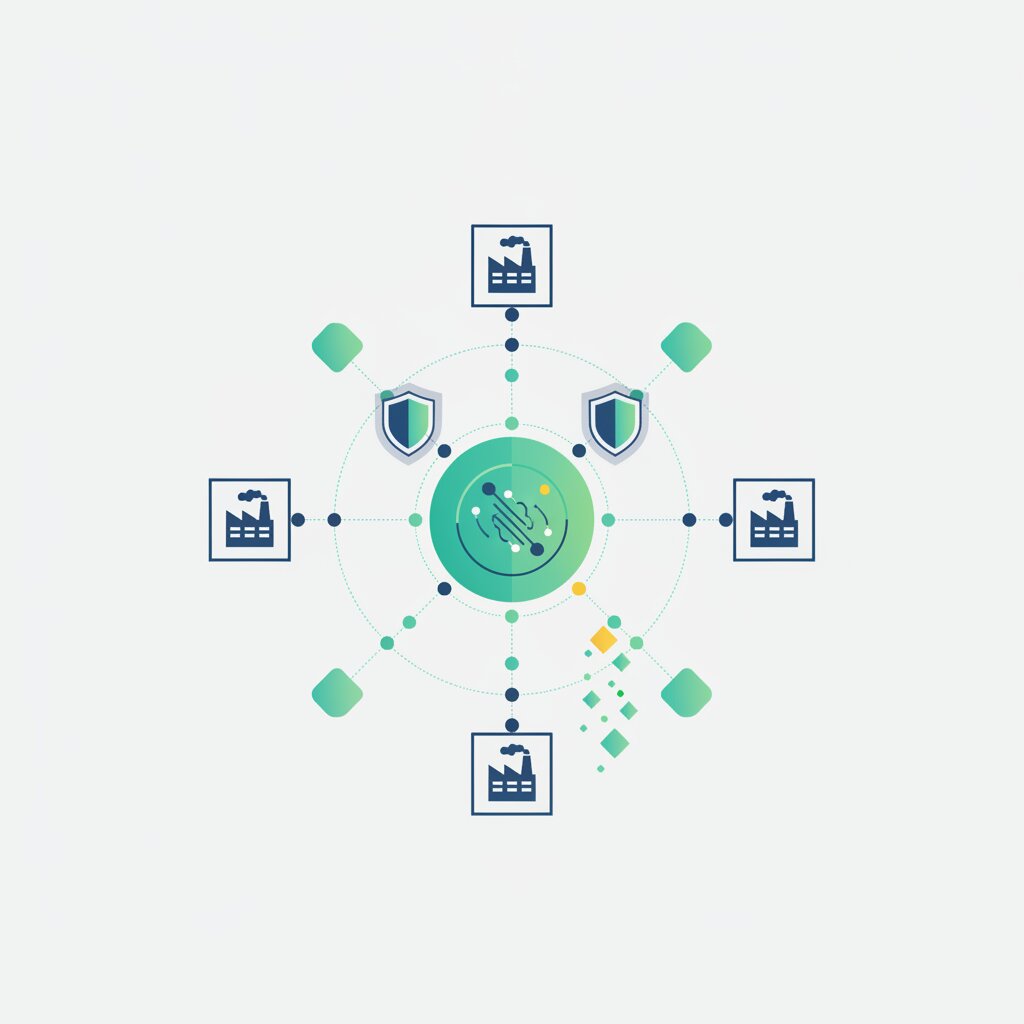

On 12 June 2026, a ransomware group called World Leaks dumped 630 gigabytes of internal data (204,341 files) from Tata Electronics onto a dark web leak site. A search for “Apple” returned 181 files and folders. Buried among them were iPhone 18 Pro CAD renders, A20 Pro chip specifications destined for TSMC’s 2nm process, details of a variable-aperture camera system no-one outside Apple was supposed to see, and the revelation that Samsung had displaced Sony as an image sensor supplier. Within hours, the files had propagated from the dark web to Instagram, TikTok, and YouTube. Apple’s cease-and-desist letters landed too late to matter. The information velocity had already won.
What happened in Tamil Nadu is a case study in supply chain vulnerability. Contract manufacturers hold the most sensitive intellectual property of multiple companies under one roof. Their security architecture is optimised for keeping production lines running, not keeping data inside. And the pure data-extortion model makes detection nearly impossible until the files are already public. What happened in June 2026 changes how you should think about every manufacturing partnership your company maintains.
In This Series
- What the Tata Electronics Breach Exposed About the iPhone 18 Pro — A forensic catalogue of every category of exposed data and the strategic significance of each, from CAD renders to cryptographic certificates.
- World Leaks and the Dark Web Economics of Stolen Manufacturing IP — Who World Leaks are, how their pure data-extortion model works, and why stolen factory-floor intelligence commands a premium on dark-web markets.
- Why Contract Manufacturers Are the Weakest Link in Supply Chain Security — Why Tier-1 suppliers concentrate IP across multiple OEMs, how the OT/IT security divide leaves engineering data exposed, and why supplier-to-component mapping is Apple’s most jealously guarded secret.
- What the Tata Breach Means for Apple’s China-Plus Strategy and Beyond — Whether India’s cybersecurity maturity can support Apple’s diversification timeline, and how to assess whether your own supply chain faces the same exposure.
What exactly was exposed in the Tata Electronics breach about the iPhone 18 Pro?
The breach exposed iPhone 18 Pro CAD renders showing physical design and assembly tolerances; A20 Pro 2nm chip specifications from TSMC; a variable-aperture 48MP Fusion camera system; 5,000 to 5,200 mAh battery specifications revealing the thermal design envelope; and the Samsung-as-sensor-supplier disclosure that broke Sony’s perceived monopoly on iPhone image sensors. Beyond product specifications, the leak included cryptographic certificates and key files (which represent an ongoing security risk no cease-and-desist can recall) plus the supplier-to-component mapping that reveals Apple’s entire component-sourcing strategy in a single document set.
The raw numbers establish the magnitude: 630 GB, 204,341 files, of which 181 were Apple-related, according to analysis by Madre Janus. But the categories matter more than the volume. CAD renders reveal physical design months before launch. Chip specifications pre-empt TSMC’s process-node marketing and reveal Apple’s performance targets. The variable-aperture camera system exposes the computational photography roadmap. Battery specs reveal the power and thermal strategy. The Samsung sensor revelation was the most commercially sensitive detail of all: it pre-empted Apple’s ability to frame the supplier relationship on its own terms. Alongside the product IP, the dataset included employee passport scans and personally identifiable information. That human dimension is a different category of harm, distinct from the competitive exposure but carrying its own regulatory weight under India’s DPDP Act.
Not all exposed data carries equal strategic weight. A CAD render damages Apple’s launch surprise; a cryptographic certificate enables active exploitation (signed malware, device impersonation) with an expiry measured in years, not news cycles. The supplier-to-component mapping is more damaging than any single product specification because it remains accurate across product generations. Reuters reported that at least six files map components in the iPhone 18 Pro models to specific suppliers, revealing where Apple dual-sources (bargaining power) and where it relies on a single vendor (vulnerability). Competitors learn not just what Apple is building this year but how Apple builds everything. And once the files hit the dark web, propagation to Instagram, TikTok, YouTube, and enthusiast forums happened within hours. Apple’s cease-and-desist response was largely performative. Information velocity, the speed at which leaked data spreads, now exceeds the speed at which any legal or PR response can contain it.
Read more: a detailed breakdown of every category of exposed data and why each matters — including the attack chain World Leaks used to breach Tata’s systems.
Who is the World Leaks group, and how does the pure data-extortion model change the ransomware threat?
World Leaks is widely assessed by security researchers to be a rebrand of Hunters International, itself a successor to the dismantled Hive ransomware operation. Their track record includes breaches of Dell (1.3 TB), Nike (1.4 TB), and defence contractor L3Harris before the Tata operation. What distinguishes them is their exclusive use of pure data extortion: they infiltrate, silently exfiltrate high-value intellectual property over weeks or months, then demand payment under threat of publication, without ever encrypting a single file. The absence of disruption means the security architecture never encountered the attack it was designed to detect. The attackers chose a different payload entirely.
The lineage matters. Hive was dismantled by law enforcement in 2023. Hunters International emerged from that diaspora, and World Leaks is its rebrand, launching on 1 January 2025. In November 2024, Hunters International’s administrators told affiliates the project was shutting down, citing ransomware as “too risky and unprofitable” due to law enforcement pressure and declining payments. The rebrand signalled a strategic pivot to manufacturing targets specifically, where pure data extortion is most effective because the victim’s primary security investment (operational continuity) is irrelevant to the attack. The victimology pattern is telling: Dell (consumer electronics), Nike (sportswear), L3Harris (defence), Tata Electronics (contract manufacturing). It is an escalation in target sensitivity and IP concentration.
Pure data extortion evades detection because traditional ransomware detection relies on encryption behaviour: mass file operations, extension changes, ransom note creation. Pure data extortion produces none of these signals. Attackers use legitimate tools (PowerShell, RDP, SMB shares) to move laterally and exfiltrate data in patterns that resemble legitimate traffic. The detection surface shifts from “is someone encrypting our files?” to “is someone reading files they shouldn’t be?” That is a question most manufacturing networks are not instrumented to answer. The 630 GB exfiltration from Tata likely occurred over an extended dwell period without triggering data-loss prevention alerts. World Leaks operates a four-platform infrastructure: a main data leak site, a victim negotiation portal with live chat, an affiliate management panel, and an “Insider” journalist platform granting media 24-hour advance access to stolen data. This is industrialised theft.
Read more: how World Leaks operates and why stolen factory-floor intelligence commands dark-web premiums — including the economics of initial access brokers and ransomware-as-a-service.
Why are contract manufacturers the weakest link in supply chain security?
Contract manufacturers are information concentrators. A single Tier-1 supplier like Tata Electronics holds the full design-to-manufacturing IP for multiple OEMs simultaneously (Apple, Tesla, Jaguar Land Rover) because they need the complete engineering package to build each product. This makes them higher-leverage targets than any single OEM: breach one company, extort several. Unlike the OEMs themselves, who invest heavily in security as a brand-protection measure, contract manufacturers operate on thin margins where cybersecurity is a cost centre rather than a competitive differentiator. Their detection architecture is optimised for operational continuity, not silent data exfiltration from engineering workstations.
The information concentration problem is structural, not incidental. Tata does not just assemble iPhones. It holds Tesla vehicle specifications marked “TRADE SECRET,” JLR design documents, and Apple’s complete iPhone 18 Pro engineering package. Each OEM trusts Tata with its sensitive IP, but Tata’s security posture reflects its own risk calculus, not the aggregate value of the IP it holds. A breach of Apple’s own systems would have yielded less IP diversity than the Tata breach did, as the Madre Janus analysis documented when it found Tesla, TSMC, and Qualcomm files alongside Apple’s in the same dataset. This concentration effect applies to any contract manufacturer serving multiple clients in any industry.
The OT/IT security divide compounds the problem. Manufacturing environments run on two distinct technology stacks. Operational technology (OT), covering production systems, PLCs, and SCADA, prioritises availability and safety above all else; you cannot patch a production-line controller the way you patch a laptop. IT systems (email, ERP, engineering file servers) prioritise confidentiality and integrity. The engineering workstations where CAD files and component specifications live typically sit on the IT side with connectivity to OT for production data, creating a bridge attackers traverse laterally. Shieldworkz’s analysis of the Tata incident confirmed the compromise targeted corporate IT infrastructure (email gateways, ERP modules, file sharing platforms linked to the Hosur facility) without evidence of lateral movement into ICS or OT. But that distinction is little comfort when the IT systems contained the engineering package for the iPhone 18 Pro.
What does the Tata breach mean for Apple’s China-plus diversification strategy?
The breach does not kill China-plus, but it reveals that the strategy’s cybersecurity dimension was underinvested relative to its logistical and political dimensions. India now produces roughly one in four iPhones globally, and Tata Electronics accounts for about a third of that Indian output. Apple cannot simply walk away from Tata without undermining its production targets and its narrative of successful diversification. The immediate response (cease-and-desist letters, internal access restrictions at Tata) is tactical. The strategic question is whether Apple can simultaneously maintain its India ramp-up timeline and impose higher cybersecurity requirements on suppliers whose security maturity has not kept pace with their manufacturing scale.
The scale context anchors the significance. India assembled about 55 million iPhones in 2025, a 53% jump from the previous year, and is on track to make 26% of the world’s iPhones in 2026, up from 6% four years ago. Apple now builds every iPhone 17 variant in India, including Pro and Pro Max models. Tata has overtaken Foxconn in iPhone exports during the five-year PLI scheme period. The breach creates a trust deficit at the moment when Apple needs to deepen its Tata relationship to hit production targets. Apple’s global cybersecurity team is reviewing the incident, and Tata has appointed a global cybersecurity consulting firm to conduct a forensic audit. These are sensible steps, but they are reactive.
The timeline compression is the core of the problem. Chinese manufacturing partners like Foxconn have had two decades of Apple security requirements layered onto their operations. Indian partners are being asked to reach equivalent maturity in under five years. The PLI scheme compressed a 20-year development curve into a fraction of that time, and cybersecurity investment did not compress at the same rate. India’s manufacturing cybersecurity gap reflects the speed of production scaling, not any inherent security deficiency. Scaling production faster than security maturity creates exposure, and that exposure is what the breach exploited. The conglomerate complication adds another layer: the same Tata Group that owns Tata Electronics also owns Jaguar Land Rover. A single conglomerate holding sensitive IP from Apple alongside OEM interests in automotive raises information-barrier questions that are uncomfortable for any OEM.
Read more: what the breach means for Apple’s diversification strategy and whether your own supply chain faces the same exposure — including how cybersecurity maturity compares across India, China, and Vietnam.
Why has manufacturing become the most-targeted sector for cyberattacks?
Manufacturing has led cyberattack rankings for five consecutive years, accounting for 27.7% of all incidents in 2025 according to IBM X-Force. The sector presents an unmatched combination of three attack surfaces: IT systems (email, ERP, file servers), operational technology (factory-floor PLCs and SCADA systems that are often unpatchable), and connected products (millions of internet-facing endpoints). Beyond the technical attack surface, manufacturing carries a distinctive economic vulnerability: intellectual property represents years of R&D investment that can be stolen in hours, and production downtime costs can run to millions per hour.
Unlike most sectors, manufacturing cannot separate its security domains. A factory runs IT for business operations, OT for production, and increasingly connects products directly to the internet for telemetry and updates. Each domain has different security priorities: confidentiality for IT, availability for OT. The intersections between them create seams that attackers exploit. The engineering workstations where the most valuable IP lives typically sit at the IT/OT boundary, connected to both domains but secured by neither philosophy completely. Exploitation of public-facing applications was the most common attack vector in 2025, accounting for 32% of observed manufacturing breaches. Attackers used valid accounts in 16% of cases and external remote services in 11%. As Ryan Anschutz, North American incident response lead at IBM X-Force, noted, threat actors prefer these methods because “they help them blend into normal business activities, and their behaviors do not trigger alarms the way malware often does.”
The economic vulnerability is asymmetric. The R&D cost of a single CAD file can represent years of engineering investment; the cost to exfiltrate it is negligible. Production downtime costs create acute time pressure to resolve incidents quickly, which ransomware operators understand and exploit. Unlike financial data, which can be monetised immediately through fraud, manufacturing IP’s value to competitors, counterfeiters, and nation-state actors persists long after the breach is disclosed. And the geographic concentration amplifies the problem: 68% of manufacturing cyber incidents occur in the Asia-Pacific region, where both electronics production and attacks are most concentrated. Ransomware attacks against manufacturing surged 61% year-over-year in 2025, from 520 incidents to 838. Three groups dominated: Akira, Qilin, and Play. World Leaks is the newest entrant to this ecosystem, and its manufacturing focus suggests it will not be the last. Sophos data shows 42.5% of breached manufacturers cited lack of in-house cybersecurity expertise as a contributing factor, while data encryption in manufacturing dropped to its lowest level in five years as extortion-only attacks surged.
Read more: why Tier-1 suppliers concentrate risk across multiple OEMs and the dark-web mechanics that turn stolen factory data into a premium asset.
How does the Tata breach compare to previous iPhone leaks and supply chain incidents?
The Tata breach is the most consequential iPhone leak since the iPhone 4 prototype was left in a bar in 2010, but the mechanism makes it more dangerous. The iPhone 4 incident involved a single physical device accidentally lost; Gizmodo purchased and published it, revealing the industrial design. Apple recovered the device and controlled the narrative through legal response. The Tata breach is irreversible: 204,341 files on the dark web cannot be recalled. It reveals the engineering substrate (chip specifications, supplier relationships, cryptographic material), not just the exterior.
Where the iPhone 4 leak was accidental, physical, and recoverable, the Tata breach is deliberate, digital, and irreversible. One revealed what the product looked like; the other reveals how the product is engineered, who supplies every component, and how Apple negotiates with those suppliers. The iPhone 4 affected one product generation’s surprise factor; the Tata breach affects multiple OEMs’ competitive positioning, supplier negotiation leverage, and security infrastructure simultaneously. The iPhone 4 leak was more dramatic as a story, but the Tata breach is more damaging as a business event.
The closest precedent is the 2021 REvil breach of Quanta Computer, which exposed M1 MacBook Pro schematics. REvil demanded $50 million, and when Quanta refused, hackers leaked detailed engineering schematics of the then-unreleased MacBook Pros. That was the warning shot. The five years between Quanta and Tata have seen the industrialisation of the ransomware model (RaaS, IAB marketplaces, and the pure data-extortion technique) that transforms a targeted attack into a replicable business model. The Quanta breach was a sophisticated operation by an elite group. The Tata breach is what happens when that sophistication becomes a product available to affiliates. And within the Tata Group itself, there is a precedent: JLR suffered a ransomware attack in 2025 by Scattered Lapsus Hunters that caused a six-week production halt, costing an estimated $68 million per week. Two major Tata Group entities, two significant cyber incidents within 12 months. That is a pattern.
Read more: the complete catalogue of exposed data from the breach and how the breach reshapes Apple’s supplier diversification calculus.
Why is Apple’s supplier-to-component mapping more sensitive than the iPhone’s physical design?
The comparison section above established why this breach is different from every previous iPhone leak. The supplier-to-component mapping is the data category that best illustrates why. A product photograph tells competitors what Apple is building this year. The supplier-to-component mapping tells competitors how Apple builds everything: which suppliers it trusts for which technologies, where it dual-sources critical components to maintain bargaining leverage, what it pays (inferable from supplier margins), and which suppliers are gaining or losing share. When the Tata breach revealed Samsung as the image sensor supplier, it did not just reveal a component choice. It revealed that Sony’s position was weakening, that Samsung had passed a qualification process Apple kept entirely non-public, and that Apple’s camera roadmap favoured Samsung’s sensor technology.
Apple publishes a supplier list annually but deliberately obscures which supplier makes which component. The mapping connects each component to its source, revealing the architecture of Apple’s supplier strategy: not just who supplies what, but where Apple has alternatives (bargaining power) and where it does not (vulnerability). This mapping is accurate across product generations because supplier relationships change slowly even as product specifications change annually. A source familiar with the matter told Reuters that Apple treats this granular vendor data as more sensitive than product specs themselves.
The Samsung sensor case study makes the point concrete. Before the breach, the industry assumed Sony held a monopoly on iPhone image sensors. The leak revealed not only that Samsung had won a share of the iPhone 18 Pro sensor business but that Sony’s position had been quietly eroding. That information affects Sony’s negotiating position with every other smartphone OEM, not just Apple. Samsung gains leverage in its own supplier negotiations. Other sensor manufacturers learn exactly what specification threshold they need to meet to compete. The competitive ripple effects extend far beyond Apple. At least six files in the leaked dataset map components in the iPhone 18 Pro models to specific suppliers: chips on the main circuit board, battery parts, and cameras. The records show where Apple draws a part from several suppliers and where it relies on just a few, exposing both its bargaining leverage and its vulnerabilities. This is the equivalent of a competitor obtaining your vendor pricing sheet and contract terms.
Read more: why Apple’s supplier-to-component mapping is more sensitive than the iPhone 18 Pro’s physical design.
Could this kind of supply chain breach happen to any company using contract manufacturers?
Yes, with the important qualification that your exposure depends on whether your contract manufacturers are information concentrators. The structural conditions that made Tata a target apply to any Tier-1 supplier in any industry: they hold multi-client IP, they operate on margins that disincentivise security investment, their detection architecture is optimised for operational continuity rather than data confidentiality, and the ransomware industry has developed a model specifically suited to exploiting these conditions. Your company’s size is not the protective factor. A small firm using the same contract manufacturer as a Fortune 500 competitor has its IP sitting on the same servers, protected by the same security controls.
Apple is simply the most visible example of a structural condition that affects every company using multi-client contract manufacturers. The conditions that produced the Tata breach exist wherever a contract manufacturer holds sensitive IP for multiple clients, operates on thin margins, and manages security as a compliance cost rather than a competitive requirement. The pure data-extortion model removes the most visible breach indicators (encryption, downtime, ransom notes), meaning you may not know your IP has been stolen until it appears on a dark web leak site.
Your security monitoring ends at your perimeter. Your IP exposure extends into supplier networks you do not monitor. Most companies’ third-party risk assessment consists of annual security questionnaires: self-reported, rarely verified, and focused on IT controls rather than exfiltration detection capability. Only 4% of organisations have high confidence that their third-party questionnaires accurately reflect real-world risk. And here is what should concern you most: the World Leaks public dump may indicate a failed private sale. The group may have demanded a ransom Tata or Apple refused to pay, and publication was the escalation. But not all stolen manufacturing IP is published. Much of it is sold privately to competitors, nation-state actors, or investment analysts who value exclusivity. The breaches you read about, where data appears on a leak site, may represent a minority of incidents. The ones where data is sold quietly never become public. The victim may never know the breach occurred at all.
Read more: whether your own supply chain faces the same IP theft exposure.
How does cybersecurity maturity compare across India, China, and Vietnam?
China represents the baseline: two decades of Apple’s security requirements layered onto Foxconn and other suppliers have produced relatively mature cybersecurity postures in Chinese electronics manufacturing. Vietnam sits in the middle: Samsung’s dominance as the primary OEM customer has driven security investment over a longer period, and Vietnam’s electronics manufacturing ecosystem had more time to mature than India’s. India is the newest entrant at scale: the government’s PLI scheme accelerated manufacturing investment faster than cybersecurity maturity could develop organically. The gap is not irreparable. It reflects compressed timelines rather than fundamental capability differences. But it matters because Apple’s diversification timeline does not wait for cybersecurity maturity to catch up.
The three-country comparison is revealing. Foxconn’s facilities in China benefit from decades of Apple security audits, though the opacity of Chinese cybersecurity regulation makes independent verification difficult. Vietnam’s electronics manufacturing ecosystem is more established: Samsung’s vertically integrated approach means its Vietnamese facilities operate under Samsung’s security architecture rather than developing security independently, producing a higher baseline. India’s PLI scheme, the world’s largest sector-specific manufacturing incentive program with a total outlay of USD 26 billion across 14 sectors, created a manufacturing boom whose cybersecurity dimension was underinvested. The policy incentive was production volume, not security maturity.
As discussed in the China-plus analysis, cybersecurity maturity in manufacturing is partly a function of accumulated incident response experience, and Indian suppliers are experiencing this learning curve in compressed form. The Tata breach is the first major test of whether India’s manufacturing ecosystem can absorb security requirements at the same pace it absorbs production capacity. Samsung’s model (significant in-house manufacturing in Korea for premium products, supplemented by contract manufacturing in Vietnam for volume) represents a different IP-protection philosophy. IP stays closer to home. Apple’s model (design in California, manufacture everywhere) generates more IP-in-transit and IP-at-supplier exposure by design. Neither model is objectively superior; they represent different trade-offs between manufacturing flexibility and IP concentration risk.
Read more: how cybersecurity maturity compares across India, China, and Vietnam.
What should you evaluate when assessing supply chain security in manufacturing partnerships?
Start by asking whether your contract manufacturers are information concentrators: do they hold IP for your competitors alongside yours? If yes, the value concentration that made Tata a target exists in your supply chain regardless of your company’s size. Then assess three specific capabilities: whether the manufacturer can detect data exfiltration from engineering environments (not just perimeter intrusion), whether their incident response plan covers IP theft without operational disruption (not just production outages), and whether they maintain data segregation that prevents your IP from residing on the same systems as competitors’ IP. Standard cybersecurity certifications (ISO 27001, SOC 2) are necessary but insufficient.
The most important question is whether your contract manufacturer holds IP for multiple clients. If they do, their security posture protects not just your data but a portfolio of targets that makes the manufacturer attractive to an attacker regardless of your individual profile. A second-order question: does your contractual relationship grant you audit rights that extend to OT environments and exfiltration testing, or are you limited to IT-focused questionnaires? Most supplier agreements were drafted before pure data extortion existed as a threat model.
The three capabilities that matter go beyond certification-checking. Exfiltration detection: can the manufacturer distinguish between a legitimate CAD file transfer and a silent bulk exfiltration? IP-specific incident response: do they have a plan for “data is gone but production is fine”? Data segregation: is your IP stored on systems that also hold competitors’ IP? These are not standard audit criteria in most supplier assessment frameworks, which means you may need to negotiate them into supplier agreements explicitly. Customer IP storage should be siloed in isolated, zero-trust environments rather than sitting on general-purpose corporate file shares. The automotive industry’s TISAX model already mandates information security management as a condition of engagement with European automotive clients. Consumer electronics manufacturing has no equivalent, but the Tata breach may change that, as discussed in the conclusion below.
Read more: the structural vulnerability that makes contract manufacturers the weakest link and the strategic implications for every company relying on manufacturing diversification.
Synthesis: What the Tata Breach Changes About Supply Chain Security Thinking
The breach revealed the product: the iPhone 18 Pro in extensive engineering detail. The attacker’s model made detection unlikely: pure data extortion leaves no encryption artifacts. The contract manufacturing structure made the target unavoidable: information concentration at a thin-margin supplier. And the geopolitical context made the consequences strategic rather than operational: India as the cornerstone of China-plus diversification. These four dimensions are not separate stories. They are interlocking conditions that make the Tata breach a systemic event rather than an isolated incident.
Before June 2026, supply chain security in manufacturing was primarily concerned with operational disruption: a ransomware attack that halts production, a compromised supplier that ships faulty components. The Tata breach demonstrates that the more damaging threat is silent exfiltration of engineering IP from a supplier whose security you do not control and whose breach you may not detect. This shifts the security conversation from “can our suppliers keep producing?” to “can our suppliers keep our secrets?” That question requires different assessment frameworks, different contractual protections, and different detection architectures. As the Shieldworkz analysis put it, the economic threat to advanced manufacturing hubs now lies primarily in the theft of intellectual property rather than the temporary disruption of factory operations.
Apple is the most visible victim of a supply chain condition that affects every company outsourcing to multi-client manufacturers. The next breach may target a company without Apple’s resources to respond, and that company may never know its IP was stolen. Three Tata subsidiaries have been hit in eighteen months: Tata Technologies by Hunters International, JLR by Scattered Lapsus Hunters, and Tata Electronics by World Leaks. That pattern raises a supplier-risk question about what security standards OEMs require of tier-one suppliers and how those standards are audited. The answer, as of July 2026, is: not well enough.
Forward-Looking Conclusion
The most immediate consequence will be an acceleration of supplier cybersecurity audits, particularly from OEMs whose IP was concentrated at Tata. Expect audit frameworks to expand beyond IT certifications to include exfiltration-detection testing, OT-specific penetration testing, and data segregation verification. The automotive industry’s TISAX model (a structured, third-party-audited supplier security assessment) may serve as a template for consumer electronics manufacturing, replacing the self-assessment questionnaires that 56% of organisations still rely on.
The regulatory dimension will intensify. India’s DPDP Act imposes breach notification within 72 hours and defines obligations for Significant Data Fiduciaries including annual audits and data protection impact assessments. Other manufacturing destinations (Vietnam, Mexico, Thailand) will face pressure to demonstrate that their regulatory frameworks provide equivalent protection, or risk being passed over in the next round of supply chain diversification. The breach may accelerate the development of manufacturing-specific cybersecurity regulation in countries competing for OEM investment.
The ransomware industry trajectory is the wildcard. Pure data extortion is not new, but its adoption by RaaS groups represents industrialisation. If the Tata breach produces a ransom payment (unconfirmed as of July 2026), it will validate the model and accelerate adoption. If it produces no payment, if publication was the end state, it signals that some groups are shifting from financial extortion to reputational damage or competitive disruption as their primary objective. Either outcome has consequences for how manufacturing companies assess and budget for supply chain security risk. The manufacturers who will hold and expand their OEM relationships in the coming years combine quality systems with leadership that treats information security with the same discipline that plant managers treat product quality.
For readers who arrived at this pillar as a starting point: each section above links to the cluster article that provides detailed treatment. Read them in sequence (ART001 through ART004) for the complete analysis. For readers returning after completing the cluster: this synthesis and conclusion provide the connective tissue between the four articles, drawing together the breach mechanics, attacker economics, structural vulnerability, and strategic implications into a single argument about what has changed.
Resource Hub: Supply Chain Security Deep Dives
Understanding the Breach and the Attacker
- What the Tata Electronics Breach Exposed About the iPhone 18 Pro — A forensic case study cataloguing every category of exposed data, from CAD renders to cryptographic certificates, with the strategic significance of each. Includes the reconstructed attack chain and the counterintuitive explanation of why 630 GB was exfiltrated without disrupting production.
- World Leaks and the Dark Web Economics of Stolen Manufacturing IP — The attacker profile and economics explainer. Traces World Leaks’ rebranding from Hunters International, explains the pure data-extortion model and why it evades traditional detection, and reveals why stolen factory-floor intelligence has become a premium dark-web asset class with its own marketplace dynamics.
The Structural Problem and Strategic Fallout
- Why Contract Manufacturers Are the Weakest Link in Supply Chain Security — The structural analysis that transforms a single breach into a systemic argument. Explains why Tier-1 suppliers are information concentrators, how the OT/IT security divide leaves engineering data exposed, and why Apple’s supplier-to-component mapping is more sensitive than the iPhone 18 Pro’s physical design.
- What the Tata Breach Means for Apple’s China-Plus Strategy and Beyond — The forward-looking strategic assessment. Evaluates what the breach means for Apple’s India diversification timeline, compares cybersecurity maturity across India, China, and Vietnam, and provides the framework for assessing whether your own supply chain faces the same IP theft exposure.

Suggested reading order: ART001, then ART002, then ART003, then ART004. Each article builds on the previous one. Readers with limited time should start with ART001 (the breach itself) and ART004 (the strategic implications), which together provide the evidentiary foundation and the forward-looking assessment.
Frequently Asked Questions
How is the pure data-extortion model different from double extortion?
Double extortion encrypts your systems and threatens to leak your data. You are paying for both decryption and non-disclosure. Pure data extortion skips encryption entirely: the attacker silently exfiltrates your IP and threatens publication. Without encryption, there are no locked screens, halted production lines, or ransom notes to alert you that a breach is occurring. Detection depends on catching the exfiltration itself, which most manufacturing networks are not instrumented to do. For a full explanation, see the dark-web economics of stolen manufacturing IP.
Is India’s manufacturing cybersecurity gap a temporary growing pain or a structural risk?
It is a function of compressed timelines rather than fundamental capability. The PLI scheme accelerated manufacturing investment faster than cybersecurity maturity could follow: a 20-year development curve compressed into five years. The gap will close as OEM security requirements catch up with production scale, but the question is how many incidents occur during the catch-up period and whether those incidents erode OEM confidence in the diversification timeline. For the full comparative analysis, see how the breach affects Apple’s diversification strategy.
Does bringing manufacturing in-house provide better IP protection than using contract manufacturers?
In-house manufacturing consolidates your attack surface: one target, but you control the security architecture. Contract manufacturing distributes it: many targets, each with varying security maturity. The answer depends on whether your in-house security capability exceeds the aggregate security maturity of your contract manufacturing base. For most companies below a certain scale, in-house security investment is difficult to justify, making contract manufacturing the default. That is why the supplier-assessment question is so important. For a deeper treatment, see the structural analysis of contract manufacturer vulnerability.
What makes the Tata breach more damaging than the iPhone 4 prototype left in a bar?
The iPhone 4 leak was a single physical device that Apple recovered. The Tata breach is 204,341 files on the dark web that cannot be recalled. The iPhone 4 leak revealed what the product looked like; the Tata breach reveals how it is engineered, who supplies every component, and how Apple negotiates with those suppliers. The iPhone 4 leak affected one product generation’s surprise factor; the Tata breach affects multiple OEMs’ competitive positioning and supplier negotiations simultaneously. For the full comparison, see the forensic catalogue of exposed iPhone 18 Pro data.
Why are cryptographic certificates more dangerous than CAD files?
CAD files enable competitive intelligence gathering: competitors learn your design specifications. Cryptographic certificates and signing keys enable active exploitation: signed malware that appears legitimate to devices, impersonation of authorised systems, and compromise of device trust chains. A CAD file damages your launch surprise; a leaked signing key represents an ongoing security risk with an expiry measured in years, not news cycles. See what the breach exposed about the iPhone 18 Pro for the full catalogue of exposed data categories.
What should a contractual agreement with a contract manufacturer include to address IP theft risk?
At minimum: audit rights that extend to OT environments and exfiltration simulation (not just IT policy review), breach notification timelines measured in hours not days, data segregation commitments that prevent your IP from residing on the same systems as competitors’ IP, and IP-specific incident response requirements that cover silent exfiltration, not just operational disruption. Standard cybersecurity certifications are a baseline, not a substitute. For a fuller assessment framework, see the architectural weaknesses in contract manufacturer security.
How does Samsung’s approach to supply chain security differ from Apple’s?
Samsung’s model is more vertically integrated: significant in-house manufacturing in Korea for premium products, supplemented by contract manufacturing in Vietnam for volume. IP stays closer to home. Apple’s model (design in California, manufacture everywhere) generates more IP-in-transit and IP-at-supplier exposure by design. Neither model is objectively superior: Samsung sacrifices manufacturing flexibility and supplier competition; Apple sacrifices IP concentration control. The Tata breach sharpens the cost side of Apple’s trade-off without necessarily invalidating it. For the full comparison, see the strategic implications of the breach for supply chain diversification.
Has Apple responded publicly to the Tata breach?
Apple has declined to comment to all media outlets. Its operational response (cease-and-desist letters to platforms hosting the leaked files, internal access restrictions imposed at Tata facilities, and a global cybersecurity team review) is known only through reporting by Reuters, CNBC, and other outlets. The absence of public comment is consistent with Apple’s standard practice for supply chain incidents, but it creates an information vacuum that the leaked documents themselves fill. The full scope of Apple’s forensic investigation and its assessment of the competitive damage remain unknown as of July 2026.