
In June 2026, Finnish telecom operator Elisa connected a DAS interrogator unit to a dark fibre strand in one of its Baltic Sea cables and switched it on. Suddenly a cable laid for moving data became a sensor array capable of hearing every vessel approaching it. The deployment, using hardware from AP Sensing and tested with the Finnish Border Guard and Navy, was the first publicly acknowledged operational DAS system for real-time cable protection. The system surrounding it, however, is layered, and each layer has a breaking point — a reality that makes this one dimension of the broader undersea cable protection challenge.
How does Distributed Acoustic Sensing turn a fibre optic cable into a seabed monitoring sensor?
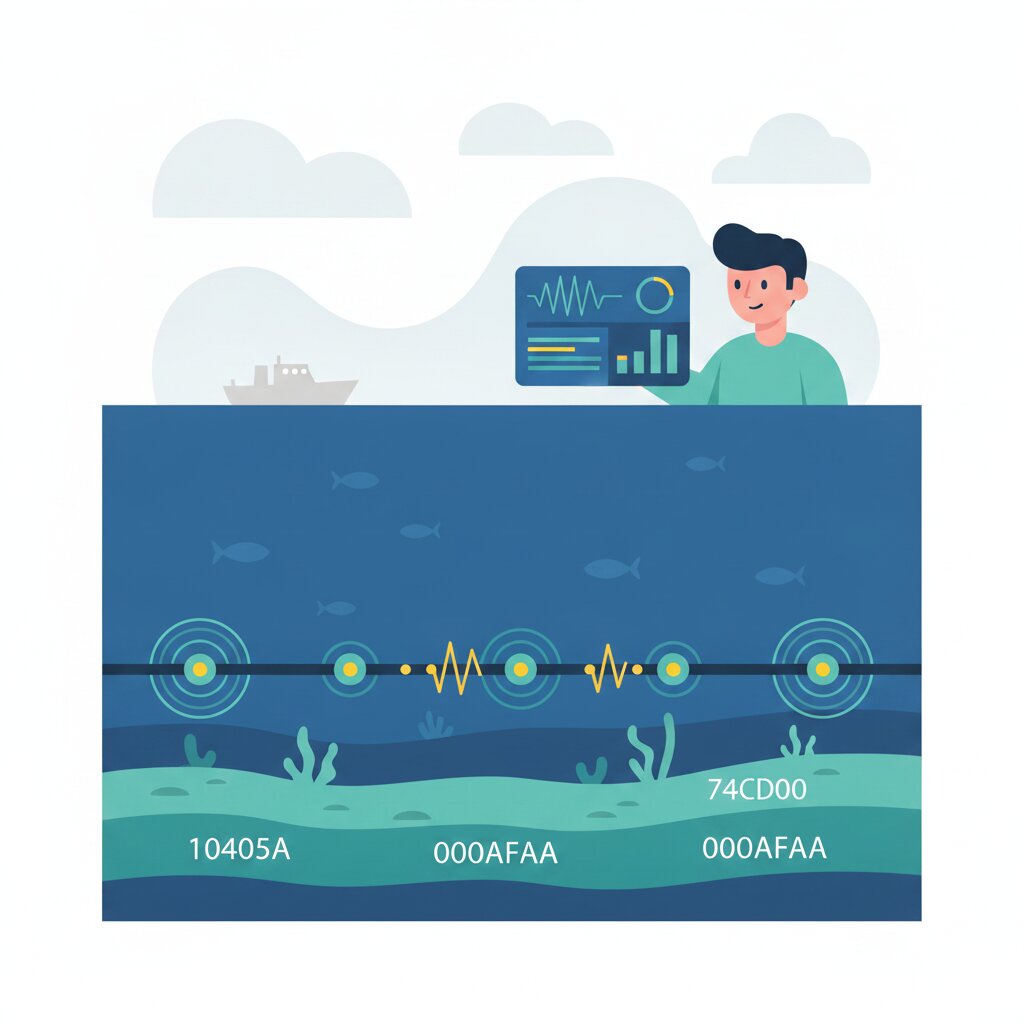
The principle is phase-sensitive optical time domain reflectometry, or ϕ-OTDR. An interrogator at a landing station injects coherent laser pulses into a dark fibre, those unused strands manufacturers include as spare capacity. Because DAS uses dark fibre rather than active strands, it does not affect the internet traffic flowing through the same cable.
The pulses hit microscopic density fluctuations frozen into the glass during manufacturing, producing Rayleigh backscatter that returns to the interrogator. When acoustic energy from the water column, a ship’s propeller, an anchor dragging, strikes the fibre, it creates strain via the photo-elastic effect. The interrogator analyses phase changes between sections of backscatter separated by a gauge length, the spatial interval over which it compares readings, yielding dynamic strain measurements with metre-scale resolution along tens of kilometres of cable.
In practice, a 100 km cable becomes 10,000 virtual sensors, each 10 metres long, polling over a thousand times a second. Interrogator units need installing roughly every 100 km, making the system scalable across long-haul routes.
“Our goal is to use the early warning system to alert the authorities even before the first damage occurs,” said Jouni Petrow, Elisa’s New Business Director.
The historical thread matters. SOSUS, the Cold War US Navy hydrophone network, pioneered persistent seabed monitoring. DAS achieves comparable coverage using existing commercial infrastructure, without the cost and friction of deploying military sensors. But the capabilities that make DAS effective against surface vessels also define what it cannot yet do: detect submarines.
Can DAS detect a submarine or underwater vehicle approaching a cable?
DAS is good at detecting surface vessels. Submarines are a different question.
The physics works against you. Acoustic energy from a submerged source must travel through the water column, couple into seabed sediment, and induce enough fibre strain to register above the noise floor. Surface vessels benefit from the Lloyd’s mirror effect, interference between direct and surface-reflected acoustic paths creating distinctive frequency notches. Submerged sources lack that component. Their signatures are weaker and harder to characterise.
Nobody has published quantitative data on DAS sensitivity to submarines or UUVs near cables. The INESC TEC ϕ-OTDR studies, the Hartree Centre work with Indeximate, the Nature Scientific Reports cable monitoring paper, all of it focuses on surface vessels. For the operator asking whether DAS will alert them to a submarine, the honest answer is: not reliably, and not yet.
This matters because Russian submarine activity near cables in the Irish Sea and Norwegian Sea is documented, and China has tested deep-water cable-cutting devices.
What technologies enable seabed-to-space situational awareness for cable protection?
Detection without identification gets you a notification that something is near your cable. Is it a fishing trawler or a hostile actor? You do not know.
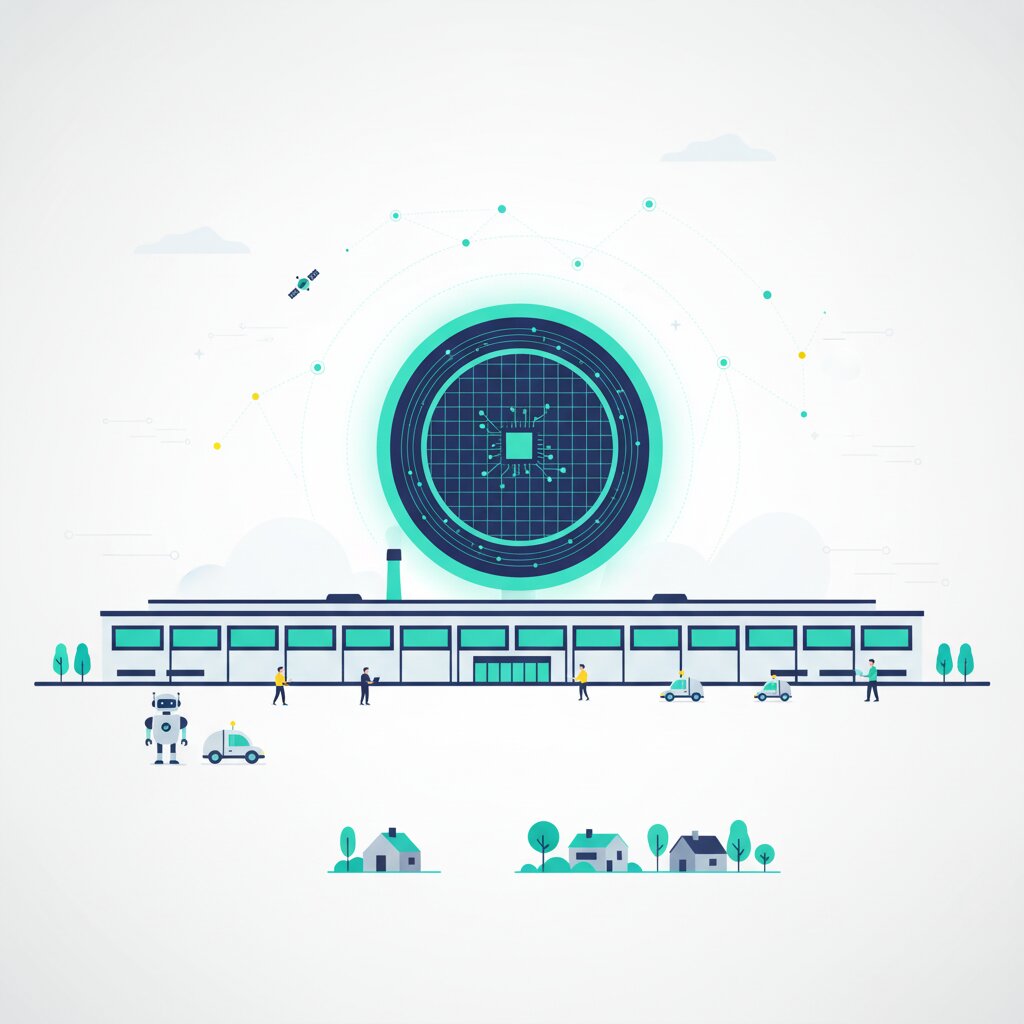
Seabed-to-space situational awareness, S3A, is the architecture designed to answer that question. NATO formalised the concept under its 2023 Digital Ocean Initiative. It has four layers.
The seabed layer is DAS, persistent acoustic detection. The surface layer is AIS vessel tracking and coastal radar. AIS broadcasts identity and position for most commercial ships, but it can be switched off, creating dark vessels. The space layer adds SAR and optical satellite imagery, wide-area and non-cooperative, but intermittent: orbital passes are periodic and optical sensors are weather-dependent. The subsurface mobile layer, UUVs and crewed submersibles, provides close inspection but cannot cover wide areas persistently.
No single layer is sufficient. DAS detects but cannot name. AIS names but can be deactivated. Satellites see everything but not continuously. UUVs inspect closely but slowly.
The fusion layer is the unsolved problem. NATO’s Mainsail system, developed at the Centre for Maritime Research and Experimentation in La Spezia, uses AI to track over 100,000 vessels daily and flag anomalous behaviour — part of how NATO and the EU are deploying these technologies operationally.
There is also the data volume problem, which is separate from fusion. A single DAS interrogator produces terabytes of raw strain data daily. Without machine-learning filtering, operators drown in data while missing the signal. Fusion asks how to correlate multiple streams into one picture. The data volume problem asks how to make a single stream manageable. Both need solving before S3A becomes operational reality.
How does cable routing redundancy actually protect against disruption and what are its limits?
So DAS detects and S3A identifies. What happens when something still gets through?
Routing redundancy is the internet’s built-in answer. Instead of a single cable between two points, operators build physically separated routes. When one cable is cut, BGP and software-defined networking reroute your traffic automatically, typically before you notice. Users in well-connected regions rarely feel a single failure. The system was built for accidents, and it handles them well.
The limits are structural. Cost is the obvious one: each route costs hundreds of millions, and for nations served by a single cable, a second cannot be justified commercially.
Geography is harder. Narrow corridors like the Gulf of Finland, Bab el-Mandeb, and the Luzon Strait force multiple cables through the same physical space because there is no alternative. If you operate in a chokepoint region, redundancy is physically impossible, all paths share the same corridor.
Landing station convergence may be more vulnerable. Separate submarine routes can terminate at the same building. A fire or physical attack there defeats the redundancy of the submarine segments.
Then there is the ownership dimension. Hyperscalers, Google, Meta, Microsoft, Amazon, now control more than half of intercontinental cable capacity and accounted for approximately 90% of new investment by 2024. They build redundancy because it protects their services. But their routing is commercially optimised for their own traffic, not for national resilience. The two objectives overlap but are not identical, and the gap is a strategic vulnerability that governments are only beginning to recognise — at the centre of the strategic debate over infrastructure resilience.
How does undersea cable repair actually work and how long does it typically take?
When detection, identification, and redundancy all fail, you are left with repair. And repair has a bottleneck.
The sequence is straightforward. Here is how it plays out:
- Optical time domain reflectometry sends a laser pulse down the fibre and the backscatter timing reveals the break with metre-level accuracy
- A cable ship transits to the site, which alone can take days depending on distance
- The ship deploys a grapple to hook the cable from the seabed
- The damaged section is cut out and a replacement fusion-spliced in onboard, a process that can take sixteen hours per joint
- The cable is redeployed and reburied where depth permits, typically under 1,500 metres
The bottleneck is the fleet. Between 60 and 75 cable repair ships serve the entire globe, most built in the 1990s to 2000s, none government-owned. They are commercially scheduled. If multiple cables are severed simultaneously, a coordinated attack could leave regions offline for months.
A fibre optic repair runs roughly AU$1.5 to 3 million, borne by the cable owner and typically insured. The EU has launched a cable security action plan with funding for rapid repair capability. Japan is subsidising new vessels for NEC. But the structural question remains: should governments invest in sovereign repair fleets? The case for it is surge capacity during a crisis. The case against is that the commercial model has functioned for decades, and a government fleet sitting idle between crises is expensive. What is changing is the perceived likelihood of the crisis that would require it. That crisis scenario is what brings us back to the architecture.
The protective architecture around undersea cables is real. DAS turns passive infrastructure into active sensors. S3A promises to fuse sensor streams into awareness. Routing redundancy absorbs single failures. The repair fleet restores what breaks.
But each layer has a structural limit an informed adversary can map. DAS cannot reliably detect submarines. Sensor fusion remains an unsolved integration problem. Redundancy fails at chokepoints and landing stations. The repair fleet is stretched, commercial, and cannot surge.
The Finnish DAS deployment is progress, but it protects against surface vessels in one sea, not submarines, not chokepoint sabotage, not coordinated multi-cable attacks. The gap between what each layer can do and what a determined adversary would demand of it: that is the story. The cable protection problem is a systems problem. Each layer works; each layer has a seam. The question is whether the seams are found and closed before an adversary finds them first.
Frequently Asked Questions
Does DAS damage the fibre optic cable or interfere with internet traffic?
No. DAS uses dark fibre, which are unused strands already inside the cable that were included during manufacturing as spare capacity. The laser pulses travel through these dormant fibres while the active strands continue carrying data uninterrupted. The DAS interrogator connects only at the landing station, and the sensing process does not physically alter the cable in any way. Regular internet traffic is completely unaffected.
How long does it actually take for the internet to go down after a cable is cut?
For a single cable cut, most users never notice an outage at all. Traffic reroutes automatically via alternate cable paths within seconds through BGP and software-defined networking. The problem emerges when multiple cables are severed simultaneously, or when a cable serves a region with no redundancy. In those cases, the impact ranges from noticeably slower speeds to a complete blackout that persists until repair, which can take weeks.
Can Starlink and satellite internet make undersea cables obsolete?
No. Satellite constellations provide valuable last-mile and emergency connectivity, but they cannot replace the bandwidth of undersea cables. A single modern fibre pair carries terabits per second; the entire Starlink constellation combined cannot match one transatlantic cable. Satellites complement cables, and they provide resilience for isolated communities, but intercontinental data volume grows faster than satellite capacity ever will. Cables remain the backbone of the global internet.
How often are undersea cables actually damaged?
Cable faults are surprisingly routine. The submarine cable industry averages 100 to 200 faults per year globally, though the overwhelming majority are caused by fishing trawls and ship anchors rather than sabotage. Most of these go unnoticed by the public because redundancy absorbs the impact. What has changed since 2023 is not the frequency of damage but the nature of it: the Baltic Sea has seen a cluster of deliberate, targeted cuts rather than accidental breaks, which is historically unprecedented.
Can DAS actually prevent a cable attack or only detect one?
DAS is a detection system, not a prevention system. It can identify a vessel behaving suspiciously near a cable and alert authorities in real time, potentially enabling an intercept before damage occurs. But DAS cannot physically stop an anchor from dragging or a submersible from cutting. Prevention requires the operational response layer: patrol vessels, naval presence, and the political will to intercept a suspect vessel, which DAS enables but does not itself provide.
Why are not undersea cables buried deeper to protect them?
Cable burial is limited by water depth and seabed geology. Remotely operated ploughs can bury cables to about one to three metres below the seabed, but this is only feasible in depths shallower than approximately 1,500 metres. Beyond that, the equipment cannot operate effectively, and the risk of damage from fishing and anchors also drops sharply. In deep water, cables are simply laid on the seabed where natural sedimentation gradually covers them over time.
Who pays for deploying DAS monitoring on commercial cables?
The cable owner or consortium bears the cost. For a commercial operator like Elisa, the business case is straightforward: preventing a single cable cut that would require weeks of repair and cost millions in restoration, plus reputational damage and regulatory scrutiny, justifies the investment in DAS interrogator hardware. For consortium-owned cables, costs are shared. Governments have also begun subsidising DAS deployment on cables deemed critical national infrastructure, particularly in the Baltic Sea region.
Is attacking an undersea cable an act of war under international law?
It depends on context and attribution. Deliberately severing a civilian telecommunications cable during peacetime is a violation of the United Nations Convention on the Law of the Sea, specifically the cable protection provisions, but it is not automatically an act of war. The threshold rises to an armed attack under Article 51 of the UN Charter if the damage is severe, systematic, and attributable to a state actor. The grey zone is exactly where cable sabotage operates: below the threshold of armed conflict but above ordinary criminality.
What happens if all cable repair ships are busy when multiple cables are cut?
You wait. The global fleet of approximately 20 cable repair ships is commercially scheduled and cannot surge beyond its physical capacity. If three cables are cut simultaneously in different oceans, at least one fault site will sit unattended for days or weeks until a ship completes another job and transits to the new site. This is not a hypothetical scenario: NATO and national defence planners actively war-game coordinated multi-cable attack scenarios precisely because the repair fleet is the single biggest bottleneck in cable resilience.
Are some parts of the world more vulnerable to cable cuts than others?
Yes, dramatically so. The Indo-Pacific region, parts of Africa, and Pacific Island nations often rely on one or two cables for all international connectivity. A single cut can isolate an entire country. By contrast, Western Europe and North America are connected by dozens of cables on diverse routes, making total isolation nearly impossible. Geography compounds the problem: maritime chokepoints like the Luzon Strait and the Strait of Bab el-Mandeb concentrate multiple cables in narrow corridors where redundancy cannot be physically achieved.
How does DAS distinguish between a fishing vessel and someone deliberately damaging a cable?
Through behavioural analysis rather than a single signature. A fishing vessel trawling legally follows predictable patterns: steady speed, repeated passes over fishing grounds, AIS transponder active. A vessel dragging an anchor across a cable corridor or loitering above a cable with AIS deactivated exhibits anomalous behaviour. Machine-learning models trained on DAS acoustic data, fused with AIS feeds, flag these behavioural deviations for human operators. The system identifies anomalies; a human analyst makes the final threat determination.
Has any cable saboteur ever been caught and prosecuted?
Almost never, and this is one of the most significant weaknesses in the cable protection framework. The evidentiary burden for prosecution is extremely high: you must prove beyond reasonable doubt that damage was intentional, identify the specific vessel and crew, establish jurisdiction, and apprehend the perpetrators. In the Baltic Sea incidents since 2023, vessels of interest have been identified, but no prosecutions have succeeded. Attribution is not enforcement, and the gap between knowing and proving is where impunity lives.