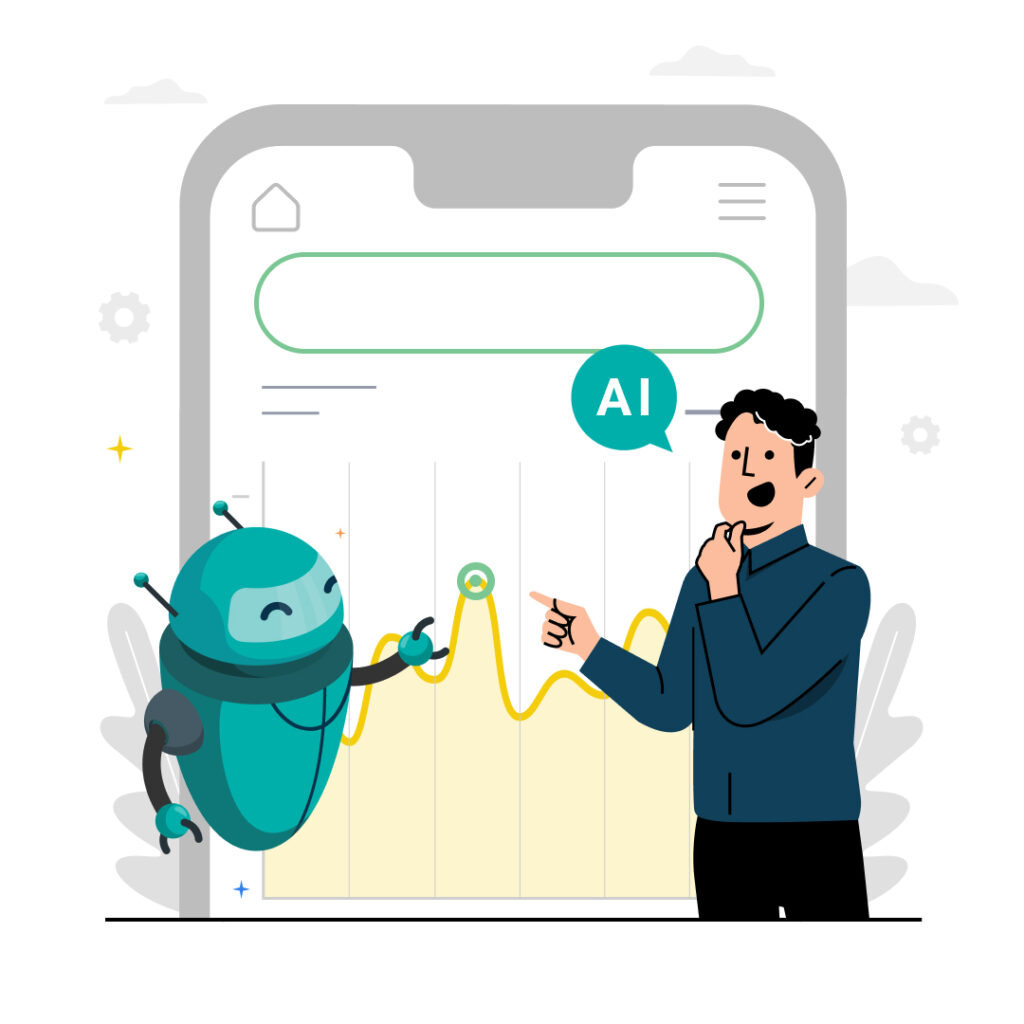

Your team is probably already using an agentic browser. Cyberhaven’s research found that 27.7% of enterprises had at least one employee with ChatGPT Atlas installed within a week of its launch — before IT knew it existed. These are autonomous agents that navigate pages, submit forms, read email, and execute workflows using your logged-in credentials. The security frameworks for managing them are months behind the deployments. What follows maps six distinct threat surfaces, each linking to the article that covers it in depth.
What makes an agentic browser different — and why prompt injection is still unsolved
A conventional browser displays content. An agentic browser acts on it — it is a second user operating under your account, with your authority, across every domain at once. This creates the confused deputy problem: the agent holds legitimate cross-domain authority, so attackers redirect it using content it processes. Same-Origin Policy and CORS provide zero protection because the agent’s cross-domain access is intentional and authorised by design.
That architectural gap is why prompt injection remains unsolved. Malicious instructions embedded in a webpage, image, or calendar invite are indistinguishable from legitimate content at the model level. Indirect prompt injection requires no user action and cannot be blocked by input sanitisation. OpenAI’s own CISO has called it “a frontier, unsolved security problem”. Microsoft’s FIDES project proposes deterministic architectural controls — enforced separation of trust rather than filters that can be bypassed.
Read more: Why Prompt Injection Is the Unsolved Problem Inside Every Agentic Browser
What does the real-world exploit record actually look like?
Between August 2025 and February 2026, researcher-attributed vulnerabilities were disclosed in Perplexity Comet, Opera Neon, Fellou, and ChatGPT Atlas — with Atlas vulnerable within 24 hours of its beta launch. The OpenClaw incident saw credential exfiltration via a single crafted email in about five minutes. Miggo Security‘s calendar-invite semantic attack against Google Gemini showed that even Google’s own detection model failed when the payload was indistinguishable from a legitimate entry. The pattern: vendors cannot patch the ambient web content their agents process. Each of the six demonstrated exploits in the incident record shares one root cause — the architectural problem inside every agentic browser described above.
Read more: Six Demonstrated Exploits That Prove Agentic Browser Security Is Not Theoretical
What attack surfaces are most organisations not thinking about?
The exploits above target the browser interface. The less-visible attack surfaces are AI skill registries and messaging app link previews. Cisco analysed 31,000 AI agent skills and found 26% contained at least one vulnerability — the top-ranked skill in MolthHub was functionally malware, exfiltrating data to an external server via a silent curl command.
The Model Context Protocol (MCP) creates a second supply chain surface: malicious MCP servers can be installed like any other tool and execute code with elevated permissions. Zero-click link preview exfiltration through Teams, Telegram, and Slack requires no user action beyond having the agent deployed. The full picture of the AI skill supply chain and zero-click messaging exploits represents the attack surface most security reviews miss entirely.
What does a safe adoption process look like before company-wide rollout?
Blocking deployment is not sustainable — 69% of enterprises are already piloting or running early production agent deployments, and employees are self-adopting consumer-grade agents without IT oversight. The practical approach: assess current shadow AI exposure, run a sandboxed pilot with non-production data, implement governance controls before company-wide access, and integrate agent telemetry into existing SIEM/XDR platforms without requiring new tooling. A governance framework for rollout — covering acceptable use policy, least-privilege configuration, and an incident response playbook for browser-agent compromise — is the practical complement to the threat model laid out above.
Read more: A Safe Adoption Playbook for Agentic Browsers Before Company-Wide Rollout
What open-source tools exist for scanning and red-teaming agentic browser deployments?
Several open-source options exist. Cisco’s Skill Scanner (GitHub: cisco-ai-defense/skill-scanner) combines YARA signature detection, LLM-as-judge semantic analysis, and VirusTotal correlation. Perplexity’s BrowseSafe achieves F1 ~0.91 on prompt injection benchmarks. Giskard offers LLM red teaming with 40+ adversarial probes. TrojAI covers build-time testing (Detect) and runtime protection (Defend). PromptArmor’s aitextrisk.com tests specifically for link-preview exfiltration. These open-source scanning and red-teaming tools give security teams practical options regardless of budget.
Read more: Open-Source Tools for Scanning and Red-Teaming Agentic Browser Security
What do OWASP, MITRE, and compliance frameworks say about this risk?
The open-source tools above map directly to recognised risk classifications. OWASP LLM Top 10 covers the core risks under LLM01 (Prompt Injection), LLM02 (Sensitive Information Disclosure), LLM05 (Improper Output Handling), and LLM06 (Excessive Agency). The OWASP Top 10 for Agentic Applications 2026 extends this to cascading failures, orchestration vulnerabilities, and memory poisoning.
The liability question matters: when an agent manipulated by prompt injection sends PII externally, the data controller — the company deploying the agent — bears the compliance obligation, not the vendor. OpenAI’s documentation explicitly states Atlas is not in scope for SOC 2 or ISO attestations. For board-ready risk language that maps these incidents to GDPR, HIPAA, and SOC 2 obligations, the full framework analysis is the place to start.
Read more: What OWASP, MITRE, and Compliance Frameworks Say About Agentic Browser Risk
Where should you start?
Start with the threat model, not the tooling. Read the prompt injection mechanics first — it explains why the problem is architectural, not a configuration issue you can patch. Then assess what your team has already deployed with a shadow AI audit.
Three time-sensitive actions: (1) audit for self-deployed agents already in use, (2) check whether any agentic browser has authenticated access to regulated data, and (3) confirm your SIEM can ingest agent action logs. The attack surface — the ambient web — is not patchable. The appropriate posture is governed deployment with monitoring, not block-or-allow.
Suggested reading order: Prompt injection mechanics → The evidence base → Attack surfaces you may be missing → Governance playbook → Tooling → Compliance language for boards and auditors
Browser-Agent Security Reference Library
Understand the Threat
- Why Prompt Injection Is the Unsolved Problem Inside Every Agentic Browser: The confused deputy problem, indirect prompt injection, and why traditional browser security models break down.
- Six Demonstrated Exploits That Prove Agentic Browser Security Is Not Theoretical: Researcher-attributed incident record from August 2025 to February 2026.
- The Agentic Browser Attack Surface You Are Not Thinking About: AI Skills and Zero-Click Messaging Exploits: AI skill supply chain risk and zero-click messaging app exfiltration.
Govern and Respond
- A Safe Adoption Playbook for Agentic Browsers Before Company-Wide Rollout: Four-stage adoption framework, policy template, SIEM integration, and incident response playbook.
Detect and Test
- Open-Source Tools for Scanning and Red-Teaming Agentic Browser Security: Cisco Skill Scanner, Giskard, TrojAI, PromptArmor, and Microsoft Defender with MITRE ATLAS mappings.
Compliance and Governance Language
- What OWASP, MITRE, and Compliance Frameworks Say About Agentic Browser Risk: OWASP LLM and Agentic Top 10, MITRE ATLAS technique IDs, and GDPR/HIPAA/SOC 2 liability framing.
Frequently Asked Questions
What is the difference between an agentic browser and a regular browser?
A regular browser renders content for a human to read and interact with. An agentic browser uses an embedded AI agent to interpret content and take actions autonomously — navigating, form-filling, clicking, reading email, and executing multi-step workflows — on behalf of the user, using the user’s authenticated session. The security distinction is that the agent acts, where the browser only displays.
Can an AI browser be compromised without the user clicking anything?
Yes. Indirect prompt injection embeds malicious instructions in web content the agent processes — a page it navigates to, an email it reads, an image it OCR-parses. PromptArmor documented zero-click exfiltration through messaging app link previews in February 2026, requiring no user interaction beyond having the agent deployed.
See also: Six Demonstrated Exploits That Prove Agentic Browser Security Is Not Theoretical
Why do existing security tools like EDR, CASB, and DLP not protect against agentic browser threats?
These tools intercept known attack signatures and enforce data policies at the file or endpoint level. Agentic browser threats operate at the semantic layer — the attack is a natural-language instruction indistinguishable from legitimate content. DLP cannot inspect content inside an agent prompt. CASB sees an authenticated session and no policy violation. EDR sees no malware.
See also: The Agentic Browser Attack Surface You Are Not Thinking About
What does “shadow AI” mean in the context of browser agents, and why does it matter?
Shadow AI refers to employee-adopted AI agents deployed without IT oversight. OpenClaw went viral with 60,000+ GitHub stars in 48 hours, with developers using it to manage email, Slack, and calendars before IT knew it existed — acting with full user credentials, outside any monitoring. See also: The Agentic Browser Attack Surface You Are Not Thinking About
Is it safe to use agentic browsers with regulated data — HIPAA, GDPR, or PCI-DSS?
OpenAI’s own documentation explicitly states: “Do not use Atlas with regulated, confidential, or production data.” When an agent exfiltrates PII via a prompt injection triggered by a third-party website, the company deploying the agent bears data controller obligations under GDPR, including the 72-hour breach notification requirement. See also: What OWASP, MITRE, and Compliance Frameworks Say About Agentic Browser Risk
What is the OWASP Top 10 for Agentic Applications, and how does it differ from the OWASP LLM Top 10?
The OWASP LLM Top 10 covers language model risks broadly; the OWASP Top 10 for Agentic Applications 2026 is a dedicated extension that addresses the additional risk surface introduced when an LLM is given the ability to take autonomous actions — covering cascading failures, orchestration vulnerabilities, memory poisoning, and excessive agency in ways the LLM Top 10 does not.
How quickly can attackers find vulnerabilities in a newly launched agentic browser?
ChatGPT Atlas was found to be vulnerable to prompt injection within 24 hours of its beta launch in November 2025. The attack surface is the ambient web, not the product code — researchers do not need to reverse-engineer the product, they need to construct an injection payload that the agent will process during normal browsing.