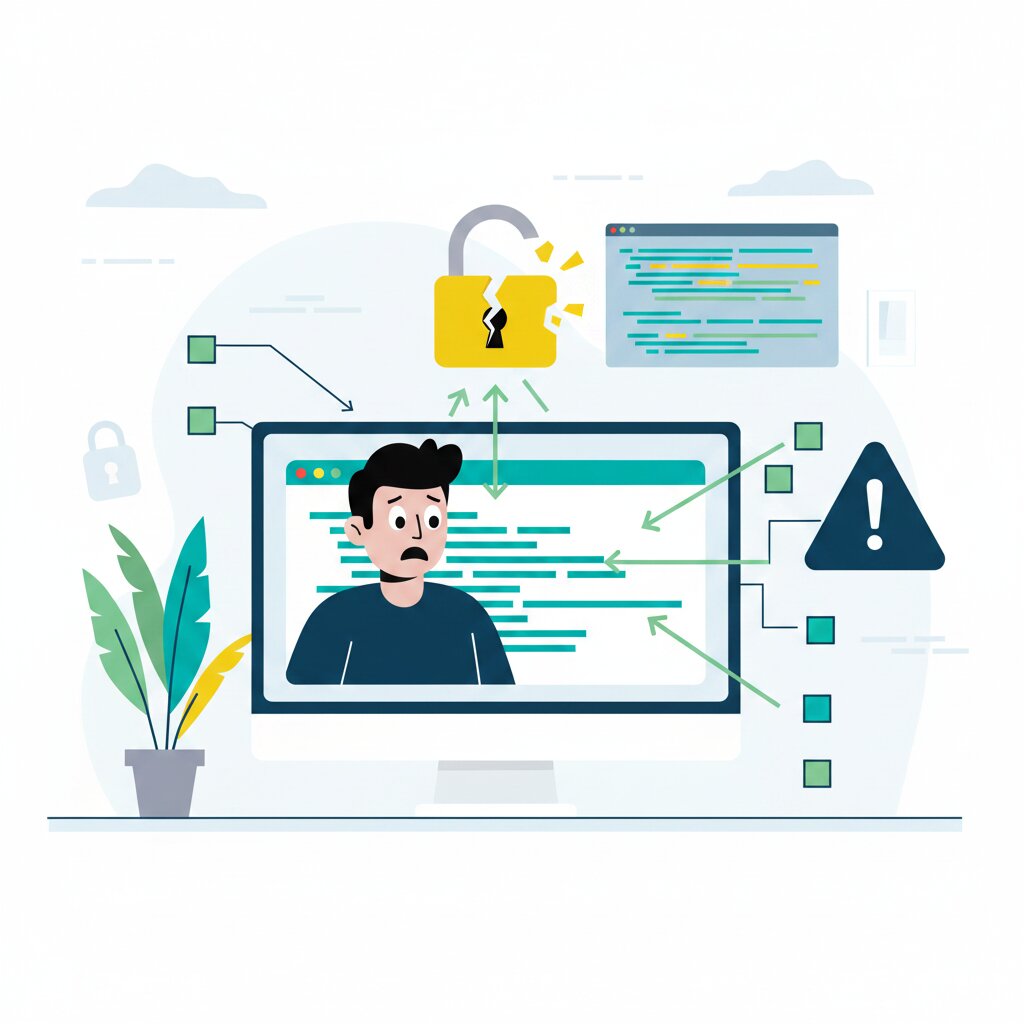

For the first three years of the generative AI era, prompt injection sat in the “data leakage” column of most risk registers. Attackers could manipulate outputs, extract information the model had been told to withhold, cause some embarrassing behaviour. Real damage, but bounded. The attacker could not own the system.
CVE-2026-26030 changed that. The vulnerability — a flaw in Microsoft’s Semantic Kernel Python SDK — documents the full path from an injected text string to remote code execution on the host running the agent. Flowise CVE-2025-59528 followed with the same outcome via a different mechanism. The risk category has shifted: prompt injection isn’t a content problem anymore, it’s a system compromise pathway. This article is part of our series covering how prompt injection moved from research to production in 2026.
This article looks at how the escalation works, why multi-tenant SaaS makes every stage worse, and why the instinct to “sanitise the input” doesn’t apply here.
Editorial note: Primary Microsoft source documentation for CVE-2026-26030 is available via the Microsoft Security Blog and GitHub Advisory GHSA-xjw9-4gw8-4rqx. The mechanism described here draws on those sources and corroborating secondary coverage.
Why Is Prompt Injection Now Classified as a System Compromise Risk?
CVE-2026-26030 reclassified prompt injection from an output integrity problem to an execution problem. The vulnerability affects Microsoft Semantic Kernel — 27,000+ GitHub stars, used widely across enterprise deployments. CVSS 9.9, Critical. This is not a marginal edge case.
The structural finding matters more than any single CVE: the LLM is not a security boundary. It parses language into tool parameters exactly as designed. In the vulnerable path, a model-generated filter expression gets interpolated into a Python lambda expression. The model generates the filter value; the filter value runs as code.
OWASP LLM01 (Prompt Injection) and LLM06 (Excessive Agency) are the two halves of the problem. LLM01 is the entry point: attacker-controlled text reaches the model’s context. LLM06 is the amplifier: the agent has permissions that turn a manipulated string into a meaningful execution event. Together, they produce RCE. OWASP has ranked prompt injection the number one LLM risk for three consecutive years — not because the vulnerability is new, but because agents now have the tool access to make it consequential.
How Does a Prompt Become a Shell — What Does the CVE-2026-26030 Attack Chain Actually Look Like?
In Microsoft’s own proof-of-concept — a hotel finder agent — a single adversarial hotel listing was enough. The agent retrieved the listing during normal operation. It contained a crafted filter value exploiting Python’s class hierarchy traversal to reach the built-in import mechanism and execute arbitrary code. Result: calc.exe launched on the host device. No browser exploit, no malicious attachment, no memory corruption. The agent did exactly what it was designed to do.
A companion vulnerability, CVE-2026-25592, demonstrates a second path. In the .NET SDK’s SessionsPythonPlugin, the DownloadFileAsync method was accidentally decorated as a callable tool — officially advertising it to the model. Inject a prompt that creates a payload inside an Azure Container Apps sandbox, invoke the download helper, write to the Windows Startup folder, achieve host compromise on next sign-in. The container boundary existed. The problem was that a trusted bridge across it had been handed to the model.
Both paths share the same structural logic: trust in model-generated parameters propagates to execution without validation.
This isn’t a Semantic Kernel quirk. In February 2026, researcher johnstawinski showed that Anthropic’s Claude Code Action had an equivalent path: a malicious pull request title enters Claude’s prompt, the injection overwrites the bun executable with an attacker payload. Every repository using it in default configuration was exposed. As the researcher put it: “If you give an LLM access to a knife, then anyone who influences that LLM controls the knife.”
What Is the Flowise CVE-2025-59528 Case and Why Does It Corroborate the Escalation Pathway?
Flowise is an open-source LLM application builder. CVE-2025-59528 documents RCE via CustomMCP configuration — different mechanism from CVE-2026-26030, same structural logic. Flowise had an allowlist protecting certain commands: python, npm, npx. OX Security researchers bypassed it by injecting commands through allowed commands’ arguments. At discovery, 12,000–15,000 Flowise instances were exposed online; active exploitation was reported April 7, 2026.
The Model Context Protocol (MCP), originally developed by Anthropic, is the standard for connecting AI agents to external tools and services. Every MCP connection is a trust boundary. In April 2026, Ox Security disclosed a STDIO command-injection flaw across MCP SDKs affecting 7,000+ servers and 150 million package downloads. The same month, CVEs landed across LiteLLM, Agent Zero, Windsurf, DocsGPT, Upsonic, and Flowise — all the same pattern: unsanitised input reaching execution sinks.
Two separate codebases, two separate mechanisms, same injection-to-RCE path. This is a consequence of how agent frameworks get built, not one vendor’s mistake.
Why Can’t You Fix Prompt Injection the Way You Fixed SQL Injection?
SQL injection was solved at the architectural level: parameterised queries enforce a hard boundary between code and data at the protocol level. The database engine never parses attacker-controlled text as SQL syntax. Structural, deterministic. That same fix is not available for LLMs.
SQL injection is syntactic — the fix enforces structural separation at the protocol level. Prompt injection is semantic. The model must process instructions and data in the same natural language format to function. There is no protocol-level separation to enforce. Block “ignore all previous instructions” and the attacker uses a different phrasing, Unicode characters, or a role-play scenario. Natural language has infinite variation. You can’t maintain a blocklist.
Microsoft’s “Spotlighting” technique marks untrusted content with structural delimiters — the closest analogy to parameterisation. Researchers have demonstrated up to 100% evasion success against Azure Prompt Shield and Meta’s Prompt Guard. Instruction hierarchy research from OpenAI, Anthropic, and Google improves resistance similarly. Neither provides a structural guarantee.
The implication: “sanitise the input” is a category error. Input filtering addresses what the agent reads. The real defence addresses what the agent can execute. OWASP LLM01 has stayed top-ranked for three years precisely because the fix is architectural — minimal tool exposure, capability gating, human-in-the-loop for irreversible actions — not textual. The documented attack patterns that precede escalation in production environments are in the Unit 42 analysis.
How Does Multi-Tenant SaaS Architecture Amplify Prompt Injection Risks?
In a single-tenant deployment, a successful injection compromises one customer’s agent. In multi-tenant SaaS, the blast radius is qualitatively different. Research found 12 of 18 LLM vulnerabilities are amplified in multi-tenant versus single-tenant deployments — cross-tenant data exfiltration and knowledge base poisoning show the highest amplification.
RAG poisoning makes this concrete: PoisonedRAG demonstrates a 97% attack success rate with only 5 malicious documents in a million-document shared knowledge base. A single bad actor tenant can corrupt responses served to every other tenant on the platform. Shared RAG indices are incompatible with multi-tenant security at this threat level.
PROMPTPEEK is a KV-cache timing side-channel attack that exploits standard multi-tenant performance optimisations to reconstruct other tenants’ system prompts and proprietary instructions — without any access to those accounts. The mitigation cuts throughput by 15–30%.
When an agent achieves code execution in a multi-tenant environment, it may reach shared credentials, databases, and network paths spanning the entire customer estate. If you’ve classified prompt injection as a low-priority “data leakage” item, this is a different threat model — and the full scope of the industrial injection threat makes clear why.
What Does Escalation Look Like Before the Shell — How Does Excessive Agency Enable the Full Attack Chain?
Injection achieves RCE only when the agent has the permissions to execute code, write files, or invoke privileged APIs. OWASP LLM06 (Excessive Agency) is the structural amplifier: agents can reach tools beyond task scope, those tools run with broader privileges than necessary, and high-impact actions proceed without human confirmation. The principle is direct: the tools you expose to an agent define the maximum blast radius of any injection that succeeds.
The Vertex AI Double Agent case (March–April 2026) illustrates this in production. Agents in Vertex AI inherited excessive default permissions through Google-managed service accounts. Exploiting injection in them enabled credential extraction and privilege escalation across Google Cloud. The default permissions were the real vulnerability; injection was the mechanism for reaching them.
The Mexican Government Breach (late December 2025 through January 2026) demonstrated the same dynamic at national scale. A single attacker used Claude Code and GPT-4.1 to compromise nine Mexican government agencies, exfiltrating approximately 150 GB of sensitive data including 195 million taxpayer records. The agents’ excessive data access converted injection-enabled entry into a multi-agency breach — the first documented nation-state-adjacent AI workflow attack.
Patch CVE-2026-26030 — upgrade to Semantic Kernel Python SDK 1.39.4 and .NET SDK 1.71.0 now if you haven’t. That closes the specific eval() and DownloadFileAsync paths, but not the underlying architectural condition. The mitigation guidance and patching options now available are in the enterprise defence article. Durable defence is architectural: minimal tool exposure, capability gating, per-tenant isolation, human confirmation for irreversible actions. The injection entry point is hard to eliminate by design. The blast radius is not. For the full picture of the 2026 state of production AI attacks, including how this escalation pathway fits within how prompt injection moved from research to production in 2026, the series hub maps every dimension of the industrialisation.
FAQ
What is CVE-2026-26030 and which systems are affected?
CVE-2026-26030 is a critical (CVSS 9.9) RCE vulnerability in Semantic Kernel Python SDK before 1.39.4, via unsanitised model-controlled parameters in InMemoryVectorStore. CVE-2026-25592 is a companion .NET SDK vulnerability (before 1.71.0) enabling sandbox escape via an exposed DownloadFileAsync tool. Both are patched — upgrade immediately and consult MSRC advisory GHSA-xjw9-4gw8-4rqx.
Is prompt injection to RCE possible in AI frameworks other than Semantic Kernel?
Yes. Anthropic’s Claude Code Action (Feb 2026, CVSS 7.7), Flowise CVE-2025-59528, and a batch of April 2026 CVEs across LiteLLM, Agent Zero, Windsurf, DocsGPT, Upsonic, and Flowise all share the same pattern: unsanitised input reaching execution sinks. This is not a single vendor’s error.
Why does a Crescendo attack make prompt injection harder to detect?
A Crescendo attack spreads the adversarial instruction across multiple benign-looking conversation turns; the injection only emerges from accumulated context. Standard per-message filters don’t catch it — detection requires conversation-level analysis.
What was the Vertex AI Double Agent vulnerability?
Vertex AI agents inherited excessive default permissions through Google-managed service accounts. Exploiting injection in them enabled credential extraction and privilege escalation across Google Cloud. The lesson: “what can the agent do” matters as much as “what payloads can reach the agent.”
How does PoisonedRAG enable cross-tenant attacks in SaaS?
Five malicious documents in a million-document shared knowledge base achieve a 97% manipulation success rate. In multi-tenant SaaS, a single bad actor tenant can corrupt every other tenant’s responses. Fix: strict per-tenant knowledge base segmentation.
Does patching CVE-2026-26030 fully address the prompt injection RCE risk?
No. Patching closes the specific eval() and DownloadFileAsync paths. Any other path where model-controlled parameters reach execution sinks without structural validation remains vulnerable. Patching is necessary; architectural defence is required.
What is the Promptware Kill Chain?
Five stages: Initial Access → Privilege Escalation → Persistence → Lateral Movement → Actions on Objective. It reframes injection as a structured campaign with distinct intervention points, not a one-shot exploit.
What is the PROMPTPEEK attack?
A KV-cache timing side-channel: by measuring inference response timing in a shared KV-cache environment, an attacker can reconstruct other tenants’ system prompts and proprietary instructions. Mitigation requires per-tenant KV-cache isolation at a 15–30% throughput cost.