
So you’re thinking about bringing in an AI vendor. Maybe it’s a chatbot for customer support, something to handle document processing, or recommendation engines. Whatever the use case, here’s the thing – choosing an AI vendor is nothing like picking a traditional SaaS tool.
AI vendors bring risks you probably haven’t dealt with before. Models drift over time. Where did the training data come from? Good question – it’s often murky. Your customer data might be training their next model unless you explicitly prevent it. And then there are security vulnerabilities like prompt injection and model poisoning – attack vectors your security team hasn’t seen before.
This guide is part of our comprehensive AI governance and compliance resource, where we explore vendor evaluation from start to finish – compliance verification, contract negotiation, the lot. You’ll learn which certifications actually matter, what questions to ask, how to spot red flags, and what contract clauses protect your business.
What Makes Evaluating AI Vendors Different from Traditional Software Vendor Evaluation?
Traditional vendor evaluation is pretty straightforward – uptime, scalability, data security. AI vendor evaluation needs all that, plus model transparency, explainability, and fairness testing.
Here’s the big one. 92% of AI vendors claim broad data usage rights. That’s way beyond the 63% average for traditional SaaS. What does this mean? AI vendors may use your data to fine-tune models or improve algorithms unless you explicitly block it in contracts.
Model behaviour changes over time – that’s model drift. Your vendor’s chatbot works great in January. By July it’s giving questionable responses if drift isn’t being monitored.
Security vulnerabilities are fundamentally different. Prompt injection lets malicious users override an AI’s safety instructions. Model poisoning corrupts the training data. These AI-specific attack vectors need different defences than your traditional security setup.
And then there’s liability. Who’s responsible when your AI generates biased recommendations or violates regulations? Only 17% of AI contracts include warranties related to documentation compliance, versus 42% in typical SaaS agreements. That gap should worry you.
What Compliance Certifications Should AI Vendors Have and How Do I Verify Them?
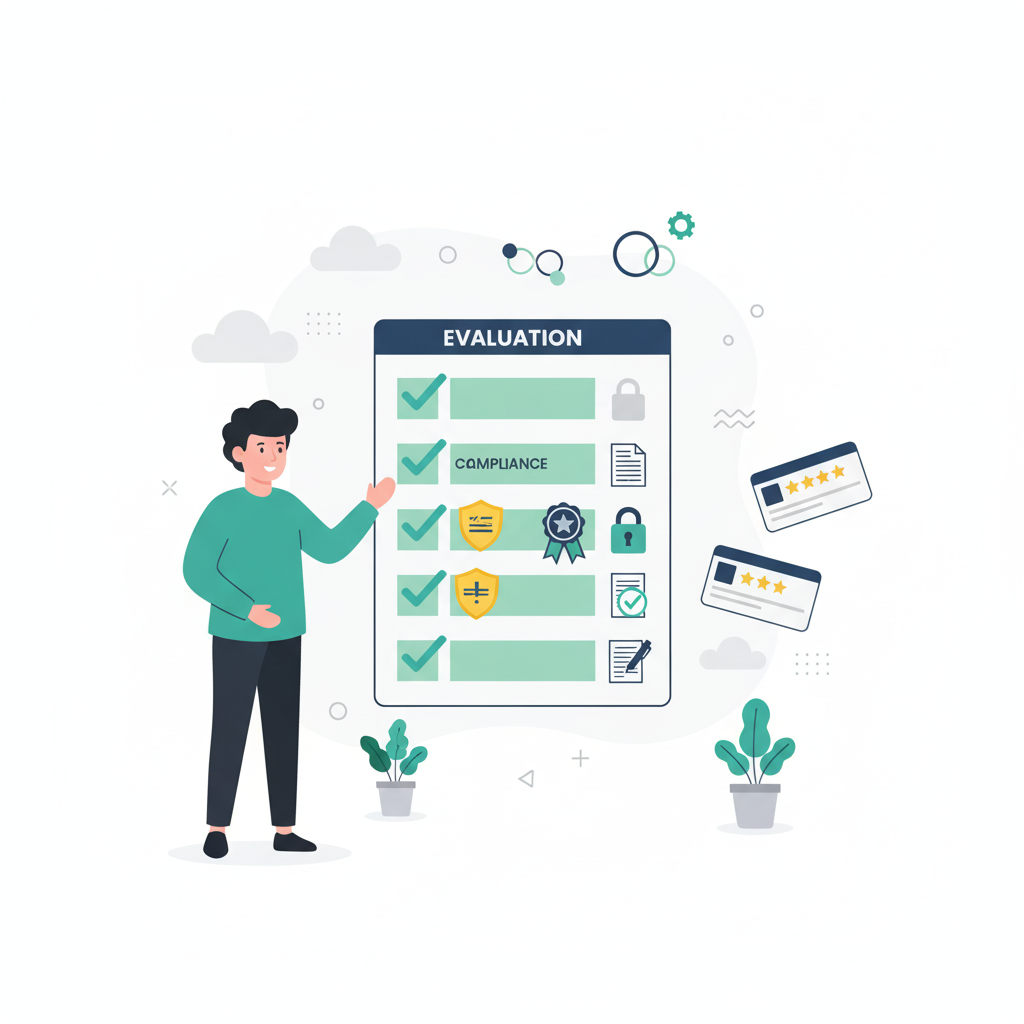
Don’t accept marketing claims at face value. Request the actual audit reports. Verify certificates with the issuing bodies. Confirm certifications haven’t expired. Understanding these certifications is crucial to the broader AI governance context your organisation operates within.
SOC 2 Type II shows your vendor has implemented and maintained security controls, audited by a third party. Look for reports covering security, availability, confidentiality, processing integrity, and privacy.
ISO 27001 certifies information security management systems. Request the certificate from an accredited certification body and verify its validity.
ISO 42001 specifically addresses AI management systems and responsible AI development. ISO 42001 governs AI systems, addressing risks like bias, lack of transparency, and unintended outcomes.
AI vendors should ideally have all three. SOC 2 for security. ISO 27001 for information security. ISO 42001 for AI-specific governance.
Industry-specific certifications matter too. HIPAA for healthcare. PCI DSS for payments. FedRAMP if you’re doing government work.
A lot of vendors list “compliance in progress” or expired certifications. These provide zero protection. Contact the certification body directly.
If a vendor can’t produce current audit reports within a week or two, that’s a red flag right there.
What Questions Should I Ask AI Vendors About Data Security and Privacy?
Start with data residency. Where is customer data stored geographically? Can you guarantee data stays in specific regions? These questions matter for GDPR compliance and regional regulations.
Confirm encryption standards. Is data encrypted at rest and in transit? What encryption algorithms – AES-256 minimum? Who manages the encryption keys?
Training data usage is where AI vendors differ most from traditional SaaS. Will the vendor use customer data to train or improve AI models? Can this be contractually prohibited? You need to nail this down.
Access controls determine who can reach your data. Who within the vendor organisation can access customer data? Multi-factor authentication should be mandatory. How are access logs maintained?
Data segregation in multi-tenant environments prevents data leakage. How is your data isolated from other customers? Have there been any data exposure incidents? Ask for architecture diagrams showing how segregation is implemented.
Vendor maturity shows through incident response protocols. What’s the incident response plan? How quickly will breaches be reported – 24-48 hours is standard? If there’s no documented plan or they claim “no incidents ever”, those are red flags.
What Are the Red Flags When Evaluating AI Vendors?
Evasive or vague responses to security questionnaires tell you something is wrong. If a vendor says “we take security seriously” without specifics or claims “proprietary security” prevents disclosure, that’s a red flag.
Missing or expired compliance certifications are significant concerns. Vendor claims SOC 2 but can’t produce a current audit report? Certifications are 2+ years old? These indicate the vendor never had proper certification or let it lapse.
Refusal to provide documentation before procurement signals issues. Won’t share a Data Processing Agreement template? A lack of a DPA could result in improper handling of sensitive customer data.
Unrealistic performance claims without benchmarks are common. Promises 99.9% accuracy without defining metrics? A vendor might claim to use AI when it’s minimal or non-existent.
No incident response plan suggests lack of maturity. Can’t articulate incident response procedures? Claims they’ve “never had a security incident” – unrealistic for any established vendor? Poorly defined documentation indicates risk you don’t want to take on.
Vendor lock-in indicators appear in contracts and technical architecture. Proprietary data formats with no export option? APIs designed to prevent migration? Some vendors include clauses allowing them to keep using your confidential information for training even after you terminate. Read the fine print.
Reference checks help validate your concerns. Ask existing customers about documentation quality, incident response, and how contract negotiations went.
What Should Be Included in an AI Vendor Contract and Data Processing Agreement?
Your Data Processing Agreement must define data controller versus data processor roles. Explicitly prohibit using customer data for model training unless you’ve separately agreed to it. Require a sub-processor list with approval requirements. Ensure support for data subject rights and breach notification procedures.
Service Level Agreements for AI differ from traditional software. Include model performance baselines with the measurement methodology clearly defined. Define model drift detection thresholds. Set availability guarantees for inference endpoints. AI systems produce probabilistic outputs – contracts should address minimum accuracy thresholds and what the vendor’s obligations are to retrain models if performance dips.
Liability clauses determine who bears responsibility for AI errors or bias. Include indemnification for IP infringement if AI generates copyrighted content. Watch for vendors excluding consequential damages – push for mutual indemnities and “super caps” for high-risk areas.
Data security obligations should align with ISO 27001 or NIST CSF. Specify encryption requirements for data at rest and in transit. Set security incident notification timelines – 24-48 hours is standard. Reserve your right to audit vendor security controls.
Termination provisions protect your exit strategy. Set data deletion timelines after termination – 30-90 days is standard. Specify data export formats. Require transition support. Consider escrow arrangements for valuable AI models or APIs.
Intellectual property clauses should clarify that your business owns the inputs and outputs generated by the AI. Carefully negotiate ownership terms for input data, AI-generated outputs, and models trained using your data.
Focus your negotiation on non-negotiable protections: prohibition on using customer data for training, minimum performance guarantees, reasonable liability caps, and data portability rights.
How Do I Assess AI-Specific Risks Like Model Drift, Bias, and Explainability?
Model drift occurs when AI performance degrades as data patterns change. Ask vendors how they monitor for drift, what thresholds trigger retraining, and what baselines are guaranteed. Vendors should commit to drift detection thresholds – typically ±5% performance degradation triggers notification.
Bias detection helps protect against discrimination. How does the vendor test for bias across protected characteristics? What fairness metrics are used? Bias can creep into models through historical data – without explainability, such biases stay hidden.
Model explainability is mandatory in regulated industries. Can the vendor explain how the model makes decisions? Do they provide model cards? Explainability provides transparency you need to calibrate trust.
Training data provenance reveals quality and potential issues. Where did the training data come from? Was it ethically sourced? Ask for detailed insights into datasets and model cards.
Security vulnerabilities unique to AI need specific protections. How does the vendor prevent prompt injection and model poisoning? What safeguards exist?
Performance monitoring depends on your use case. What metrics measure AI quality – accuracy, precision, recall, F1 score? Document processing might target 95%+ accuracy, chatbots 85-90% user satisfaction.
Vendors must define their measurement methodology, provide baseline performance, and commit to drift detection thresholds. Beware vendors promising “99.9% accuracy” without clear definitions of what that means.
Should I Build or Buy AI Solutions—What Framework Should I Use to Decide?
Total cost of ownership analysis often favours buying. When you actually cost it all out, vendor solutions are typically 3-5x cheaper compared to building in-house.
The costs escalate quickly when you’re building. Top AI engineers demand salaries north of $300,000. Gartner estimates custom AI projects range between $500,000 and $1 million, and about 50% fail to make it past the prototype stage. That’s a lot of money to potentially waste.
Time-to-market often determines the decision. Vendor solutions deploy in weeks to months. In-house development takes 6-12+ months. If your competitors are already using AI, buying is the faster route.
Does your team have AI/ML expertise, training data at the required scale, and the infrastructure? Most businesses lack these capabilities, making building impractical right from the start.
Strategic differentiation is a key argument for building. If AI is your core competitive differentiator, building may justify the investment. If AI just supports your business processes but isn’t your primary value proposition, buying reduces risk.
Buying risks vendor lock-in. Building risks technical debt. Off-the-shelf solutions mean you might need to adjust your processes to fit the AI – not the other way around. Whether you build or buy, you’ll still need internal governance implementation to manage AI risk and compliance.
Hybrid approaches provide flexibility. Use vendor foundation models but fine-tune them with your proprietary data. Build orchestration on top of vendor APIs. Start with vendor solutions, then selectively in-source high-value components as you grow.
Deciding to in-source is easy; staffing it is not. Standing up an internal team for a high-value component usually means running a hiring round while the vendor clock keeps ticking. SoftwareSeni’s extended software development teams put developers on your roadmap without that delay, so the in-sourcing move happens on your timeline, not the recruiting market’s.
see how extended development teams could staff that in-sourcing move →
“I’ve worked with SoftwareSeni for many years now across different CTO roles. Davo and his team are such a pleasure to work with and they have always provided the best and most capable resources when I needed them. They run a well oiled process to ensure they find and present the best candidates, plus they ensure smooth onboarding process. I highly recommend SoftwareSeni to any company that is wanted to expand their team and keen to explore an embedded team model.”
— Simon Farrell, VP of Engineering, Forage
FAQ
What is the difference between SOC 2, ISO 27001, and ISO 42001 certifications?
SOC 2 is a US-based audit framework that focuses on security controls for service providers. ISO 27001 is an international standard for information security management systems. ISO 42001 specifically addresses AI management systems and responsible AI development. AI vendors should ideally have all three – SOC 2 for security, ISO 27001 for broader information security, ISO 42001 for AI-specific governance.
How long does a thorough AI vendor evaluation typically take?
Expect 8-12 weeks for a comprehensive evaluation. That’s 1-2 weeks for initial vendor shortlisting, 2-3 weeks for questionnaire completion and review, 2-3 weeks for reference checks and security assessment, 1-2 weeks for proof-of-concept testing, and 2-3 weeks for contract negotiation. You can accelerate this by using compliance certifications as initial filters and focusing deep due diligence on finalists.
Can I trust AI vendors who claim they don’t use customer data for training?
Verify the contractual protections rather than relying on verbal claims. Your Data Processing Agreement must explicitly prohibit using customer data for model training, improvement, or any purpose beyond providing the contracted services. Request technical documentation showing data segregation between production customer data and training datasets. Include audit rights to verify compliance and penalties for violations.
What questions should I ask about an AI vendor’s incident response plan?
Ask for documented incident response procedures, mean time to detection and mean time to resolution metrics, historical incident summaries with lessons learned, breach notification timelines (should be 24-48 hours), forensic investigation capabilities, customer communication protocols, and examples of how they’ve handled past security incidents. If there’s no documented plan, that’s a red flag worth investigating.
How do I verify an AI vendor’s compliance certifications are legitimate?
Request the actual audit reports, not just the certificates. Verify certificate validity with the issuing certification body directly – contact information is on the certificate. Confirm the certification scope matches the services you’re purchasing. Check that certifications are current and not expired. A lot of vendors list “compliance in progress” or expired certifications – these don’t provide any protection.
What are important contract clauses for AI vendor agreements?
Important clauses include a Data Processing Agreement that prohibits customer data use for training, Service Level Agreements with model performance guarantees, liability allocation for AI errors or bias, data security requirements covering encryption and access controls, breach notification timelines, data deletion obligations upon termination, intellectual property ownership clarifying you own the inputs and outputs, and audit rights to verify vendor compliance.
How can businesses conduct thorough vendor evaluation without dedicated compliance teams?
Use compliance certifications as your initial filters – require SOC 2 and ISO 27001 as a minimum. Leverage vendor questionnaire templates from frameworks like NIST AI RMF. Focus deep due diligence on 2-3 finalists rather than trying to deeply assess all candidates. Engage legal counsel specifically for contract review, not for the entire process. Use proof-of-concept testing to validate the capabilities you actually need. Consider third-party risk management platforms that automate parts of vendor assessment.
What is the difference between AI-native vendors and traditional vendors adding AI features?
AI-native vendors like OpenAI and Anthropic built their entire business specifically around AI. They typically have deeper AI expertise and more mature governance frameworks, but may lack enterprise sales experience. Traditional vendors adding AI features have established security practices and enterprise relationships, but AI capabilities may be less sophisticated and bolt-on rather than core to the architecture. Evaluate based on your use case – mission-critical AI may favour AI-native, supporting features may favour traditional vendors.
How do I prevent vendor lock-in when purchasing AI solutions?
Contractual protections include data export rights with specified formats, API documentation and portability guarantees, prohibition on proprietary data formats, reasonable termination notice periods (90-180 days), transition assistance obligations, and escrow arrangements for valuable models. Technical protections include using standardised interfaces when possible, maintaining data pipelines independent of the vendor, documenting all integration points, and architecting for vendor replaceability from the start.
What AI-specific security risks should I ask vendors about?
Key risks include prompt injection (malicious inputs manipulating model behaviour), model poisoning (corrupted training data compromising model integrity), adversarial attacks (inputs designed to fool the AI), data leakage (the model revealing training data), and model inversion (reverse-engineering proprietary models). Ask vendors about their detection methods, prevention controls, security testing specifically for AI vulnerabilities, and incident response plans for AI-specific attacks.
How often should I reassess AI vendor risk after initial procurement?
Conduct a formal reassessment annually at minimum, with quarterly check-ins on SLA performance and compliance certification renewals. Trigger an immediate reassessment when the vendor has a security incident, compliance certifications expire or change, the vendor changes ownership or leadership, your use case expands significantly, new regulations affect your industry, or the vendor announces major architectural changes. Maintain ongoing monitoring of vendor performance metrics and model drift indicators.
What are realistic AI model performance expectations I should require in SLAs?
Performance varies by use case. Document processing might target 95%+ accuracy, chatbots 85-90% user satisfaction, recommendation engines get measured by click-through rate improvements. More important than the absolute numbers, vendors must define their measurement methodology, provide baseline performance from your proof-of-concept, commit to drift detection thresholds (typically ±5% performance degradation triggers notification), and specify remediation timelines when performance falls below thresholds. Beware vendors promising “99.9% accuracy” without clear metric definitions of what that actually means.
Wondering how fast you could staff an in-sourced component without opening a hiring round? Talk to SoftwareSeni about extended development teams