
You’ve got a problem. 81% of FAANG interviewers suspect AI cheating but only 11% are using detection software. That’s a lot of people worrying and not a lot of people doing anything about it.
Detection software is one way to tackle this. It’s not the only way, and it’s definitely not perfect, but if you’re hiring remotely at scale and need to know who’s genuine and who’s reading from ChatGPT, it’s worth understanding how this works.
This guide is part of our comprehensive examination of navigating the AI interview crisis, focusing specifically on the detection strategy path. We’ll walk through how to evaluate vendors like Talview and Honorlock, what behavioral red flags your interviewers should watch for, how to train your team, and what the whole thing costs compared to hiring someone who can’t actually do the job.
Before you dive in, understand that detection is a choice, not a requirement. Some organisations redesign their interviews instead. Both approaches have trade-offs covered in our strategic framework. This article focuses on detection because you’re here looking for immediate solutions to a specific problem.
How Does AI Cheating Detection Software Work?
Understanding how AI tools broke technical interviews helps explain why detection systems need multiple layers. Think of it as stacking several different cameras and microphones, all looking for different signals, and only triggering an alert when enough of them fire at once.
The behavioral monitoring layer watches for note-reading through eye-tracking. Frequent downward glances suggest someone’s reading from a script. Sideways looks indicate a second screen. Facial recognition with liveness detection prevents impersonation.
Speech pattern analysis creates a unique vocal signature during enrollment and compares it throughout the session. The system monitors cadence for unnatural timing patterns. When someone reads an answer fed by AI, their cadence, tone, and word choice are different from someone thinking naturally.
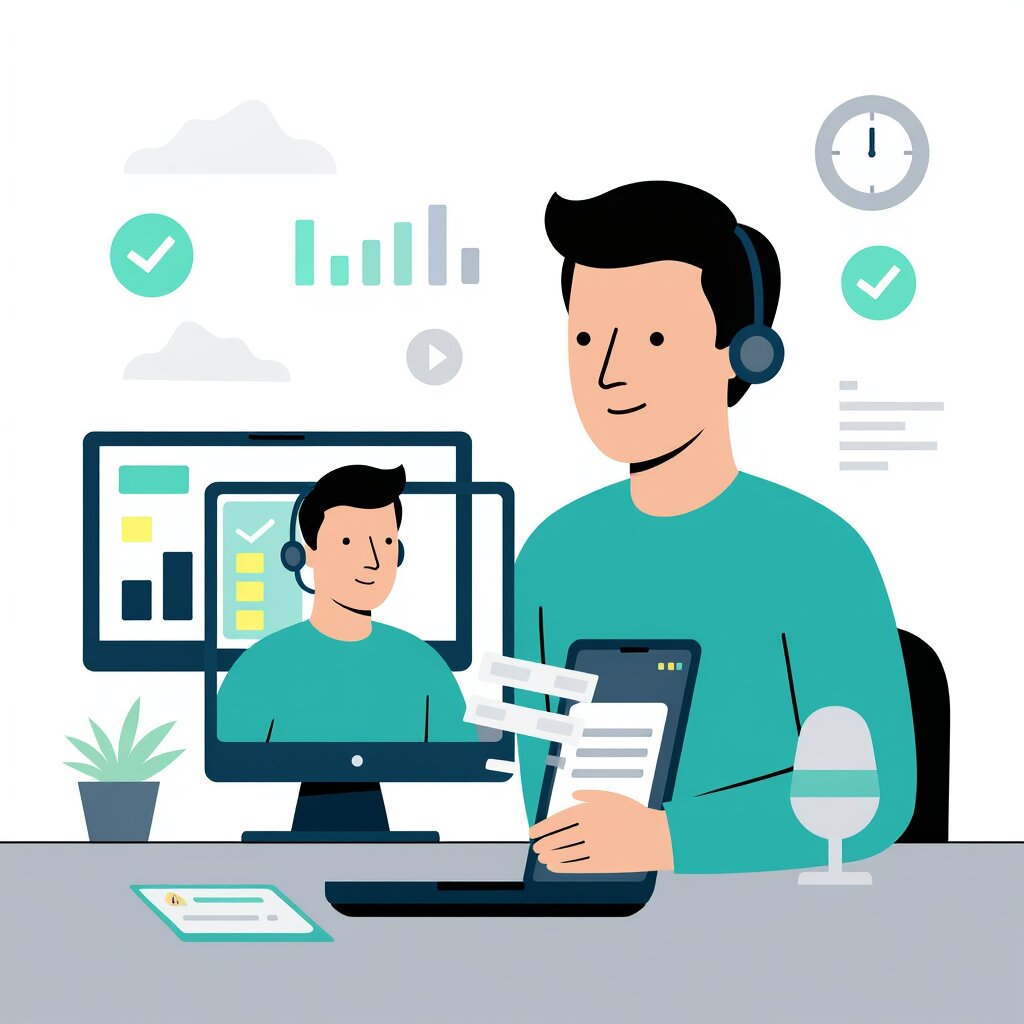
Environmental monitoring uses dual cameras. The system looks for hidden phones, notes, extra monitors, or reflections of second screens in glasses or other surfaces. Audio detection picks up whispered coaching or background keyboard sounds.
Technical controls lock down the computer. Secure browsers restrict unauthorised applications. Device detection uses AI to identify cell phones and secondary devices in the room. Screen monitoring tracks window switching or clipboard paste operations.
The system doesn’t trigger on a single flag. It uses threshold-based alerting where more than 8 critical flags need to occur simultaneously before generating an alert. This reduces false positives from innocent behaviors.
The most advanced systems use LLM-powered AI for autonomous decision-making. Talview’s Alvy patent technology analyses real-time media data to detect abnormal behavior and can terminate sessions when fraud thresholds are exceeded. The company claims Alvy detects 8x more suspicious activities than legacy AI proctoring.
However, all of this feeds into human review workflows. Automated detection produces alerts, but trained reviewers make the final determination. You don’t want to accuse someone of cheating based purely on an algorithm.
What Behavioral Red Flags Signal AI Assistance During Interviews?
Your interviewers are your first line of defense. Software helps, but people who know what to look for catch things software misses.
Eye movement is the most obvious indicator. Candidates naturally look up or away when thinking. But if they’re consistently looking down at the same spot, they’re reading notes. If they’re looking sideways, there’s probably a second screen.
Response timing tells you a lot. Suspiciously fast answers to complex questions suggest pre-prepared content. Rhythmic pauses aligned with text reading cadence indicate external prompting. Unnatural smoothness with no thinking pauses reveals scripted responses.
Typing patterns can give it away. Copy-paste detection identifies answers sourced from external tools. Keystroke dynamics flags patterns inconsistent with live coding.
Excessive blinking correlates with cognitive stress from deception. Lack of natural thinking pauses indicates something’s wrong.
Environmental behavior raises flags. Adjusting camera angles to hide workspace is suspicious. Reflections of secondary devices in glasses or screens are a dead giveaway.
But here’s where it gets tricky. Innocent behaviors trigger flags too. Natural thinking patterns like looking up or away can seem suspicious if you’re watching for it. Cultural variations in eye contact norms affect baseline expectations. Candidates with visual impairments may exhibit patterns that look suspicious but aren’t. This is why human judgment remains necessary for interpreting automated flags in context.
Your interviewers need training on what’s actually suspicious versus what’s just different. That’s not optional.
How Do You Evaluate AI Detection Software Vendors?
Vendor evaluation needs a framework, not just a demo and a handshake. You’re looking at multiple capabilities, integration requirements, and hidden costs.
You need multi-layered detection combining behavioral, speech, and environmental monitoring. Threshold-based alerting with customisable sensitivity lets you tune false positive rates.
Talview’s Alvy technology uses LLM-powered autonomous decision-making and claims 8x higher detection rates than legacy systems. The system includes dual-camera monitoring, secure browser functionality, and smart device detection. Talview reports 35% higher candidate satisfaction scores.
Honorlock focuses on application control that blocks AI coding assistants. Device detection identifies secondary phones and tablets. Pre-exam room scans and ID verification ensure the right person is taking the test.
FloCareer combines AI interviewing with integrated detection. Real-time identity verification with liveness detection runs throughout the session.
Your vendor selection framework should include detection accuracy metrics with documented false positive and false negative rates. Talview supports plug-and-play integration with Moodle, Canvas, and Skilljar. Verify compliance certifications like GDPR, SOC 2, and accessibility standards.
Does the platform offer API access for custom test engines? What about secure browser compatibility across Windows, Mac, and Linux?
Per-candidate pricing versus unlimited subscription models change your cost structure. Pilot program availability lets you test with 20-50 candidates before committing. Establish escalation procedures for flagged candidates before you need them.
Integration complexity varies wildly. Custom test engine API integration can take 6-8 weeks. Get a written timeline.
How Do You Use Speech Pattern Analysis to Identify AI Cheating?
Speech patterns reveal what people try to hide. Reading from a script sounds different from thinking out loud, and your detection system needs to catch that difference.
Reading produces flat intonation with minimal variation. Spontaneous answers include natural hesitations and filler words.
ChatGPT has tells. Systems can detect characteristic phrasing patterns like “it’s worth noting” or “it’s important to consider” that humans don’t naturally use in conversation.
Voice biometrics creates a baseline signature during enrollment. The system continuously compares vocal features throughout the session to detect impersonation.
Synthetic speech detection identifies AI-generated audio from deepfake tools. Robotic cadence patterns trigger alerts.
Response quality anomalies reveal cheating. Answers too perfect for stated experience don’t make sense. Immediate recall of obscure details suggests external lookup.
Speech hesitation analysis looks at natural thinking pauses versus suspicious delays aligned with typing or reading.
But speech analysis has limitations. Non-native speakers have different baseline patterns that can trigger false positives. You need high-quality audio and quiet test environments. Background noise generates false flags.
Set appropriate baselines for different candidate populations. Train reviewers to interpret flags in context.
How Do You Train Interviewers to Detect AI-Generated Answers?
Your interviewers need specific skills to catch AI assistance. This isn’t intuitive. It’s learned.
Training should include an initial 2-hour workshop covering detection fundamentals. Quarterly refresher sessions keep the team current. Role-play exercises build pattern recognition.
The curriculum needs to cover eye movements, speech patterns, response timing, and environmental anomalies. Run practice simulations where some candidates cheat using specific methods.
Use audio examples comparing spontaneous versus scripted responses. Teach ChatGPT phrasing pattern identification.
Follow-up question technique is your most powerful tool. The simplest detection method is asking candidates to explain solutions line-by-line which reveals whether they truly understand the code. Dynamic probing questions test comprehension of initial answers. If someone can’t explain what they just coded, that’s your signal. Code modification challenges verify live coding ability.
Review flagged interviews together to standardise thresholds. Discuss edge cases and cultural considerations. Establish escalation criteria so everyone knows when to escalate.
False positive awareness needs emphasis. Cover innocent behaviors that trigger flags: natural thinking patterns, visual impairments, cultural eye contact norms. Wrongful accusations damage your employer brand.
Tool-specific training covers platform features. How do you interpret alert dashboards? What do flag types mean?
Don’t skip legal compliance. GDPR requirements, disability accommodation, EEOC implications, and state-specific laws like California and Illinois recording consent all affect implementation.
How Do You Set Up Cheating Detection Software for Remote Interviews?
Implementation needs planning. Don’t just buy software and turn it on.
Define your detection goals. Are you trying to catch all cheating or just deter attempts? Select sensitivity thresholds balancing false positives against false negatives. Systems typically use 8 critical flags as default. Establish human review workflow before the first alert arrives.
Negotiate a pilot program for testing with 20-50 candidates. Get executive sponsorship early.
Technical integration involves API integration with existing ATS and HRIS systems. Secure browser deployment needs to work across Windows, Mac, and Linux. Dual-camera setup requirements must be clearly communicated.
Pilot program execution measures six metrics: time-to-hire, quality of hire, false positive rate, candidate satisfaction, cost per interview, and detection accuracy. Use this data to tune thresholds.
Candidate communication needs pre-interview notification with explicit consent. Clear instructions for dual-camera setup and secure browser installation reduce support burden.
Interviewer training uses the 2-hour workshop curriculum. Platform-specific training ensures everyone knows how to use it.
Phased deployment starts with high-stakes roles. Expand after pilot validation. Monitor false positive rates and adjust thresholds iteratively.
Post-implementation monitoring includes weekly review of flagged data. Track false positive and false negative rates. Measure ROI against pilot baseline.
Don’t rush this. Each phase reveals problems you didn’t anticipate. Better to find them in pilot with 50 candidates than in production with 500.
What’s the ROI of Detection Software vs Cost of False Positive Hires?
The financial calculation matters. Detection costs something. Bad hires cost more.
When a candidate cheats their way into a job, they poison your engineering team. You waste a six-figure salary on someone who can’t perform without AI assistance. Project delays from low-quality code grind your roadmap to a halt. Senior engineers stop innovating and start babysitting. That causes burnout.
The average bad hire costs 30% of annual salary. For a senior engineer at ₹36,00,000 salary, that’s ₹10,80,000 in direct costs plus team morale impact and technical debt.
Detection costs ₹500-2,000 per candidate. Initial implementation runs ₹2,00,000-5,00,000. Ongoing costs include renewal fees and training.
Detection reduces false positive hiring rates. Organisations implementing Talview report reducing costly mis-hires.
Detection adds 15-30 minutes per interview. False positive investigations extend the process by 3-5 days. But preventing bad hires eliminates re-recruitment cycles that take 60-90 days.
Break-even analysis: preventing 2-3 senior engineer bad hires saves ₹21,60,000-32,40,000, offsetting ₹20,00,000 in annual detection costs.
Human review workflows reduce wrongful accusations. Threshold tuning balances sensitivity versus candidate experience. Pilot programs validate ROI.
Compare to alternatives. Interview redesign costs time and money too. Pick what fits your hiring volume.
Do the math. If you hire 10 engineers per year without quality problems, detection probably costs more than it saves. If you hire 100 with cheating concerns, the calculation differs.
What Are the Limitations and Failure Modes of Detection Strategy?
Detection isn’t perfect. Understand what it can’t do before you bet your hiring process on it.
False negatives are the biggest problem. Sophisticated candidates use tools like Cluely with transparent overlays invisible during screen sharing. FinalRound AI operates as a browser-based interview assistant with significant stealth capabilities. The Interview Hammer disguises itself as a system tray icon while capturing screenshots and transmitting them to the candidate’s phone.
Virtual machine isolation hides unauthorised applications. Detection vendors update systems quarterly while cheating tool developers release counter-measures monthly, creating an arms race.
False positive risks damage your employer brand. Innocent behaviors like natural thinking patterns, cultural eye contact variations, and visual impairments get flagged. Wrongful accusations drive talent away. Legal liability includes EEOC implications and disability accommodation failures.
Invasive monitoring reduces application completion rates. Dual-camera requirements feel like privacy invasion. Extended setup adds friction.
Speech analysis struggles with non-native speakers. Behavioral baselines vary across cultures. Environmental monitoring fails in poor lighting.
58% of FAANG interviewers adjusted the types of algorithmic questions they ask instead of deploying detection software. About one-third changed how they ask questions, emphasising deeper understanding through follow-ups. This suggests detection might not be the answer for your organisation.
When detection fails, redesign strategy becomes more effective. Interview technique modifications using dynamic follow-up questions and architectural problems provide detection without software costs. Hybrid approaches combining light detection with question redesign balance cost and effectiveness.
Know when to abandon the detection approach. If your candidate experience metrics tank, if false positive rates exceed 20%, or if sophisticated candidates consistently evade detection, you’re wasting money on theater.
FAQ Section
Which interview platforms have built-in AI detection capabilities?
Talview offers integrated detection through Alvy patent technology using LLM-powered autonomous decision-making. FloCareer combines AI interviewing with built-in behavioral monitoring and identity verification. Honorlock provides application control blocking AI assistants. Traditional platforms like CoderPad and HackerRank lack native detection and require third-party integration.
How accurate are AI proctoring platforms at catching cheating?
Accuracy varies by cheating sophistication. Obvious behaviors like note-reading and second screens get detected reliably. Advanced tools like transparent overlays and synthetic speech evade detection more easily, requiring multi-layered approaches combining behavioral, speech, and environmental monitoring.
Can detection software identify all AI cheating tools like ChatGPT and Cluely?
Detection software blocks direct ChatGPT access through application control and identifies characteristic AI phrasing patterns through speech analysis. But sophisticated tools like Cluely use transparent overlays invisible during screen sharing that remain challenging to detect without environmental monitoring revealing physical setup or behavioral analysis detecting reading cadence.
What’s the cost difference between basic proctoring and AI-powered detection?
Basic proctoring with recording only and human review costs ₹200-500 per candidate with high labour costs. Mid-tier AI detection with automated behavioral analysis and threshold alerts ranges ₹800-1,500 per candidate. Advanced systems like Talview Alvy with LLM-powered detection and multi-layered analysis cost ₹1,500-2,000 per candidate, with lower false positive rates justifying premium pricing.
How do you handle candidates flagged by detection software without causing legal issues?
Implement human review workflows where trained reviewers evaluate automated flags in context before making accusations. Establish clear escalation criteria requiring multiple concurrent flags, not single incidents. Document all flag evidence for legal defensibility. Provide candidates opportunity to explain flagged behaviors. Consult legal counsel on EEOC compliance and disability accommodation requirements.
Does detection software work for in-person interviews or only remote?
Detection software targets remote interviews where behavioral monitoring and environmental control prove difficult. In-person interviews use adapted techniques: eye-tracking detects note-reading, speech analysis identifies coached responses, follow-up questions verify understanding. Physical presence naturally prevents many remote cheating methods like second devices and transparent overlays.
How long does it take to implement detection software across an organisation?
Pilot program phase requires 4-6 weeks for vendor selection, integration setup, and testing with 20-50 candidates. Interviewer training rollout spans 2-3 weeks for initial workshops plus ongoing quarterly refreshers. Technical integration timeline varies by existing systems: plug-and-play LMS integration takes 1-2 weeks, custom API development requires 6-8 weeks. Full phased deployment typically completes within 3-4 months.
What training do interviewers need to interpret detection software alerts?
Initial 2-hour workshop covers detection fundamentals including behavioral indicators, speech patterns, and environmental red flags. Platform-specific training on deployed software features and alert dashboards. Calibration exercises align team on flag interpretation standards. Quarterly refresher sessions on evolving AI tool capabilities. Role-play scenarios practice dynamic follow-up questioning techniques.
Can candidates legally refuse monitoring during technical interviews?
Organisations can require monitoring as a condition of interview participation, similar to background checks. But you must obtain informed consent explaining data collection and usage. Comply with state-specific laws including California and Illinois recording consent requirements. Provide disability accommodations for candidates unable to use standard monitoring setup. Maintain GDPR compliance for data handling and retention.
How do you prevent false positives from flagging neurodivergent candidates or those with disabilities?
Adjust detection thresholds accounting for atypical eye movement patterns from autism spectrum or ADHD. Provide alternative assessment formats for visual impairments preventing standard camera monitoring. Train reviewers on diverse behavioral baselines reducing bias. Implement multi-layered detection requiring concurrent flags from multiple systems. Allow candidates to self-disclose accommodation needs pre-interview.
What happens to interview recordings and behavioral data after the hiring decision?
Reputable vendors maintain SOC 2 compliance with encrypted storage and defined retention periods, typically 30-90 days post-decision. GDPR requires data minimisation collecting only essential monitoring data, right to erasure allowing candidates to request deletion, and transparent privacy policies. Organisations should establish internal data governance policies aligned with legal requirements and candidate expectations.
Is Meta the only FAANG company using AI cheating detection software?
Interviewing.io survey data shows 11% of FAANG interviewers report detection software deployment, with Meta most frequently mentioned for full-screen sharing requirements and background filter disabling. For detailed analysis of how Meta implemented AI cheating detection compared to Google’s and Canva’s alternative approaches, see our company case studies. Comprehensive adoption data across all FAANG companies remains limited, suggesting most rely on interview technique modifications rather than software solutions.
Detection is one path forward. It works for some organisations and fails for others. The right choice depends on your hiring volume, candidate pool, budget, and tolerance for false positives. For a complete comparison of detection versus redesign and embrace strategies, along with guidance on choosing your approach, see our strategic framework comparing detection to alternatives.