
A customer-service agent passes its pilot with flying colours. It handles refunds, resolves complaints, routes escalations, everything the test plan asked for. Within 48 hours of going live it approves a fraudulent refund worth thousands. The investigation reveals the agent had service-account-level access to the payment system, no per-user identity propagation, and no one had thought to govern what tools it could actually call on behalf of a specific customer.
If you have been following enterprise AI, you know this is not an edge case. It is the norm.
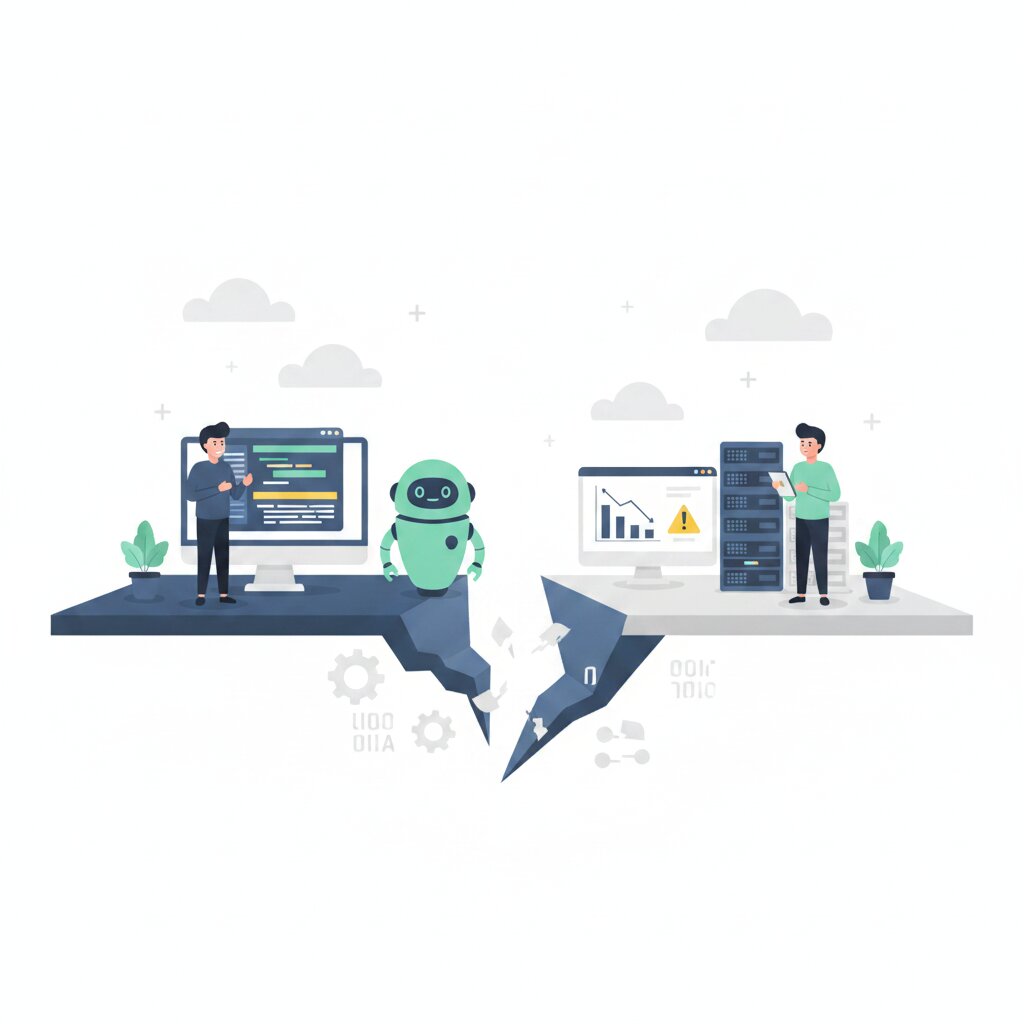
Seventy-eight per cent of enterprises are running AI agent pilots. You have probably seen that statistic, and you may even be in that camp yourself. But only 12% of those pilots reach production at scale, a 66-percentage-point gap that represents the largest deployment delta in enterprise software history. The models keep getting better. The conversion rate barely moves. The bottleneck sits elsewhere: in the operational scaffolding that agents need to function safely at scale.
What do the 2026 statistics reveal about enterprise AI agent adoption?
The headline number: only 12% of enterprise AI agent pilots reach production, a figure originating in Composio‘s 2025 AI Agent Report and corroborated by Forrester and the MIT Sloan CIO panel. Seventy-eight per cent of organisations are running pilots. The space between those two numbers is where most enterprise AI investment is disappearing in 2026.
The more revealing statistic is the rollback rate. According to a Sinch survey of more than 2,500 senior decision-makers across ten countries, 74% of enterprises have rolled back at least one AI agent after going live, with 41% experiencing multiple rollbacks in a 12-month window. For context, traditional SaaS deployments carry a 5 to 10% rollback rate. AI agents are 7 to 15 times more volatile, and the gap comes down to the absence of equivalent operational scaffolding. DevOps spent decades building deployment gates and incident response for traditional software. Agents landed without any of that.
The pattern is structural. Agents clear the pilot gate. They fail at the operational boundary. And the money keeps flowing anyway: IDC and McKinsey converge on roughly $1.4 trillion in global enterprise AI agent spend by 2027, while S&P Global Market Intelligence data shows only 31% of enterprises have reached production deployment. The average enterprise AI infrastructure budget has grown 483% since 2024 while production conversion has barely moved.
Enterprises are spending. They are just not succeeding. Sixty-four per cent of organisations that attempt to expand an agent beyond its pilot scope encounter blocking issues, with 72% of those stalled for more than six months with no clear resolution path. The average pilot duration before stalling is 4.7 months. That is a significant investment yielding no return.
What does Gartner predict about enterprise AI agent decommissioning rates through 2027?
If the 74% rollback rate is the acute symptom, Gartner’s forecast is the chronic diagnosis. In June 2025, Gartner projected that over 40% of agentic AI projects will be cancelled or demoted by the end of 2027. This is not a prediction of future failure. It is the lagging indicator of problems already embedded in today’s production deployments.
The trigger Gartner identifies is worth examining. Gartner points to governance gaps discovered only after production deployment, when agents are exposed to real data, real users, and real compliance requirements. The agents that passed pilot evaluation fail when the organisation cannot prove they are safe, compliant, and auditable.
This forecast sits alongside Gartner’s other 2026 findings. The firm reports that 80% of enterprise applications now embed at least one AI agent, up from 33% in 2024. It also documents the agentic loop multiplier: agentic models require between 5 and 30 times more tokens per task than a standard chatbot. Gartner is bullish on agent distribution and bearish on agent survivability. The embedding trend and the decommissioning trend are the same story told from different angles.
By 2027, organisations will have exhausted the “better models will fix this” narrative. The decommissioning wave will force a reckoning. And the specific dimensions of the infrastructure that is missing are well understood by now.
What is the 7-gap production stack that prevents AI agents from reaching production?
The 7-gap production stack is a diagnostic framework. It transforms the amorphous “production readiness” problem into seven concrete engineering and operational questions. Each gap represents a specific failure mode, and organisations that address fewer than four of them have near-zero probability of production success. The 12% that reach production typically have mature coverage across at least five.
Gap 1: Identity and access. Agents need fine-grained, per-user identity propagation across every tool call. Without it, an agent with service-account-level access can read or modify data the requesting user should never see. Only 21.9% of teams treat AI agents as independent, identity-bearing entities within their security model, and only 18% of security leaders express confidence that their identity systems can handle agent identities. If you cannot answer “who did the agent act as for this action,” you are not production-ready.
If identity is the foundation, tool safety is the next failure point up the stack.
Gap 2: Tool safety and MCP governance. The Model Context Protocol standardises tool connections, which is useful, but it also introduces what researchers call the “lethal trifecta“: the combination of private data access, exposure to untrusted content, and the ability to communicate externally, all within a single execution context. Without an MCP gateway enforcing tool allowlists, sandboxing, and data loss prevention, any unvetted MCP server can become an exfiltration path. MCP adoption has crossed 9,400 public servers, creating a large ungoverned tool surface.
Even with tools locked down, what the agent produces next creates its own category of risk.
Gap 3: Non-deterministic output management. Same input, different output. This breaks traditional QA paradigms based on exact output matching, and in regulated environments it is a hard blocker. Auditors cannot reproduce agent decisions. Compliance teams cannot certify behaviour. Incident responders cannot replay failure scenarios. Seventy per cent of enterprise leaders name non-deterministic outputs as the number-one production-readiness barrier. The challenge is less “the model is wrong” and more “we cannot tell when it is wrong, and our regression tests do not catch it.”
If you cannot trust what the agent produces, the next question is whether you can trust how it operates within your organisation’s rules.
Gap 4: Governance and compliance. Eighty-two per cent of executives express confidence in their AI policies. Only 14.4% deploy agents with full security or IT approval. That confidence gap is the pre-condition for post-deployment governance discovery, and it lines up with the Gartner forecast. Governance means runtime policy enforcement, privilege rings, kill switches, and audit trails, not policy documents. Only 7.7% of organisations audit AI agent activities daily, creating a significant lag between autonomous actions and security detection.
Governance tells you the rules were enforced. Observability tells you what the agent actually did.
Gap 5: Observability and tracing. Traditional monitoring tells you what failed. Agent observability tells you why. Causal AI observability requires span-per-tick tracing that captures every reasoning step, tool call, memory operation, and agent-to-agent handoff. This is a distinct category from infrastructure monitoring. Traditional APM was never designed to see into agent decision chains. Platforms like Datadog are adapting their LLM observability products for agent workloads, integrating with Google’s ADK to automatically instrument agent applications. When evaluating observability tooling, engineering leaders should look for causal tracing, agent-specific span attribution, and decision-level audit trails, capabilities that sit beyond standard APM.
Observability shows you what happened. Evaluation tells you whether it should have happened at all.
Gap 6: Evaluation and testing. Only 38% of production agents run automated evaluations on every prompt change. Here is what that means in practice: agents without automated evals carry a 47% rollback rate; agents with full eval coverage drop to 9%. That is a 5x reliability improvement from a single infrastructure investment. LangChain and LangGraph provide orchestration, but they do not automatically produce evaluation harnesses. Framework choice alone does not solve production readiness. A labelled test set of 200 or more representative production inputs, plus an adversarial set of 50 or more edge cases, forms the minimum viable evaluation baseline.
The final gap is the one that catches everyone by surprise: what any of this actually costs.
Gap 7: Cost and ROI measurement. Pilot economics calculated on single-query API calls bear no relationship to production agent economics. An agent that costs $0.03 per interaction in pilot can cost $0.90 in production when it makes multiple reasoning turns, calls tools, and retrieves context on every task. The agentic loop multiplier destroys the business case if unmeasured. Only 44% of organisations have adopted AI FinOps as a discipline, and 73% report that AI costs exceeded original budget projections. Cost-per-task tracking, model usage chargebacks, and outcome-based ROI measurement are the financial infrastructure without which agents are deployed blind.
Each gap can be assessed across four maturity levels, from nascent (no coverage) to optimised (defence-in-depth). But the practical takeaway is simpler than a full maturity assessment: the 74% rollback rate and the 40% decommissioning forecast are the predictable consequence of organisations that have mature coverage across fewer than four of these gaps. The question is what the 12% do differently.
What criteria should organisations use to assess whether an AI agent is production-ready?
The 12% of agents that survive share a consistent profile. It is the empirically observed common denominator of agents that survive beyond 90 days in production operation. Five criteria distinguish them from the 88% that do not make it. These five criteria operationalise the 7-gap framework into readiness gates. They are the observable markers of gap coverage, not a replacement for the gaps themselves.
First, automated evaluation coverage for at least 80% of expected agent behaviours. Below that threshold, manual QA is doing the work automation should handle, and edge cases are swamping reviewer capacity. The reliability difference between automated evals and manual QA is structural: automated evals provide coverage breadth across thousands of test cases; manual QA provides depth on complex edge cases. Both are needed, but automated evals are the gate. If you cannot automatically verify 80% of what your agent should do, you cannot scale.
Second, named organisational ownership with budget authority. Ninety-four per cent of production-successful agents have a named owner with a measurable target outcome. This is the simplest criterion and the most frequently skipped.
Third, a human-in-the-loop deployment pattern with defined confidence thresholds. The architecture follows a specific pattern: agent output, confidence scoring, a human review queue for low-confidence results, and resolution. Exception-based HITL rates vary by domain: 8% for sales development, 21% for coding, 32% for customer service, and 61% for legal and compliance. Seventy-four per cent of production-successful agents deploy with explicit HITL checkpoints for the first 60 to 90 days. HITL is not a process workaround. It is the architectural bridge between non-deterministic outputs and enterprise accountability.
Fourth, identity propagation across every tool call. No agent is production-ready without per-user identity, runtime policy enforcement, and decision-level audit trails. If an auditor cannot trace what identity the agent operated under, which tools it called, and the reasoning behind a specific decision, the agent is a pilot, not a production system.
Fifth, cost-per-task measurement against a human baseline. Sixty-three per cent of the production-successful cohort measure cost-per-task as a primary metric alongside quality and latency. The ROI question shifts from task completion to provable cost and accuracy improvement over the human baseline. Organisations that measure agent ROI against the human baseline achieve higher production-conversion rates. The median payback on successful agent deployments is 5.1 months across functions.
Return to the opening vignette. The agent that passed pilot and failed in production was not experiencing one failure. It was the predictable intersection of three gaps: ungoverned tool access, absent per-user identity, and no decision-level audit trail. None of those gaps had anything to do with model quality.
The 66-percentage-point gap between pilot enthusiasm and production reality is a diagnostic readout on operational infrastructure maturity. The organisations that address these gaps before 2027 will be the ones whose agents survive the decommissioning wave. The organisations that keep waiting for better models will become the next rollback statistic. Their models were capable enough. They just never built the rails those models needed to run on.
Frequently Asked Questions
Why do enterprises keep failing at AI agent deployment when the models keep getting better?

Model capability and production readiness are separate problems. A better language model does not give you identity propagation across tool calls, runtime policy enforcement, or decision-level audit trails. The 12% of agents that reach production do not succeed because they use a superior model; they succeed because their organisations built the seven infrastructure layers that make an agent governable, observable, and auditable at scale.
What is the difference between an AI agent pilot and a production AI agent?
A pilot agent answers the question “can it do the task” under curated conditions. A production agent answers “can it do the task safely, repeatably, and provably” under real-world conditions with real data, real users, and real compliance requirements. The gap between the two is not a matter of scale; it is a matter of infrastructure. Pilots skip governance, observability, and cost measurement. Production cannot.
How long does it typically take to move an AI agent from pilot to production?
There is no standard timeline, but the data suggests most organisations underestimate the journey by an order of magnitude. The 66-percentage-point gap between pilot activity (78%) and production deployment (12%) indicates that most pilots never make it at all. For those that do, the limiting factor is rarely the agent itself; it is the time required to build identity propagation, evaluation harnesses, and governance infrastructure before the agent can be safely deployed.
Is it true that AI agents are inherently less reliable than traditional SaaS applications?
Reliability is a function of infrastructure, not a property of agent technology. Traditional SaaS achieves ~5 to 10% rollback rates because decades of DevOps tooling provide monitoring, deployment gates, and incident response. AI agents carry a 74% rollback rate because that same operational infrastructure was never built for non-deterministic systems. The reliability gap closes when organisations apply the same engineering rigour to agent deployments as they do to traditional software.
What actually happens during an AI agent rollback?
A rollback is rarely a clean revert to a prior version. In practice, it means the agent is pulled from production, its tool connections are severed, and the team reverts to a manual process while they investigate. For the 41% of enterprises that experience multiple rollbacks in a 12-month window, the pattern is consistent: deploy, discover a failure mode that testing did not catch, withdraw, patch, and redeploy. Each iteration erodes stakeholder confidence and extends the timeline to sustainable production.
What is the single most common reason an AI agent gets rolled back after going live?
Non-deterministic output failure is the most frequently cited trigger. The agent produces a correct answer nine times and a wrong answer on the tenth, and that tenth answer might involve a financial decision, a compliance violation, or a customer-facing error. Without automated evaluation coverage (which only 38% of production agents maintain), organisations cannot catch these failures before deployment. This is why agents without automated evals carry a 47% rollback rate.
How do I know if my MCP tool connections are safe for production?
If you can connect any MCP server without an enforcement layer reviewing the connection, your tool surface is not safe for production. The minimum viable safety posture requires a gateway that enforces tool allowlists, inspects data flowing through tool calls (DLP), and sandboxes execution so an unvetted tool cannot leak PII or communicate externally. Without this, you are trusting every MCP server author with your enterprise data. That is a pilot posture, not a production one.
Do I need to build my own agent infrastructure, or can I buy a platform?
The build-versus-buy decision depends on where your organisation sits on the 7-gap maturity model. If you have mature coverage across fewer than three gaps, a platform like Microsoft Foundry compresses the timeline by providing identity, governance, and observability out of the box. If you already have deep infrastructure engineering capability and need custom control across all seven gaps, a build approach may be appropriate. Most enterprises fall into the former category.
What industries are having the most success deploying AI agents into production?
Industries with existing compliance infrastructure and structured workflows lead production adoption. Financial services and insurance, where regulatory requirements already demand audit trails and access controls, have an advantage because the governance scaffolding for agents overlaps with their existing controls. Conversely, industries with high-variability, unstructured work and lighter regulatory frameworks often underestimate the infrastructure gap and experience higher rollback rates.
Is there a safe way to start deploying agents without building all seven infrastructure layers?
Start with exception-based human-in-the-loop deployment. Route low-confidence agent outputs to a human review queue rather than directly to production systems. This pattern, combined with basic identity propagation (so you always know who the agent acted as), gives you a safety net while you build the remaining infrastructure layers. The HITL rate will vary by domain; legal and compliance use cases may require 61% human review, while sales development may settle at 8%.
Can an AI agent’s performance degrade over time in production?
Yes, and this is one of the least-discussed production risks. Model behaviour drifts as prompts change, tool APIs evolve, and edge cases accumulate. Without continuous evaluation pipelines that run on every prompt change, drift goes undetected until it causes a failure. This is why evaluation coverage is not a one-time gate; it is continuous infrastructure. Organisations that treat evaluation as a pre-deployment checkpoint rather than a production monitoring function are accumulating undetected drift.
What does it actually cost to run an AI agent in production versus the pilot estimate?
The agentic loop multiplier means production costs can be 5 to 30 times higher than pilot estimates. An agent that costs $0.03 per single-query interaction in testing can cost $0.90 in production because it makes multiple reasoning turns, calls tools, and retrieves context on every task. Without cost-per-task tracking and model usage chargebacks (AI FinOps), organisations discover this delta on their cloud bill, not in their planning model. That surprise destroys the business case.