
Meta has decided that a feature which keeps working with your Wi-Fi and cellular switched off should be rationed to three hours a month. Conversation Focus, the hearing-assistance-style mode on its smart glasses, now comes with a monthly allowance unless you pay for a $19.99 Meta One Premium subscription. The Verge opened its report with the question: “Would you pay $20 a month for access to AI hardware you already own?”
Rate limits normally exist to defend per-use server cost. This one can’t be doing that, because there is no server involved. That gap, between what a rate limit is supposed to mean and what this one actually does, is the whole story. By the end you’ll understand what Conversation Focus does, why a feature with no running costs got metred, and what $19.99 actually buys you. For the wider picture, this sits inside Meta’s smart glasses subscription controversy.
What is Conversation Focus on Meta smart glasses, and how does it actually work?
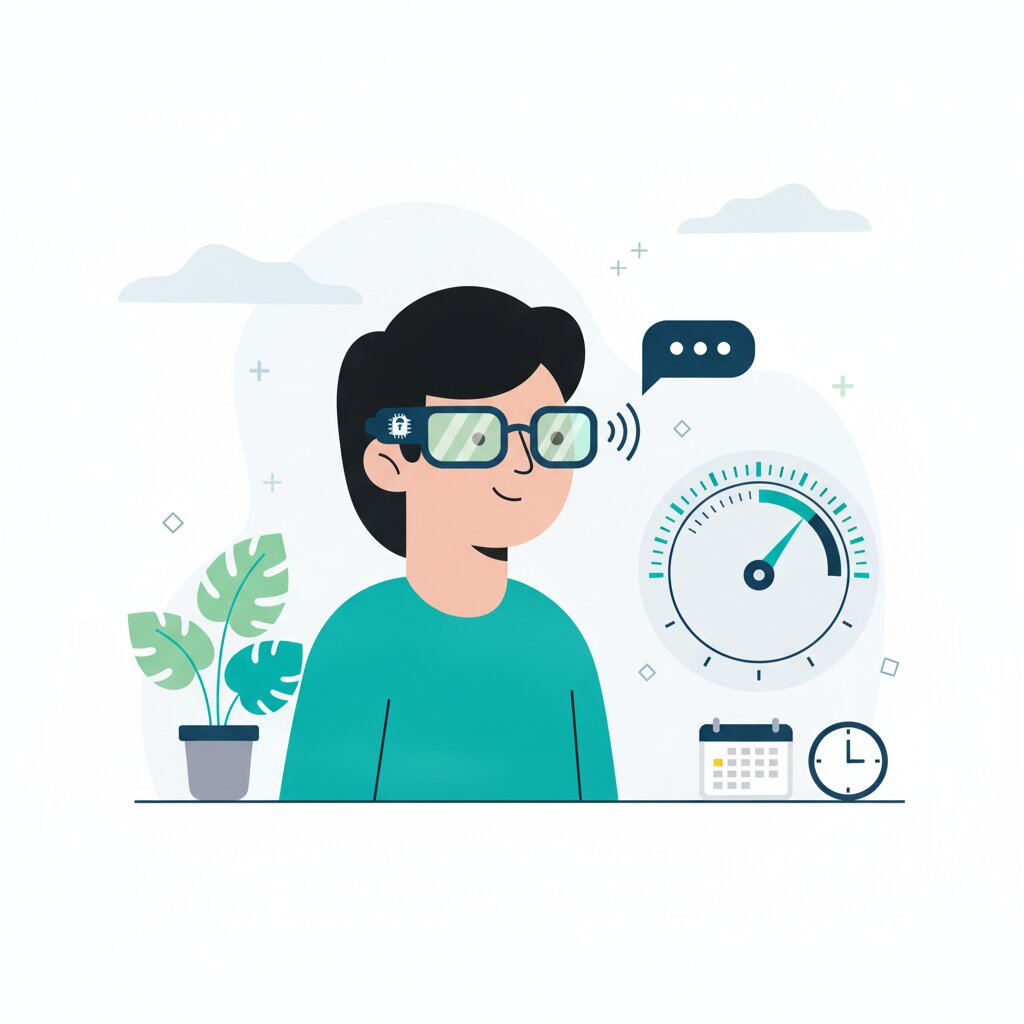
Conversation Focus isolates and amplifies the voice of the person you’re talking to when the room is loud. It lifts your conversation partner above the background noise, and the whole thing runs on the glasses’ own chips: no cloud round trip, no AI tokens, no phone doing the heavy lifting.
The signal chain is worth spelling out, because it’s what makes the pricing argument further down hold together. Beamforming microphones capture directional audio, real-time spatial processing isolates the target voice, and the open-ear speakers play it back. It runs entirely on the glasses themselves and doesn’t require an internet connection.
That architecture matters for three reasons. Latency: a live conversation can’t tolerate a server round trip, so the processing has to be local. Privacy: the audio never leaves your device. Cost: there is no per-use bill for Meta to cover. That third point is the load-bearing fact the rest of the argument leans on.
The Verge tested the offline claim by switching off Wi-Fi and cellular, putting the phone in Airplane Mode, and the feature kept working fine. No connectivity, no cloud dependency.
You switch it on by saying “Hey Meta, start Conversation Focus” or through the Meta AI app. It ships on the $299 Ray-Ban Meta line and Meta’s own unbranded Meta Glasses. Meta markets it as an accessibility boost, while explicitly disclaiming it as a hearing aid or medical device. That positioning is why capping it read as a trust problem, a theme picked up in the accessibility and privacy angle.
Why does Meta limit Conversation Focus to three hours a month when it runs on-device, uses no AI tokens, and works offline?
Meta’s stated reason is user segmentation, and it says nothing about infrastructure cost. A spokesperson framed the limit as something for power users who want expanded access and premium device support. But there is no per-use cost to segment away: the feature has no servers, no AI tokens and no licensing deal that anyone has pointed to. Rate limits exist to protect expensive server compute, and there is none here.
So what’s actually going on? The structural drivers are recurring revenue and ecosystem pull. Meta’s help page, quoted by Thurrott, insists that “no subscription is required to use AI glasses”, while the same page defines a metred free allowance and a paid ceiling. That contradiction is what reveals the real goal: the cap funnels heavy users toward a $19.99 subscription rather than covering any cost.
The defensibility test makes this clearer. Meta charges nothing for cloud features like live translation, Look and Ask, and the voice assistant, all of which do use servers and tokens. Yet the one feature that costs Meta nothing to run each time is the one that got metred. Cost recovery doesn’t explain the policy.
It’s also a bad look because of what the feature does. Conversation Focus functions as hearing assistance, and metring an accessibility-style feature on hardware you already own is what turned a pricing decision into a backlash that forced Meta to pause the plan in July 2026.
Underneath it all is money. Meta is charging for AI features for the first time as it hunts for a revenue stream beyond advertising, while it subsidises cheap glasses with subscription income. That is the driver that explains the whole move, and it’s covered in why Meta is pushing subscriptions now. That raises the next question: what does $19.99 actually buy?
What does Meta One Premium cost, and what exactly does it unlock for smart glasses owners?
Meta One Premium costs $19.99 a month and raises Conversation Focus from three free hours to fifteen hours per billing cycle. It also adds premium device support, Thinking Mode for more advanced Meta AI reasoning, and higher image and video generation caps across Meta’s apps. The $7.99 entry tier, Meta One Plus, leaves the glasses allowance out. And there is no unlimited tier at any price.
The arithmetic is the useful part. Three free hours works out to roughly six minutes a day, and a single loud dinner or a long meeting can burn a large part of that in one sitting. Premium’s fifteen hours is about thirty minutes a day, and even that doesn’t unlock unlimited access.
So the worth-it question is binary. You only get value from paying if you exceed roughly three hours of focused conversation a month. Below that, you just wait for the free allowance to refresh each calendar month, since unused time doesn’t roll over. There’s no top-up and no graduated option.
The $7.99 tier makes the same point. It bundles the social and AI perks across Instagram, WhatsApp and Facebook, but leaves smart glasses owners out in the cold. That’s how the tier structure funnels anyone who wants extra Conversation Focus minutes toward the most expensive plan.
One caveat before you reach for a card. Meta One has rolled out market by market and isn’t available everywhere, and Australian availability and AUD pricing aren’t settled in current reporting. The three-free-versus-fifteen-paid structure above is the designed policy. What’s actually in place now is covered in the current Conversation Focus usage limits after the July pause.
The thing to hold onto is simple. A feature with no cloud dependency and no per-use cost was metred, which means the only thing being priced is access. The rate limit defends no technical resource.
Run the arithmetic on yourself. If your week doesn’t routinely push past the free allowance, the subscription buys you nothing you’d actually use, and the paid tier only raises the ceiling.
There’s also the open thread. Meta paused the change in late July 2026 after the backlash, so the announced terms are not the settled terms. For the live status, see the current Conversation Focus usage limits. For where this sits in the bigger story, start with the bigger picture of the Conversation Focus paywall. Whether any of this pricing ever sticks is answered by the track record of hardware subscription models.
Frequently Asked Questions
Which Meta smart glasses support Conversation Focus?
Conversation Focus ships on the $299 Ray-Ban Meta line and on Meta’s own unbranded Meta Glasses models. It is delivered as a software feature on those glasses and enabled by voice command or through the Meta AI app, and it comes with the three-hour free monthly allowance by default, subscription or not.
How do I turn on Conversation Focus on my Meta glasses?
Say “Hey Meta, start Conversation Focus” while wearing the glasses, or turn it on through the Meta AI app. No subscription is required to start it, because everyone gets three free hours each calendar month, and the feature itself needs no network, since the processing happens on the glasses. In a noisy room you will hear your conversation partner’s voice come through the open-ear speakers much more clearly.
Do I need a Meta One subscription to use Conversation Focus?
No. Conversation Focus works with no subscription at all: every Meta glasses owner gets three free hours per calendar month, and because the feature runs on the glasses themselves it keeps working in Airplane Mode regardless of your plan. Meta One Premium does not unlock the feature; it only raises the ceiling from three hours to fifteen per billing cycle. If you never subscribe, the free hours simply refresh each month.
What happens when I use more than three hours of Conversation Focus in a month?
Under the announced policy, Conversation Focus becomes unavailable once your three free hours in a calendar month are used up. The allowance does not roll over, and there is no top-up option on the free tier, so the only way to get more hours is Meta One Premium at $19.99 a month, which raises the ceiling to fifteen hours per billing cycle. A hard monthly stop with a single paid escape hatch is the monetisation funnel in miniature.
Does the three-hour limit apply to glasses I already own?
Yes, and that is the point. The cap is not baked into the hardware or tied to when you bought the glasses; it is a software-side allowance applied to the feature on any compatible pair, including ones you already own and paid for. Nothing about the device changed when the limit was announced, which is why the policy reads as metering hardware you already own rather than pricing a new service.
Does Conversation Focus run on my glasses or on my phone?
On the glasses, not on your phone. The whole pipeline, from beamforming capture through spatial isolation of the target voice to playback on the open-ear speakers, runs on the glasses’ own chips with near-zero latency. Your phone appears only in setup: the Meta AI app enables and manages the feature, though a voice command will start it without the app. Once running, the audio pipeline depends on neither your phone nor the network.
Does Conversation Focus send my conversations to Meta?
No. While Conversation Focus is active, the audio it processes is handled in real time on the glasses themselves: the beamforming microphones, spatial isolation and playback never involve a cloud round trip, so your conversation is not uploaded to Meta for processing. It is a live local signal chain, not a recording service. That is also why the feature keeps working in Airplane Mode, and why capping an offline privacy-preserving feature is so hard to defend.
Is Conversation Focus a hearing aid?
No. Conversation Focus is an accessibility aid, not a hearing aid or a medical device, a distinction Meta draws explicitly in its own disclaimers. The feature amplifies the person you are talking to over background noise, which genuinely helps in loud settings, but it is not a substitute for professional hearing care. That hearing-assistance framing is exactly why capping the feature at three free hours read as a trust problem, not just a pricing one.
Is the three-hour Conversation Focus limit still in place?
Not as announced. The backlash against metering an accessibility-style feature on hardware people already owned forced Meta to pause the change in late July 2026, and the feature has been offered free through its Early Access Program while the policy is reassessed. The three-free-versus-fifteen-paid structure is the designed model, but it is not the settled one, so treat the announced limits as provisional until Meta confirms the next iteration.