
You’ve probably seen “AI SRE agent” in vendor pitches and on Hacker News. And you’ve probably seen it get mixed up with AIOps somewhere along the way. That conflation matters — buying the wrong tool, or deploying the right tool without the prerequisites, wastes budget and adds yet another system to maintain.
So in this article we’re going to define what AI SRE agents actually are, walk through what one does in the first fifteen minutes of a 2:47 AM incident, cover the governance pattern that makes first deployment safe, and lay out the four conditions under which deployment adds value rather than overhead. If those conditions aren’t met, the deployment can wait. Why observability is the prerequisite for any AI SRE deployment is worth reading first.
Let’s get into it.
What is the actual difference between AIOps and an AI SRE agent — and why does it matter which one you buy?
AIOps is ML-assisted operations tooling. It analyses your telemetry, surfaces anomalies and correlations, and delivers recommendations. That’s where it stops. A human must act on every finding.
An AI SRE agent is an autonomous software system that observes infrastructure telemetry, reasons about root causes using historical patterns, and executes or proposes remediation workflows without waiting to be prompted. Autonomous is the operative word.
Action is what separates the two. AIOps surfaces the finding. An AI SRE agent responds to it.
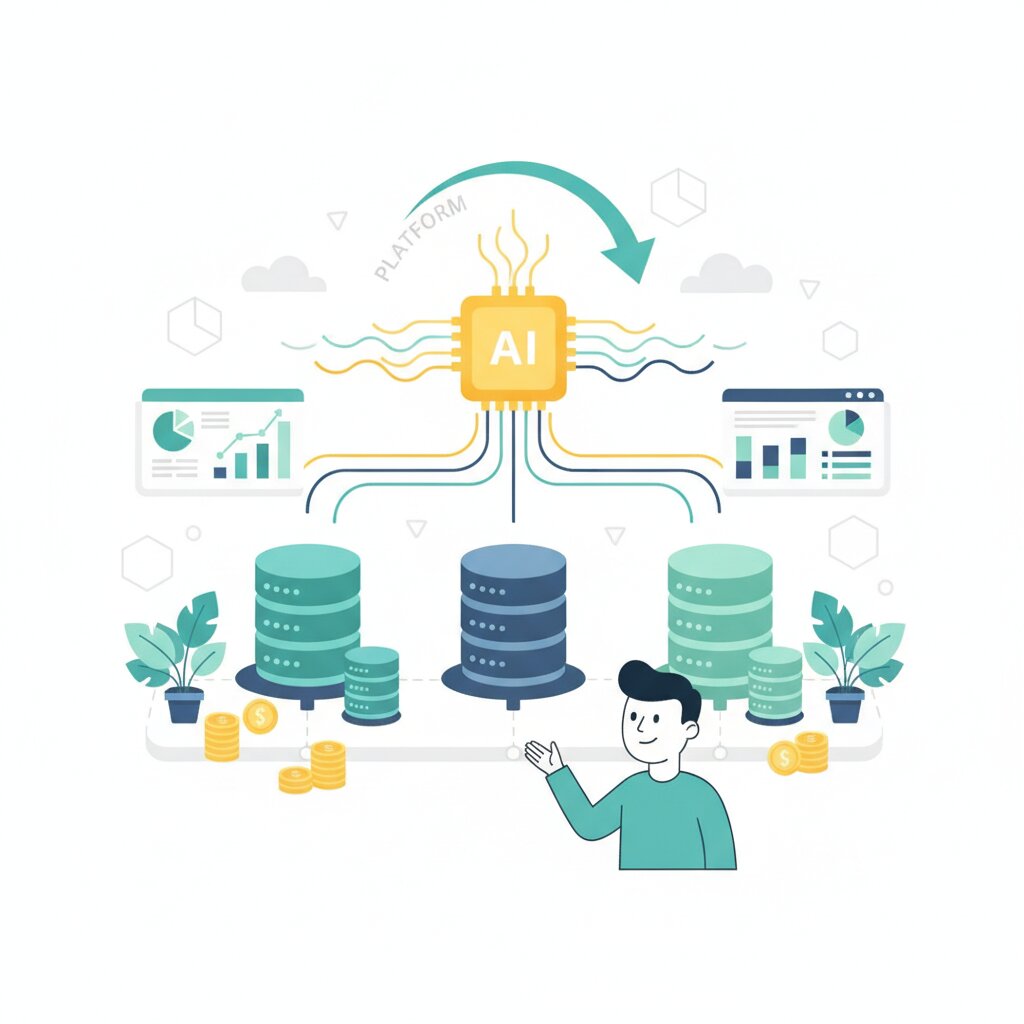
AIOps is genuinely useful — anomaly detection, noise reduction, correlation across large datasets. Think of it as the insight layer. AI SRE is the action layer. They can coexist, and the agent typically consumes AIOps insights as part of its reasoning.
Getting the category right before the procurement conversation saves you from two expensive mistakes: expecting autonomous response from a tool that only delivers insight, and deploying an autonomous agent without the telemetry it needs to reason.
What does an AI SRE agent do in the first fifteen minutes of an incident that a human cannot do as fast?
Picture this: 2:47 AM, PagerDuty fires a latency alert for your checkout service. Your on-call engineer’s phone lights up.
Without an AI SRE agent, the next ten to fifteen minutes look like this. Wake up, orient, log into Datadog, open Slack to coordinate, check PagerDuty to find who else is on-call, look at recent deploys in GitHub, find the runbook in Confluence. Five tools, twelve minutes of logistics before troubleshooting even starts.
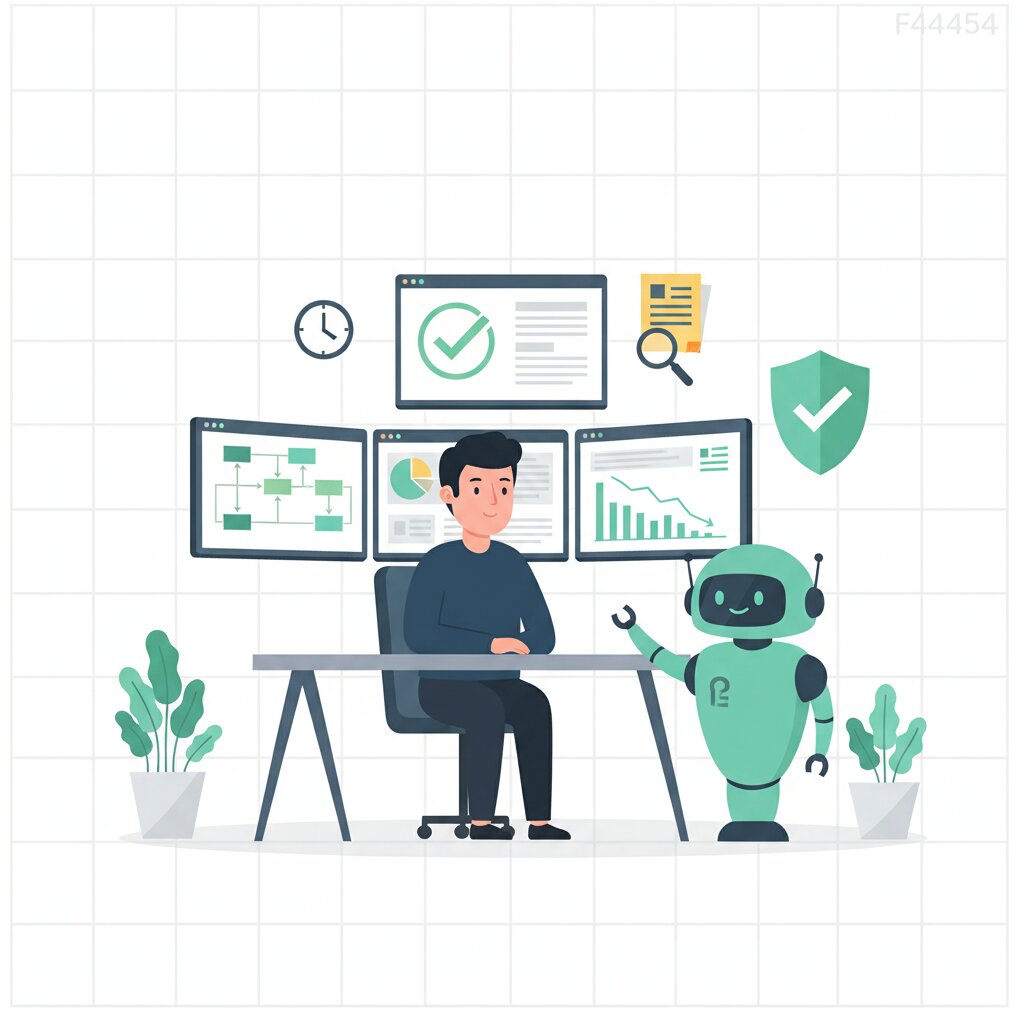
With an AI SRE agent, within seconds of the alert firing the agent correlates the latency alert with a deploy pushed at 2:31 AM, identifies payment-service as the affected downstream dependency, retrieves the relevant runbook, forms a rollback hypothesis, and sends a Slack message to the on-call engineer with the proposed action and supporting evidence. Alert triage, service ownership lookup, root cause hypothesis, remediation proposal — all before the engineer has found their glasses.
The 48-minute MTTR breakdown from incident.io’s analysis across over 100,000 real incidents: 15 minutes assembling context, 20 minutes troubleshooting, 13 minutes updating tools and documentation. The technical fix is the minority of the work. The agent directly eliminates the first and last segments. Datadog’s Bits AI SRE demonstrates up to 95% MTTR reduction across hundreds of production teams — the current performance ceiling for the category.
What is the coordination tax, and why is eliminating it the first measurable win from AI SRE deployment?
The coordination tax is the 10–15 minutes at the start of every incident spent assembling context before any troubleshooting begins. Identifying service owners, gathering dashboards, paging the right people, opening runbooks. It’s deterministic work — given a service catalogue and recent deploy history, it can be fully automated.
For a team handling 20 incidents per month, that’s five hours of pure logistics every month before anyone touches the actual problem.
This is what the Google SRE book defines as toil — manual, repetitive work that scales linearly with service growth and provides no enduring value. In practical terms: it’s the 3 AM call where the first fifteen minutes are spent figuring out what you’re even looking at. And three days later, the 90 minutes reconstructing the incident timeline from Slack for the post-mortem. The agent eliminates both.
How does a human-in-the-loop approval workflow make AI SRE safe to deploy before your team fully trusts it?
Deploying in fully autonomous mode on day one is how AI SRE gets switched off after one bad rollback. Before the team has calibrated its confidence in the agent, a single bad automated action typically triggers an immediate governance review.
Human-in-the-loop (HITL) is the recommended first-phase configuration. The AI proposes, a human approves, the agent executes.
Here’s what it looks like in practice. The agent detects an anomaly, correlates signals, forms a remediation hypothesis, and sends a Slack message to the on-call engineer with its proposed action, confidence level, and supporting evidence. The engineer types /inc approve-rollback. The agent executes, monitors, updates the status page, creates a follow-up ticket. No new tool, no new dashboard — the approval happens where the engineer is already watching.
The trust-building progression goes like this: HITL first, then semi-autonomous (low-risk runbooks run automatically, high-risk require approval), then fully autonomous with post-hoc review. After 20–30 approved actions without adverse outcomes, most teams have enough confidence to expand the autonomous scope.
When does AI SRE actually reduce toil — and when does it just add another system to maintain?
Four conditions need to align. Incident volume is high enough to amortise governance overhead. Structured runbooks exist for the agent to execute. A service catalogue maps ownership and dependencies. And observability telemetry is in place for the agent to consume.
When any of those conditions is absent, the agent adds overhead. Nothing to execute means no runbooks. Can’t identify what it’s looking at means no service catalogue. Blind to infrastructure state means no telemetry. And if incidents are infrequent enough, maintenance cost exceeds toil eliminated.
Worth noting: even at moderate incident volumes, incident.io’s Scribe feature provides standalone value. It records the incident in real time and drafts an 80%-complete post-mortem on resolution. Post-mortem archaeology eliminated.
What AI SRE does not fix is incident management coordination. Maintaining common ground across responders, managing escalation decisions, ensuring shared situational awareness — that stays human. And for lean teams worried about single-agent fixation, HITL provides the same protection as multi-agent architectures like Resolve AI’s at lower deployment complexity.
What are the four conditions your team must meet before AI SRE deployment adds value rather than overhead?
This is a self-assessment you can complete in five minutes before any procurement conversation.
Condition 1 — Observability Foundation. Structured telemetry (metrics, logs, distributed traces) must exist and be consistently instrumented. If the agent can’t see the infrastructure state, it can’t reason about root causes. Typically implemented via OpenTelemetry as the telemetry foundation AI SRE agents consume.
Condition 2 — Structured Runbooks. The agent executes runbooks. Informal notes don’t count. Minimum requirement: runbooks for the 10–15 most common incident types your team encounters.
Condition 3 — Service Catalogue. Without it, the agent faces the same “who owns this?” problem as the human. The coordination tax persists.
Condition 4 — Sufficient Incident Volume. Roughly 3–5 significant incidents per month is the minimum threshold at which governance overhead is justified. Below that, deployment, configuration, maintenance, and HITL review cost exceeds what the agent saves.
If any condition is unmet, fix the prerequisite first. The deployment can wait. Which observability platforms offer AI SRE integration paths is worth reading once the foundation is in place.
Which AI SRE tools should your team actually consider, and what does the decision come down to?
The market is crowded, but for a team without a dedicated SRE function the choice comes down to a few anchors.
incident.io is the SMB-relevant choice. Slack-native, deploys into existing incident workflows, includes Scribe for post-mortem automation, claims 80% MTTR reduction, SOC 2 Type II certified. Best fit for teams already managing incidents in Slack.
Bits AI SRE (Datadog) is the enterprise benchmark. 95% MTTR reduction via hypothesis-driven investigation across hundreds of production teams. Best fit if you’re already on the Datadog stack.
PagerDuty is the incumbent most teams already use, now expanding into autonomous SRE response. Starting here means no new vendor relationship — a migration path, not a replacement decision.
Resolve AI is the scale-up option for teams concerned about single-agent fixation. Multi-agent architecture, five-pillar framework, enterprise evaluation path.
Microsoft Azure SRE Agent signals the category has moved past early adopter. Relevant if you’re primarily on Azure.

The decision criterion is simple: start with whatever integrates best with the observability stack you already have. Optimise for minimal new infrastructure, not maximum AI capability. The agent is only as good as the telemetry it consumes. For the broader picture, the full production AI maturity framework puts AI SRE in context.
FAQ
What is an AI SRE agent in simple terms?
An autonomous software system that watches your infrastructure, detects when something goes wrong, investigates the root cause, and either fixes it or proposes a fix for human approval — without waiting to be asked. Distinct from a chatbot or dashboard: it acts.
Is AIOps the same thing as an AI SRE agent?
No. AIOps analyses telemetry and delivers recommendations; a human must act on every finding. An AI SRE agent acts autonomously (or with HITL approval). AIOps is the insight layer; AI SRE is the action layer.
What is “toil” and why does it matter for a small engineering team?
Manual, repetitive, automatable work that scales linearly with service growth — the Google SRE definition. For a small team it means identifying who owns the failing service, opening runbooks, pulling dashboards before troubleshooting can even begin. It burns engineer time without improving the system.
What is the coordination tax in incident management?
The 10–15 minutes at the start of every incident spent assembling context before troubleshooting begins. For a team handling 20 incidents per month, that’s 200–300 minutes of pure overhead per month. AI SRE agents eliminate it by automating context assembly.
How does human-in-the-loop (HITL) work in practice for AI SRE?
The agent sends a Slack message to the on-call engineer with its proposed action and supporting evidence. The engineer types /inc approve-rollback. The agent executes and monitors. No new dashboard, no new tool.
What happens if an AI SRE agent takes the wrong action in production?
In HITL mode, it can’t — no action executes without explicit human approval. In autonomous mode, a miscalibrated agent could execute a harmful runbook. Start with HITL; expand autonomous scope only after a track record of correct proposals.
When should I NOT deploy an AI SRE agent?
When any of the four readiness conditions is unmet: no observability foundation, no structured runbooks, no service catalogue, or fewer than 3–5 significant incidents per month. Fix the prerequisite first.
What is the incident.io Scribe feature and why does it matter?
Scribe records the incident in real time and drafts an 80%-complete post-mortem on resolution — summary, timeline, contributing factors, action items. Eliminates the post-mortem archaeology that otherwise takes 1–2 hours.
Does an AI SRE agent replace the incident commander during a major outage?
No. AI SRE agents handle diagnostics and remediation. Incident management coordination — maintaining common ground across responders, managing escalations, ensuring shared situational awareness — stays human.
How does AI SRE differ from traditional runbook automation?
Traditional runbook automation executes predefined scripts on predefined triggers — deterministic, brittle. An AI SRE agent uses the runbook as a procedure but decides when, why, and how to adapt based on current incident context. The AI adds reasoning; runbook automation just adds speed.
What is root cause analysis (RCA) and how does an AI SRE agent do it differently?
RCA identifies the underlying cause rather than treating symptoms. The hypothesis-driven approach formulates a specific hypothesis, queries targeted telemetry to validate or reject it, deepens into sub-hypotheses, and prunes dead branches. Summarisation-first approaches degrade with additional tool calls; hypothesis-driven approaches improve.