
95% of enterprise AI pilots fail to reach production. The primary reason? Infrastructure gaps.
Most organisations jump into AI infrastructure investment without a clear roadmap. They buy GPUs that sit idle. They modernise everything at once and deliver nothing. They treat AI infrastructure like traditional IT projects and wonder why nothing works.
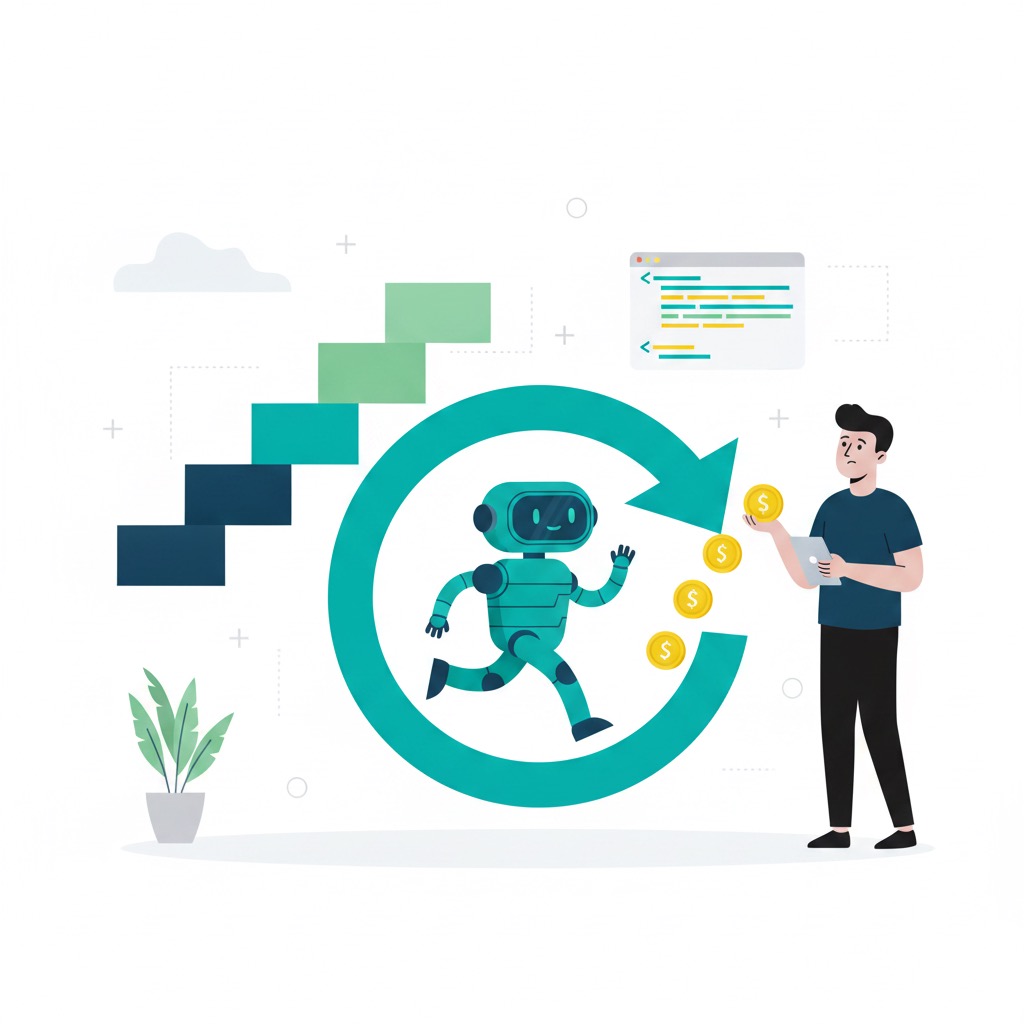
Here’s what actually happens: you assess where you are, you fix the biggest constraint first, you build in 90-day increments, and you prove value at every step. No big bang. No five-year plans that are obsolete in six months.
This guide walks you through building a phased, prioritised roadmap that starts with readiness assessment and builds incrementally. You’ll reduce infrastructure waste, deliver wins within 90 days, and build stakeholder confidence through clear milestones.
The broader context? There’s an AI infrastructure ROI gap organisations are struggling to close. A proper roadmap is how you close it.
What Should an AI Infrastructure Modernisation Roadmap Include?
Your roadmap needs five components: current state assessment, future state definition, gap analysis, phased implementation plan, and governance framework.
Unlike traditional IT modernisation plans, AI infrastructure roadmaps must address inference economics modelling, hybrid architecture decisions, and AI-specific readiness gates. You’re not just upgrading servers. You’re building the foundation for workloads that behave completely differently than anything you’ve run before.
Current state assessment evaluates your data readiness, infrastructure constraints, and skills inventory. You’re looking for the bottlenecks that will kill your pilots.
Future state definition outlines your workload requirements, architectural patterns, and success criteria. What do you actually need to run? What does good look like?
Gap analysis identifies your bandwidth, latency, and compute gaps. It maps out data pipeline needs and knowledge layer requirements. The gaps between current and future state become your roadmap.
Phased implementation plan breaks the work into digestible chunks. Months 1-3 deliver quick wins. Months 4-9 build foundational capabilities. Months 10-18 prepare for scale. Each phase has clear deliverables and success gates.
Governance framework establishes your architecture review process, vendor evaluation criteria, and ongoing measurement approach. Without this, every decision becomes a debate.
The typical timeline is 12-18 months with 90-day increment milestones. Shorter than that and you won’t deliver foundational changes. Longer and the plan becomes obsolete as the AI landscape evolves.
Research shows 70% of AI projects fail due to lack of strategic alignment and inadequate planning. Your roadmap addresses this by forcing you to think through dependencies before you spend a dollar.
How Do I Assess Current AI Infrastructure Readiness?
Start with five diagnostic questions: Can your network handle 10x current data volume? Are data pipelines automated or manual? Do you have vector database capabilities? What’s your GPU utilisation rate? Can you measure latency for data retrieval?
Your answers reveal where you stand across five dimensions: compute capacity, network performance, data infrastructure, security posture, and skills availability.
For compute readiness, check GPU availability, orchestration capabilities, and utilisation metrics. If you don’t have GPUs yet, that’s fine. But if you do and they’re running at less than 40% utilisation, you’ve got a resource allocation problem.
Network readiness means measuring bandwidth under load, latency, and identifying bottlenecks. Bandwidth issues jumped from 43% to 59% year-over-year as organisations discovered their networks couldn’t handle AI workloads. Latency concerns surged from 32% to 53%. Don’t assume your network is ready just because it handles current workloads fine.
Data readiness examines what percentage of your data is clean, structured, and accessible. How automated are your data pipelines? Only 12% of organisations have sufficient data quality for AI. If you’re manually wrangling data for each pilot, you’re not ready to scale.
Skills readiness assesses your team’s capabilities and training needs. Only 14% of leaders report having adequate AI talent.
Cost readiness establishes your current spend baseline and models inference economics. You need to know what you’re spending now and what AI workloads will cost at scale.
Create a baseline scorecard with red/yellow/green indicators across all five dimensions. Red flags include manual data pipelines, latency over 200ms, and GPU utilisation below 40%.
Your readiness assessment becomes the starting point for your roadmap. The gaps you identify determine what you fix first.
How Do I Prioritise AI Infrastructure Investments with Limited Budget?
Use a simple framework: plot initiatives on impact versus effort. High impact, low effort goes first. High impact, high effort goes second if it removes a constraint. Everything else waits.
Focus on constraint removal first. If bandwidth is limiting pilot scale-up, network upgrades deliver immediate ROI. If data pipelines are manual, automation unblocks multiple use cases. If you’ve got GPUs sitting idle because data isn’t ready, stop buying hardware and fix the data problem.
Apply the 70-20-10 budget rule: 70% to constraint removal and quick wins, 20% to foundational capabilities like hybrid architecture and knowledge layers, 10% to experimentation.
Quick wins fund the next phase. You need early victories to maintain stakeholder confidence and secure additional budget.
Common prioritisation mistakes include buying GPUs before data pipelines are ready, investing in greenfield AI infrastructure before proving use cases, and spreading budget too thin across all gaps simultaneously.
Build business cases that anchor AI initiatives in business outcomes like revenue growth, cost reduction, or risk mitigation. Quantify benefits using concrete KPIs. Break down costs into clear categories: data acquisition, compute resources, personnel, software licences, infrastructure, and training.
Include a contingency reserve of 10-20% of total budget. AI projects hit unexpected complications. Budget for them.
For architecture decisions, consider understanding inference costs and the choice between cloud and on-premises infrastructure. Each initiative must map to a specific business outcome with measurable success criteria.
What Are the Key Phases of an AI Infrastructure Roadmap?
Phase 1 runs for months 1-3: Assess and Stabilise. You run your readiness assessment, identify your top three constraints, implement quick fixes, and establish baseline metrics. Deliverables include your readiness scorecard, constraint removal plan, and pilot infrastructure for 1-2 use cases.
Success gate for Phase 1: Pilots running reliably with less than 5% downtime and cost per inference measured. If you can’t meet this gate, you’re not ready for Phase 2.
Phase 2 runs for months 4-9: Build Foundations. You automate data pipelines, implement hybrid architecture, develop knowledge layers, and train your team. Deliverables include automated ETL for AI workloads, cloud plus on-premises architecture operational, and vector database deployed.
Success gate for Phase 2: Three or more use cases running in production, data pipeline SLA above 99%, and team trained on new stack. This is where you prove the foundation works.
Phase 3 runs for months 10-18: Scale and Optimise. You deploy production-scale infrastructure, optimise inference costs, and add advanced capabilities like edge and real-time processing. Deliverables include auto-scaling infrastructure, cost per inference reduced by 40% or more, and edge or real-time capabilities.
Success gate for Phase 3: 10 or more production use cases, positive ROI demonstrated, and governance processes mature.
Why this phasing works: early wins maintain momentum, incremental investment reduces risk, and each phase creates learning opportunities that inform the next phase.
How Do I Build the Business Case for Each Infrastructure Investment?
Use a three-part template for every investment:
Problem statement describes the current cost and constraint. “Our manual data pipeline requires 40 hours per week of data engineering time to prepare datasets for AI pilots. This limits us to running one pilot at a time and delays time-to-production by 6-8 weeks per use case.”
Proposed solution outlines the technical approach, vendor or build choices, and implementation timeline. “Implement automated ETL pipeline using [specific tooling]. Estimated implementation cost: $150,000 including professional services. Timeline: 12 weeks to production-ready.”
Expected outcomes with ROI calculation methodology. “Reduce data prep time by 80% (32 hours saved per week). Enable parallel pilots (3+ concurrent). Reduce time-to-production by 50% (3-4 weeks vs 6-8 weeks). ROI: $156,000 annual savings in engineering time, break-even in 12 months.”
Include risk mitigation. What happens if you don’t invest? AI initiatives stall, competitors pull ahead, engineering team remains bottlenecked. What’s the downside if the investment doesn’t deliver? You’ve built pipeline automation that benefits non-AI workloads anyway, giving it salvage value.
Your financial analysis requires TCO calculation, ROI projection, and breakeven timeline. Don’t just look at purchase price. Include training, support, data egress costs, and professional services.
Speak CFO language: NPV, IRR, payback period for infrastructure investments.
Common objections you’ll face:
“Can’t we just use cloud services?” Show the cost threshold where on-premises wins. If cloud costs exceed 60-70% of owned infrastructure TCO, ownership makes sense.
“This seems expensive.” Compare to the cost of failed pilots and delayed revenue. Research shows 74% of organisations report positive ROI from generative AI investments. Your infrastructure investment enables that return.
“How do we know this will work?” Point to precedents. Provide customer references from vendors. The phased approach reduces risk by validating each step before the next investment.
For detailed cost modelling, understanding inference economics is essential. For architecture cost comparisons, review cloud versus on-premises decisions.
What Vendor Evaluation Criteria Matter for AI Infrastructure?
Evaluate vendors on four weighted dimensions: technical fit (40%), economics (30%), vendor viability (20%), and lock-in risk (10%).
Technical fit asks: Does this meet your workload requirements? Does it integrate with your existing stack? Test workload compatibility with your AI frameworks, models, and use cases. Run performance benchmarks for latency and throughput under realistic load.
Economics examines total cost of ownership, not sticker price. Assess cost predictability considering fixed versus variable pricing. Check scaling economics to see if per-unit cost improves or worsens at scale. Identify hidden costs including training, support, data egress, and professional services.
Vendor viability checks company financial health and market position. Review product roadmap alignment with your needs. Assess customer support quality. Talk to at least three customer references in similar situations.
Lock-in risk evaluates data portability, API and tooling standards (proprietary versus open source), and contract terms including length, exit clauses, and cost of leaving.
Create a vendor comparison matrix for side-by-side evaluation. Use a 1-5 scale where 1 equals poor and 5 equals exceptional. Define 80% as your go threshold. Scores between 60-79% trigger further due diligence. Anything below 60% is a no-go.
For hyperscalers like AWS, Azure, and GCP, compare inference pricing models, egress costs, data sovereignty options, and GPU availability guarantees.
Red flags in vendor proposals include vague pricing with no modelling tools, proprietary formats with no export path, no customer references in your segment, and pressure tactics.
Studies show 92% of AI vendors claim broad data usage rights far exceeding the industry average of 63%. Check vendor data governance frameworks carefully.
What Are the Most Common Roadmap Pitfalls and How Do I Avoid Them?
Pitfall 1: Big bang approach. Trying to modernise everything simultaneously leads to delays, cost overruns, and nothing delivered. Fix: Phased roadmap with 90-day milestones and early wins.
Pitfall 2: Premature infrastructure purchase. Buying GPUs before validating use cases means expensive hardware sitting idle. Fix: Pilot on cloud or rented infrastructure first. Buy only when utilisation exceeds 60%.
Pitfall 3: Ignoring data readiness. New infrastructure can’t fix bad data. Start with data readiness first. Fix: Data pipeline work in Phase 1, infrastructure scaling in Phase 2 and beyond.
Pitfall 4: No interim milestones. Without checkpoints, projects drift. Teams lose focus. Stakeholders lose confidence. Fix: 90-day increment goals with clear deliverables and success criteria.
Pitfall 5: Missing success metrics. You can’t prove ROI if you’re not measuring. Fix: Define measurement approach before spending. Track consistently. Report progress transparently.
Pitfall 6: Underestimating inference economics. AI workloads cost differently than traditional applications. Agent loops can spiral costs unexpectedly. Fix: Model costs early using realistic usage scenarios. Monitor continuously. Set cost guardrails.
Pitfall 7: Single-vendor lock-in. Tying your entire infrastructure to one vendor removes optionality and increases risk. Fix: Hybrid architecture preserves optionality. Use open standards where possible.
Pitfall 8: Skipping architecture review. Without governance, every team makes different decisions. You end up with fragmented infrastructure. Fix: Governance process for all major decisions.
Warning signs your roadmap is going off track: milestones slipping repeatedly, budget consumed faster than value delivered, team can’t articulate what success looks like, vendor lock-in increasing without conscious decision.
Recovery strategies when things go wrong: pause and reassess, return to constraint identification, celebrate small wins to maintain momentum, bring in external perspective through an advisor or peer CTO review.
How Do I Measure Roadmap Success and Demonstrate ROI?
Track two types of metrics: leading indicators that predict future success, and lagging indicators that show actual ROI.
Leading indicators include milestone completion rate (are you hitting your 90-day goals?), constraint removal progress (bandwidth, latency, and data pipeline gaps closing), team capability growth (training completed, certifications earned), and pilot performance trends (improving over time).
Lagging indicators include cost per inference reduction (target 40% or more by Phase 3), time-to-deploy reduction for new AI features (target 50% faster), pilot-to-production conversion rate (target above 30% versus 5% industry average), and revenue from AI-enabled capabilities.
Create an executive dashboard with 5-7 key metrics updated monthly. Include trend lines and red/yellow/green health indicators. Add commentary on anomalies and corrective actions.
For quarterly business reviews, showcase wins since last review, acknowledge challenges encountered, walk through the metrics dashboard, explain roadmap adjustments based on learning, and outline next quarter priorities with success criteria.
When communicating technical progress to non-technical stakeholders, translate infrastructure improvements into business outcomes. Don’t say “we reduced latency from 250ms to 80ms.” Say “we enabled real-time AI features that were previously impossible, opening up use cases worth $X in potential revenue.”
Define concrete metrics before implementation. Establish baseline measurements. Track consistently throughout execution. Report progress transparently.
The measurement framework closes the loop. You set goals in your roadmap, you track progress through leading indicators, you demonstrate value through lagging indicators, and you adjust based on what you learn.
This is how you solve the broader AI infrastructure investment problem and close the ROI gap.
FAQ Section
How long should an AI infrastructure modernisation roadmap cover?
12-18 months is optimal. Shorter roadmaps lack time to deliver foundational changes. Longer roadmaps become obsolete as the AI landscape evolves rapidly. Structure it as three 6-month phases with defined success gates between phases.
Should I build, buy, or rent AI infrastructure?
It depends on three factors: workload predictability (stable workloads favour build or buy, bursty workloads favour rent or cloud), cost threshold (if cloud costs exceed 60-70% of owned infrastructure TCO, ownership makes sense), and data sovereignty (regulatory requirements may mandate on-premises). Start with rented cloud infrastructure for pilots. Transition to hybrid (cloud plus owned) as you reach the cost threshold.
What’s the minimum infrastructure needed before deploying AI agents?
Agentic AI requires latency under 100ms for data access (real-time decision loops demand it), a knowledge layer or vector database (for agent context and memory), API orchestration infrastructure (agents make many API calls), and cost monitoring (agent loops can spiral inference costs). Many organisations underestimate the knowledge layer requirement.
How do I justify AI infrastructure spending when ROI is uncertain?
Use a staged investment approach. Phase 1 (assess and stabilise) requires minimal spend and proves value through pilot success. Use Phase 1 results to build the business case for Phase 2. Each phase should deliver measurable wins that fund the next phase. Frame it as “options value” where infrastructure investment preserves your ability to compete in an AI-driven market.
What if my current data infrastructure isn’t AI-ready?
Data readiness is the primary barrier. You’re not alone. Start with data pipeline automation and quality improvement before investing in AI-specific infrastructure. Month 1-3 focus on data assessment and quick pipeline wins. Month 4-6 implement automated ETL for priority datasets. Month 7-9 add vector databases and knowledge layers. Many organisations waste money on GPUs when their data isn’t ready to use them.
How do I handle vendor lock-in concerns in the roadmap?
Design for hybrid architecture from the start. Use cloud for elastic workloads, on-premises for stable or sensitive workloads. Maintain portability through open standards like ONNX for models, Kubernetes for orchestration, and standard APIs. In vendor evaluations, score data portability and exit options explicitly. Build proof-of-concept on multiple platforms before committing to a single vendor.
Should I plan for greenfield AI factory or retrofit existing infrastructure?
For most organisations, retrofitting existing infrastructure (brownfield) makes sense with lower capital requirement, faster time-to-value, and incremental risk. Greenfield AI factories make sense when existing infrastructure is more than seven years old and due for replacement anyway, you have budget for significant capital investment, or performance requirements are extreme. Start brownfield, upgrade to greenfield only when the business case is proven.
How often should I update the roadmap?
Review quarterly, update semi-annually. Quarterly reviews assess progress, identify obstacles, and celebrate wins but don’t change the plan unless major assumptions proved wrong. Semi-annual updates incorporate new learning, market changes, and technology advances. Avoid constant roadmap churn that destroys team confidence but don’t rigidly stick to an obsolete plan.
What team capabilities do I need to execute this roadmap?
Your core team needs an infrastructure architect (hybrid cloud plus on-premises expertise), data engineer (pipeline automation, vector databases), MLOps specialist (model deployment, inference optimisation), and financial analyst (TCO modelling, ROI tracking). These may be part-time roles or shared resources. Budget for external help during Phase 1 assessment if you lack internal AI infrastructure experience.
How do I maintain momentum when roadmap execution gets hard?
Build in quick wins every 90 days so teams see progress. Celebrate milestone completions publicly. When stuck, return to constraint identification (what’s the primary blocker right now?) and focus the entire team on removing it. Use an architecture review board to escalate decisions and unblock teams. Quarterly business reviews maintain executive visibility and stakeholder engagement.